


Already the largest workforce within healthcare, the nursing profession is projected to continue growing by as much as 5% in coming years. This calls into question the truth about nursing shortages, especially given the persistent concerns about understaffing and the possibility of losing a large number of these essential front-line clinicians to retirement.
A nursing shortage occurs anytime patient demand exceeds the available supply. This risks longer wait times, impacts to care quality, and unsafe workloads. To better understand the immediacy of these risks, we’ll examine the real extent of current nursing labor gaps, offering insight into some key causes of nursing shortages alongside possible solutions.
We all know the simple answer to the question, Is there a nursing shortage? But digging deeper can help you develop an effective staffing strategy that targets today’s actual healthcare challenges, ensuring a healthy work environment for your team and high-quality care for your patients.
History of Nursing Shortages in the U.S.
The U.S. has experienced periodic nursing shortages since the profession was first established in the mid-1800s. War, pandemic, economic recession, low pay, and poor working conditions were cited as the biggest reasons for nursing shortages prior to the start of the 21st century. Experts cite similar causes for nursing shortages today.
The profession has become much more diverse than it once was, and now nearly half of today's nurses come from a wide variety of backgrounds, offering representation that better reflects the country’s overall demographics. Also, data shows that the male nursing workforce has grown by over 59% in the last 10 years. Despite these notable improvements in workforce diversity, many organizations are still contending with the impact of nursing shortages across the U.S.
The Truth About Nursing Shortages: Statistics
Not all states face nursing shortages. Indeed, states like Hawaii have more nurses than patient demand. Yet, the nationwide forecast’s projected nursing shortage (by 2030) warns of an RN gap as large as 250,000 professionals. Compounding this troubling statistic, a recent Nursing Trends Study revealed that 77% of surveyed nursing professionals were actively looking for a new nursing job and 45% were looking to leave the profession altogether.
On a global scale, the truth about nursing shortages becomes even more unsettling. According to The World Health Organization, the 2030 worldwide nursing shortage will exceed 4.5 million nurses. The International Council of Nurses (ICN) describes this upcoming staffing crisis as a "global health emergency." If the real reason for the nursing shortage’s universal expansion remains unaddressed, the ICN predicts harmful consequences that will be felt across the entire healthcare landscape.
The Negative Effects of Nursing Shortages
Whether or not the nursing shortage is getting worse in your state currently, the effects of an overall undersupply will eventually be felt across all systems. Examples include interrupted hiring patterns or strained intersystem coordination.
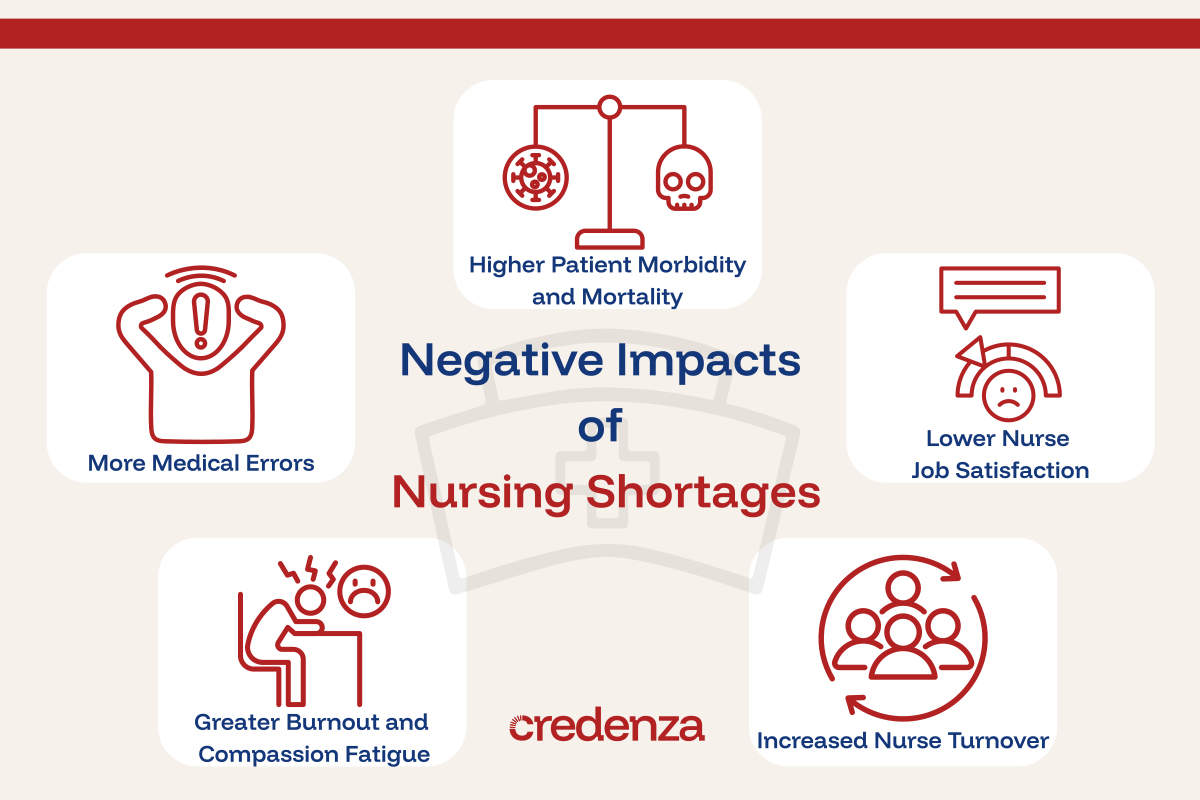
The immediate impacts to affected facilities often involve heavier nursing workloads. This can jeopardize the quality of patient care and the safety of the work environment due to:
- More medical errors.
- Higher patient morbidity and mortality.
- Lower nurse job satisfaction.
- Greater burnout and compassion fatigue.
- Increased nurse turnover.
What Are the Major Reasons for the Nursing Shortages? 5 Key Trends
Getting to the truth about nursing shortages often means understanding their root causes. Below, we'll outline five of the most influential factors contributing to the global nurse deficit. We'll also provide tips to help you build a strong, resilient team equipped to handle healthcare's toughest challenges.
1. A Nationwide Shortage of Nursing Educators
A recent survey conducted by the American Association of Colleges of Nursing (AACN) found that U.S. nursing schools had to reject 65,766 qualified applications due to staff shortages, space constraints, and budget restrictions. A separate AACN survey also identified nearly 2,000 full-time faculty vacancies in baccalaureate and graduate nursing programs across the U.S.
As nursing educators and clinicians continue to retire, schools need to be able to train individuals who are excited about the opportunity to provide care, not turn students away. This further cripples the organizations desperate for staff.
Education-Related Nursing Shortage Solutions to Consider:
- Nearly 80% of nursing faculty vacancies are for positions that require a doctoral degree. By expanding access to these positions for BSN and MSN prepared nurses, schools can fill their positions with experienced clinicians who are passionate and qualified to teach.
- Nursing schools can provide greater financial assistance to those looking to pursue a doctorate degree in exchange for years of teaching service after graduation.
- According to the AACN, only 7.4% of nursing faculty are male and as few as 19% come from diverse backgrounds. Organizations should encourage individuals in underrepresented groups to apply for teaching positions to not only reduce their faculty shortages but also improve the cultural competence of student nurses.
2. Poor Nurse Retention
According to one report, nearly 23% of RNs leave the profession within their first year of hire. This percentage is even higher — 26.8% — for new graduate nurses. When asked why they chose to leave the profession, many nurses mention the significant physical and emotional demands of the job, high rates of burnout due to challenging working conditions, and trauma from workplace violence.
Retention-Related Nursing Shortage Solutions to Consider:
- Providing patient care often requires a significant physical and emotional investment. However, developing workplace wellness initiatives can help you support and empower your team of clinicians.
- Approach retention as you do hiring. Consider using stay interviews to gather insights straight from the source. Consider offering pay incentives to those staff members who stay with your organization for years. Or, bolster your professional development program to provide ongoing career growth opportunities.
- Incorporate technological tools into your care processes to automate low-value tasks and ease the nursing workload.
3. Inequitable Workforce Distribution
So, is the nursing shortage getting worse? For many rural healthcare practices and hospitals, the answer to that question is clearly yes. Facilities located in historically underserved areas often experience significantly greater nursing shortages than those in urban, metropolitan areas.
In some instances, smaller organizations aren't able to cope after staff losses and have had to completely shut down their facilities. When facilities close, patients lose access to the care they need, especially in areas where getting high-quality care is already difficult.
Location-Specific Nursing Shortage Solutions to Consider:
- Ensure that your salary offerings are competitive. Where urban-equivalent pay isn’t available, use facility-specific perks or benefits (like greater schedule flexibility) to increase your positions’ appeal.
- Some patients present to healthcare clinics to check their blood pressure, order additional medical supplies, or get a doctor's advice on how to manage a health concern. Expand remote care offerings to help those located far from a healthcare facility get the care they need without adding to the clinician workload.
- The truth about nursing shortages in underserved areas is that the contributing causes are often beyond a facility's control. Advocating for rural patients at the federal, state, and local level can raise awareness of staffing concerns and give smaller facilities the financial support they're looking for.
4. Increased Patient Acuity
As rates of chronic disease rise across all population subgroups, patients that present to healthcare facilities are older and sicker than ever before. Many facilities simply don't have the manpower to provide the complex, attentive care these patients deserve, especially during seasons of high patient census. Without an influx of new clinicians coming in to assist with patient care demands, systems are stretched to the limit.
Acuity-Based Nursing Shortage Solutions to Consider:
- The best solutions to nursing shortages often involve collaboration. Work with a medical staffing agency to fill short-term scheduling gaps with qualified clinicians.
- Utilize varied care models to meet different patient needs. For example, you can use the team-based approach in a triage environment, the functional nursing approach in outpatient clinics, and the total patient care approach in intensive care units.
- Develop a robust nursing float pool to allocate nurses to the departments that need them most.
5. An Aging Nursing Workforce
Many experts consider the aging nursing workforce to be the most concerning truth about nursing shortages. The median age of practicing nurses in the U.S. is about 50, and nearly 25% of the nursing workforce is over the age of 50.
One-third of the current nursing workforce will be looking to retire and leave the profession within the next 10-15 years. Staff shortages in healthcare will continue to worsen as nurses exit faculty and patient-facing positions without an equivalent workforce ready to take their place.
Retirement-Related Nursing Shortage Solutions to Consider:
- Facilities will need to develop robust recruitment strategies to replace the clinicians planning to leave the profession. Tapping into younger and previously underrepresented groups (people of color, men, etc.) is one way to bridge the gap.
- Utilize a multidimensional hiring approach to appeal to different candidates. Posting vacant positions to nursing job boards, attending hiring fairs, and recruiting on social media platforms are just a few ways to broaden your search for qualified clinicians.
- Provide ample professional development opportunities to help younger staff grow their knowledge and skills, limiting the risk of an unprepared workforce when senior team members retire.
Find More Ways to Empower Your Clinical Team
Now that you understand the truth about nursing shortages and why they’re happening, you're in a better position to develop a staffing strategy that can stand the test of time. For additional insights, access our wide range of expert-backed healthcare tools and resources, designed to help you optimize workplace wellness, boost care quality, and improve staff satisfaction.