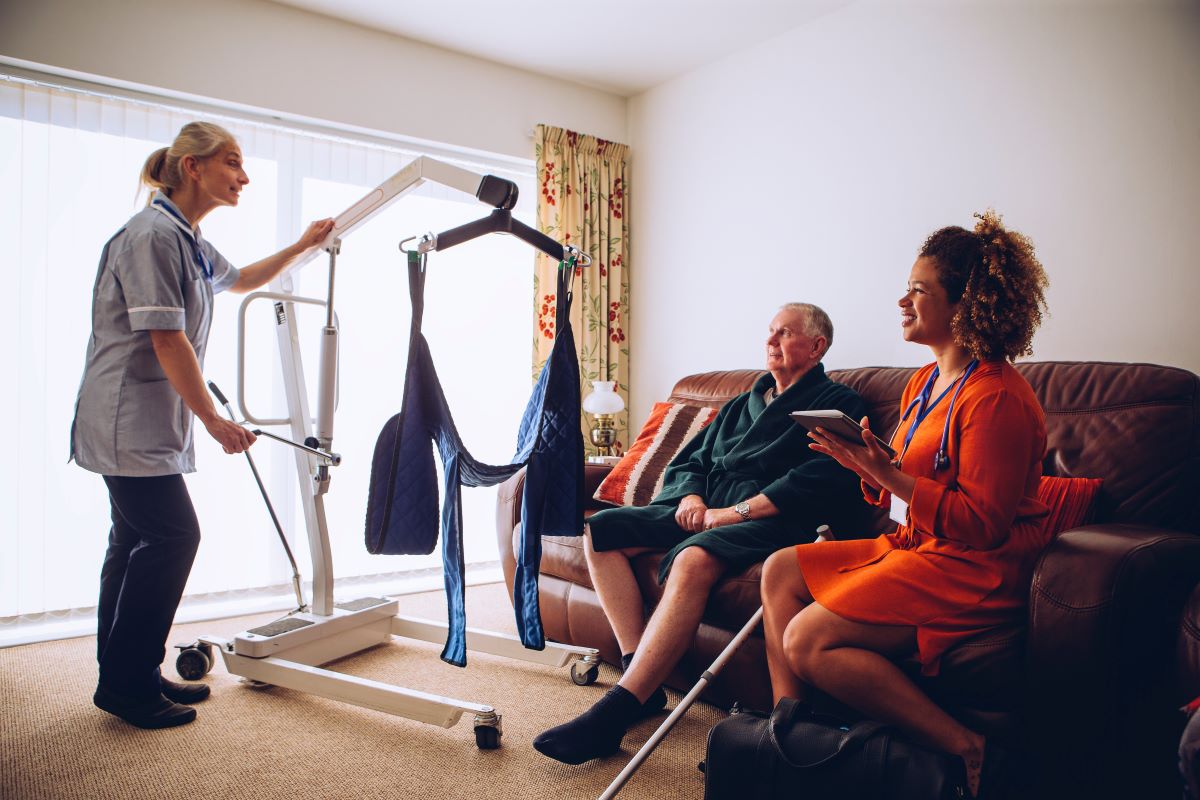


Durable Medical Equipment (DME) such as canes and walkers help people with a disabling medical condition, illness, or injury achieve independence and safely live at home. Considerable responsibility is placed on medical staff and DME suppliers to follow Medicare's rules and policies so patients receive their needed equipment on time. This is where a durable medical equipment billing guide comes in handy.
Becoming an expert in the complex Medicare DME process takes significant time and effort. Here, you can quickly learn the basics including the definition of DME, who qualifies for coverage, how to order it, which DME is covered, and finally, how to bill for it. The Medicare's DME site serves as the source for the information provided, unless noted otherwise.
What Is the Definition of DME?
Medicare defines DME as equipment that precisely meets all the following criteria:
- Long-lasting, withstanding repeated use
- Used for a medical reason
- Used due to illness or injury
- Used in the patient or resident's home
- Expected to last at least 3 years
You may have heard about "durable medical equipment, prosthetics, orthotics, and supplies (DMEPOS)." It's a broader term that includes DME and extends coverage to supplies, prostheses, splints, intraocular lenses, etc. However, this durable medical equipment billing guide will only be addressing DME.
Who Qualifies for DME Coverage?
Patients living at home, in non-skilled nursing homes, or long-term care with medical necessity for an approved DME qualify for coverage if they have Original Medicare (Part A and Part B). Once the Medicare Part B deductible is met for the year, they're responsible for 20% of the cost, and Medicare covers the remaining 80%.
While patients and residents must use a Medicare-enrolled practitioner and DME supplier to receive coverage, they only receive the full benefit of their 80% if both always take assignments, which is Medicare's approved amount for a service or item. Otherwise, the costs will be higher.
Medicare Advantage Plan follows Original Medicare rules and offers the same services to their members, including DME. However, your office will need to confirm specific rules and coverage with the plan as it isn't covered in the durable medical equipment billing guide.
How Is DME Ordered?
A Medicare-enrolled physician or treating practitioner orders durable medical equipment. The federal government has standardized the components of DME orders and prescriptions. These components include:
- Beneficiary name or Medicare Beneficiary Identifier (MBI) number
- Description of the item
- Quantity, if applicable
- Treating practitioner name or National Provider Identifier (NPI)
- Date of the order
- Treating practitioner signature
The physician or treating practitioner submits the complete written order to the Medicare-enrolled supplier before submitting a claim for Medicare payment. Medicare will determine if their coverage will include renting or buying the equipment.
Prior to ordering or completing a DME order, the providers and supplier should also review Medicare's master list to verify compliance. Sometimes Medicare requires prior authorization, a face-to-face visit, and a written order before delivery (WOPD).
Is There a Durable Medical Equipment List?
Not sure if the equipment you want to recommend is an affordable option that Medicare will cover? This durable medical equipment billing guide section addresses your concern by breaking down what is and isn't covered.
What DME Is Covered by Medicare?
Searching through long lists of Medicare-approved equipment to select the correct one is labor-intensive. Fortunately, we've categorized the DME into three tables and included a corresponding range of Healthcare Common Procedure Coding System (HCPCS) II codes provided by the American Academy of Professional Coders (AAPC). The government recognizes CPT codes for billing medical services and procedures, but uses HCPCS II for DME supplies and equipment.
The DME categories include ambulation and mobility; bed, baths, toileting, and safety; and body systems. This durable medical equipment billing guide allows you to quickly find the range of HCPCS codes your DME belongs to and obtain the specific code using the AAPC link above.
| Table 1: Ambulation and Mobility DME | ||
|---|---|---|
| Walking Aids and AttachmentsCanes, Crutches, & WalkersE0100-E0159 | Extension/Flexion RehabilitationDevicesE1800-E1841 | Transport ChairsE1037-E1039 |
| Traction and Other Orthopedic DevicesE0830-E0948 | Patient Lifts and Support SystemsE0621-E0642 | Standard WheelchairsE1050-E1228 |
| Special, Lightweight, andHeavy Duty WheelchairsE1240-E1298 | Wheelchair AccessoriesE0950-E1036 | Manual Wheelchair AccessoriesE2201-E2295 |
| Power Wheelchair AccessoriesE2300-E2398 | Wheelchair Seat, Back, Arm Cushionsand SupportE2601-E2633 | Pediatric WheelchairsE1229-E1239 |
| Pediatric Gait TrainersE8000-E8002 |
| Table 2: Bed, Baths, Toileting, and Safety DME | ||
|---|---|---|
| Sitz BathsE0160-E0162 | Bathing SuppliesE0240-E0249 | Whirlpool BathsE1300-E1310 |
| Hospital Beds andAssociated SuppliesE0250-E0373 | Pressure Mattresses, Pads,and Other SuppliesE0181-E0199 | Commode Chair andSuppliesE0163-E0175 |
| Safety DevicesE0700-E0711 |
| Table 3: DME by Body System | |||
| CirculationPneumatic Compressors and AppliancesE0650-E0677 | Head and NeckJaw Motion Rehabilitation SystemsE1700-E1702 | EndocrineInsulin Infusion Pumps and SuppliesE0776-E0791 | |
| Female ReproductiveBreast PumpsE0602-E0604 | IntegumentaryUltraviolet light therapy systemE0691-E0694 | IntegumentaryWound Therapy PumpsE2402-E2402 | |
| Mental HealthVirtual Reality Cognitive Behavioral Therapy Device (CBT)E1905-E1905 | NeuromuscularStimulation DevicesE0720-E0770 | RenalDialysis Systems and AccessoriesE1500-E1699 | |
| RespiratoryOxygen Delivery Systems and Related SuppliesE0424-E0487 | RespiratoryHumidifiers and Nebulizers with Related EquipmentE0550-E0601 | RespiratoryOther Breathing AidsE0605-E0606(Postural Drainage Boards & Vaporizers) | |
| RespiratoryAccessories for Oxygen Delivery DevicesE1352-E1406 | SpeechCommunication BoardsE1902 | SpeechSpeech Generating Devices, Software, and AccessoriesE2500-E2599 | |
| MultipleApnea, cardiac, and glucose monitors and devicesE0607-E0620 | MultipleGastric, glucose, and pulse pumpsE2000-E2120 | MultipleHeat, Cold, and Light TherapiesE0181-E0199 |
Tip: Medicare allows physicians, nurse practitioners, physician assistants, or clinical nurse specialists to bill for required face-to-face DME encounters through HCPCS code G0454.
What DME Is Not Covered by Medicare?
Medicare does not cover DME that it doesn't deem medically necessary and will deny the claim if the equipment isn't medical or is inappropriate for home use. Here are some examples of DME items not covered by Medicare:
- Convenience —; raised toilet seats, spare tanks of oxygen, etc.
- Educational —; braille teaching texts
- Not reasonable for home use— oscillating bed
- Non-reusable supply, not rental-type items — catheters, irrigation kits, disposable bed sheets, etc.
- Not medically necessary — white cane for blind people (not required for mobility), grab bars, telephone alert systems, etc.
How to Bill for DME
This section of the durable medical equipment billing guide reviews how to properly order and document for DME. Whether you're a Medicare supplier, practitioner, or healthcare administrator doing your part to ensure a smooth process, the claim is ready for submission once the DME is delivered.
To submit a Medicare DME claim:
- Step 1: Verify that all patient information and their insurance details are correct.
- Step 2: Complete the CMS-1500 form on the Common Electronic Data Interchange (CEDI) Claims Portal. Medicare contracts CEDI for electronic claims submission.
- Step 3: Ensure that all the information on the form is correct. Double check that all codes correspond with the correct DME items.
- Step 4: Submit the claim. If the claim is approved, Medicare B will pay 80%, and the patient will pay 20% of the claim.
- Step 5: If the claim is not approved, resubmit it after following their directions.
Ready to Streamline Your Healthcare Processes?
This durable medical equipment billing guide is here to support ordering and billing DME. Looking for more ways to simplify daily operations? Check out the latest key trends and updates in healthcare with expert analysis and resources you can rely on.
Credenza writer Katherine Zheng, PhD, BSN, contributed to the writing and research for this article.