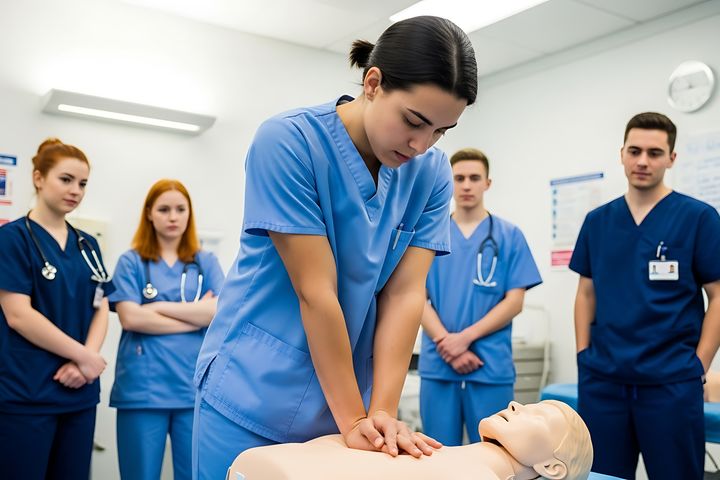

As workers in healthcare settings, Certified Nursing Assistants (CNAs) may encounter situations in which they're expected to initiate or assist with cardiopulmonary resuscitation (CPR). In Florida, CPR certification is not a requirement for obtaining a CNA license from the Florida Board of Nursing, under the Department of Health. Instead, formal CPR certification is often mandated at the level of the employer, influenced by compliance and patient care standards.
In this guide, we'll go over the specific CPR certification requirements that Florida healthcare facilities can implement for their CNA employees, and the reasons for doing so. We'll also discuss federal-level regulations that may impact requirements for staff, and what to do if CNA candidates (or staff members) don't have current CPR certification.
What Kind of CPR Certification Do CNAs in Florida Need to Have?
The most common form of CPR certification that individual healthcare organizations require of their CNA employees is Basic Life Support (BLS) certification. In Florida, as in other states, nearly all healthcare workers who provide direct patient care are required to hold this certification. More specifically, healthcare workers need BLS certification that's intended for healthcare professionals. This variety covers cardiopulmonary resuscitation in more depth than some other certification programs (such as those intended for the general public).
What Organizations Offer BLS Certification for CNAs?
The American Heart Association (AHA) and the American Red Cross are the main organizations that offer BLS for healthcare providers courses and certifications. Many hospitals in Florida require AHA CPR certification exclusively, because of this organization's research-backed coursework and rigorous passing requirements.
Federal Laws That Influence Requirements for CPR Certification
Florida facilities that adhere to The Centers for Medicare and Medicaid Services (CMS) compliance standards must ensure that there are sufficient staff members on site to perform the appropriate level of CPR. In addition, Medicare- and Medicaid-certified Florida nursing homes must ensure that all care team members hold CPR certification for healthcare providers. This mandate further requires hands-on practice and skills testing, meaning CNAs can't take a course for Florida CPR certification online only.
Steps For the Florida CPR Certification Process
If you employ CNAs on your team, you'll need to be aware of the steps involved in CPR certification. Florida facilities abide by a range of laws and regulations that are facility-specific, but the gold standard is to ensure that the CNAs can safely participate in emergency response within their scope of practice. This often entails requiring the completion of the American Heart Association CPR certification. Florida CNAs can take the following three steps for obtaining CPR certification.
1. Research CPR Course Options and Select a Course
First, the CNA will need to gather information about course offerings that will meet employer requirements. Florida healthcare facilities are responsible for setting specific requirements (rather than state laws setting the standard), so this research will vary. If a hospital requires AHA's BLS Certification for Healthcare Professionals for their CNA employees, research and course selection can be done online.
Tips:
- Since CMS requires hands-on training, facilities may require CNAs to take a course that involves in-person participation.
- In the case of getting certified by the American Heart Association, CPR course selection will involve contacting a local AHA-associated training center and reserving a place in an instructor-led class.
2. Take the CPR Course and Pass an Assessment
Next, CNAs must participate in the coursework either online, in-person, or a mix of both. The coursework typically takes three to five hours to complete, and will walk the CNA through different response scenarios for a range of patients. Course participants then must pass a test to obtain certification.
Tips:
- Remind your CNA candidates and employees that CMS requires both hands-on practice and an in-person assessment of skills. In-person classes are limited in size, and may fill up quickly.
- Due to scheduling issues and logistics, in-person training and testing can take longer to complete and requires advanced planning. Track impending expiration dates for your team and provide reminders months in advance.
3. Maintain CPR Certification
Certification typically lasts two years, though some employers and oversight agencies ask workers to renew more frequently. After obtaining initial certification, CNAs can take renewal courses that are designed to refresh skills in a slightly shorter timeframe (such as four hours instead of four-and-a-half).
Tips:
- Since the Florida Board of Nursing doesn't oversee CPR certification, CNAs and their employers must work together to ensure certification is renewed before it expires.
- The Florida Board of Nursing requires CNA's to participate in 24 hours of continuing education biannually to maintain their license. One category of CE required is called CPR skills.
- Some CPR coursework can count toward CE credits if it's documented properly.
What Can a Facility Do If a Florida CNA's CPR Certification Isn't Current?
If you're in the process of hiring a CNA who does not have current CPR certification to the degree your facility requires, ask them to obtain the appropriate certification before they begin work.
If you discover that a CNA staff member doesn't hold CPR certification, and your facility requires it, it will be important to enforce the requirement through appropriate action (such as not scheduling the employee until the requirement is satisfied). The same is true in the case of expired CPR certifications. Florida facilities that engage nursing assistants in work while their CPR certifications are lacking can put patients and their organization at risk.
Connect With CNAs Who Are Matched to Your Role
In Florida, CPR certification is just one of the credentials a high-quality CNA candidate will bring to the table. Want to reach the right CNAs for your applicant pool? Share the position on our clinician-focused job board to easily connect with qualified, engaged candidates near you.