

The National Committee for Quality Assurance (NCQA) is an independent, nonprofit organization that was founded in 1990 with the mission of improving the quality of American healthcare. NCQA accreditation indicates that a healthcare organization has met specific benchmarks. Consumers often view it as a "seal of approval" that signals trustworthiness. Some federal- and state-run programs rely on it as proof of a healthcare system's ability to provide care to certain patient populations, such as Medicaid beneficiaries.
Meeting NCQA standards can help healthcare organizations receive higher reimbursement rates, bid on contracts that would otherwise be restricted, and win the business of healthcare consumers. In this guide, we'll provide an overview of their accreditation programs and discuss the steps involved in earning this status.
An Overview of NCQA Accreditation Programs
NCQA was founded by Margaret O'Kane, a former respiratory therapist with first-hand experience of providing patient care in hospitals. Over the years the committee has become a prominent third-party organization within the industry, protecting consumers and guiding healthcare plans and organizations toward higher standards.
The committee has evolved alongside the changing healthcare industry, and now addresses a wide range of settings and services. Here are some of the accreditation programs they offer:
- Health Plan Accreditation
- Behavioral Health Accreditation
- Health Outcomes Accreditation
- Virtual Care Accreditation
- Community-Focused Care Accreditation
- Credentialing Accreditation
FAQ About National Committee for Quality Assurance Accreditation
As healthcare delivery models shift toward more integration, National Committee for Quality Assurance accreditation status has become increasingly important. While entities such as The Joint Commission provide oversight for physical healthcare sites, additional types of watchdog services are required for healthcare systems that integrate insurance coverage with medical care. NCQA meets that need, and more. Here are answers to some of the most frequently asked questions about their accreditation programs and processes.
What is the NCQA's role in healthcare?
They provide objective oversight within the healthcare industry, often through evaluation and approval processes. For example, they have accreditation and recognition programs that help healthcare organizations achieve high care quality standards and then demonstrate them to consumers.
They also provide an array of services in other areas of quality improvement, such as an education branch that offers courses. In addition, they maintain a large database of health information that can help providers see how their quality metrics stack up against national averages.
What is the National Committee for Quality Assurance known for?
They are primarily known for two core contributions to the healthcare industry:
- Healthcare Effectiveness Data and Information Set (HEDIS): This is a set of performance measures that can be used to help consumers compare health plans.
- Health Plan Accreditation: This is one of their most popular accreditation programs, utilized by health plans to demonstrate a commitment to quality care. It's estimated that over 173 million people are enrolled in health plans that have earned this status.
What are the benefits of becoming accredited?
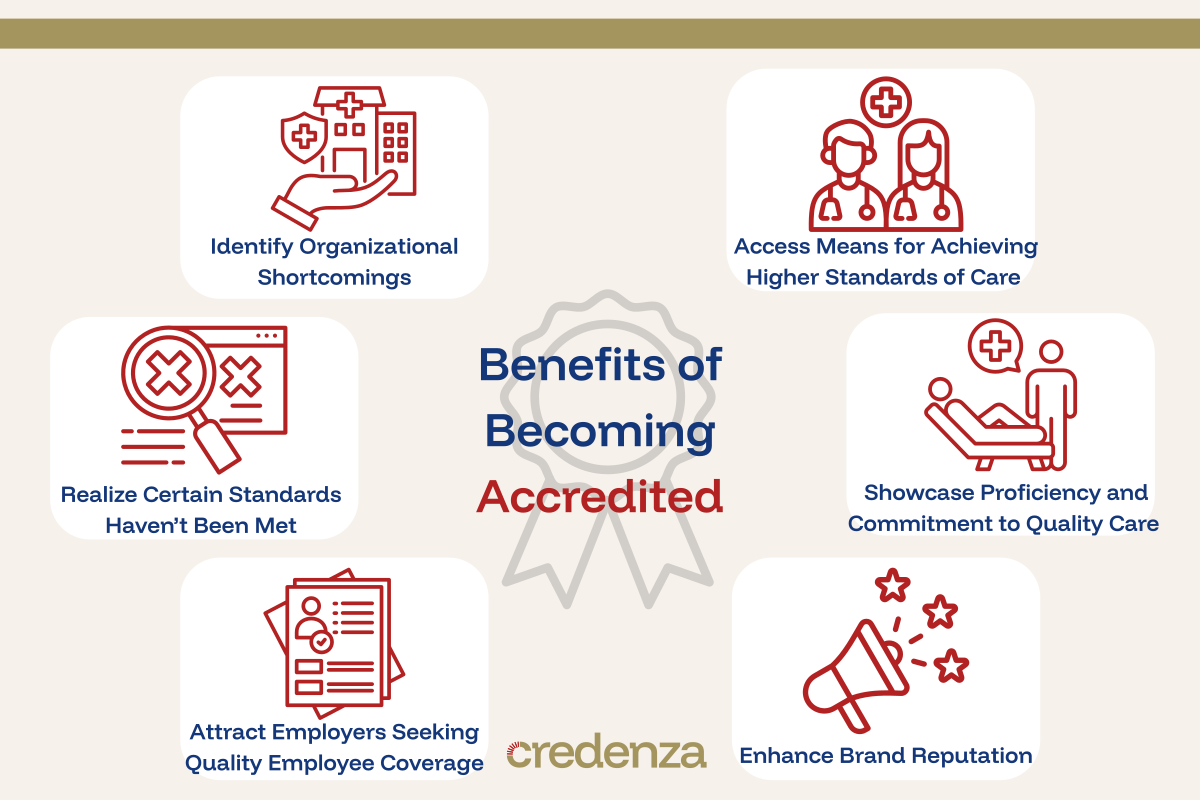
Earning this status can help healthcare organizations in many areas, from operations to marketing. Some of the top benefits of meeting NCQA standards are:
- Identification of organizational shortcomings and methods for fixing them.
- Access to tools, data, and frameworks for achieving higher standards of care.
- Verification that many additional regulatory standards have been met.
- Showcasing proficiency and a commitment to quality to patients.
- Attracting employers looking for high-quality coverage for their employees.
- Enhancement of brand reputation
Do some states require certain types of NCQA accreditation?
Yes. Some states use NCQA survey results to inform decisions related to government-run health programs. For example, Michigan requires some Medicaid plans to earn the committee's Health Equity Accreditation to demonstrate their capabilities related to social determinants of health. In addition, 27 states require Health Plan Accreditation for health plans serving Medicaid beneficiaries.
What is the accreditation process like?
The exact process differs according to the specific program as well as the organization's level of readiness. In general, it takes about 12 to 15 months. Specific steps vary by program. As an example, here's a look at the steps involved in the Credentialing Accreditation process:
- Engage in a phone consultation with a program expert.
- Purchase program resources, such as the appropriate guide and tool kit.
- Identify areas where changes will need to be made. This is called a "gap analysis."
- Turn in a pre-application form and the online application.
- Engage in work to help your organization meet the applicable standards.
- Start the survey process by submitting the requested information. Schedule your survey.
- Undergo the survey.
- Receive feedback and results, and potentially earn accreditation.
Get More Healthcare Leadership Insights
Earning NCQA accreditation is just one way to showcase your organization's commitment to excellent care. Looking for more ways to take your facility to the next level? Check out our evidence-based healthcare leadership guides and resources, created to inspire high-quality services.