


A health information exchange (HIE) refers to a network that enables providers to securely access and share critical medical information with different organizations. These networks have become pivotal tools in care delivery — offering improved efficiency and accuracy in essential healthcare communications.
Enabling the safe flow of patient health data among organizations is vital to positive patient outcomes. It's also critical to healthy revenue cycles and compliance. Participating in an HIE can help providers secure higher reimbursement rates, while failure to participate could result in penalties for "information blocking" under the 21st Century Cures Act.
If your facility is considering joining a new HIE network, it's important to ensure compliance with all relevant guidelines and regulations. In this article, we'll provide an overview of how an HIE works and outline five best practices to help you maximize its utility.
What Is a Health Information Exchange?
This term broadly refers to the act of exchanging patient data with two or more providers or healthcare organizations. However, it's also commonly used to refer to the actual system or network facilitating this exchange. The purpose of an HIE is to ensure that patient data can be conveniently and securely shared among different healthcare stakeholders.
Different Types of HIEs
HIEs are generally equipped to support three main types of exchanges. We'll discuss what these exchanges involve below.
- Directed exchanges allow two or more providers to send encrypted messages to each other over the internet. This is commonly used when providers need to coordinate patient care orders (e.g., patient referrals or discharge summaries).
- Consumer-mediated exchanges give patients the ability to manage their own health information over the internet. An example of this is a patient portal that allows patients to update their intake forms and make payments online.
- Query-based exchanges enable providers to retrieve or request patient information from another provider or organization. This is often used during emergencies or unplanned procedures.
How Does an HIE Work?
There are many different models, systems, and approaches to supporting HIE. But, in general, facilities must first join a service or network overseen by a trusted health information exchange organization.
Similar to how mobile phone carriers enable people to call and message each other, an HIE organization provides a secure network that connects information systems across different facilities. Once a facility joins a network, they're able to more seamlessly transmit data to and from other facilities within the same network.
As the industry moves toward greater interoperability, federal oversight agencies are actively facilitating a network-of-networks model, primarily through the Trusted Exchange Framework and Common Agreement (TEFCA). This model replaces former reliance on small-scale HIE networks with bigger, national networks called Qualified Health Information Networks (QHINs).
What Are Some Health Information Exchange Examples?
Since HIE participation can take multiple forms, it may be helpful to consider the following real-world examples.
Epic Nexus: Launched in 2023, Nexus is a government-approved QHIN. It gives Epic users access to TEFCA, the largest national information exchange network-of-networks. Thousands of hospitals and clinics use Epic's Nexus platform to connect to TEFCA, which allows them to then connect to other government-approved QHINs.
eHealth Exchange: Another government-approved QHIN, this platform gives users access to regional HIEs as well as other QHINs through TEFCA and another network-of-networks, Carequality. This platform enables approximately 20 billion data exchanges per year.
How Is Data Stored Within an HIE Network?
The way that data is stored will largely depend on the HIE organization that's supplying services. Some organizations regulate a centralized platform where data from all facilities within their network is collected and stored in a single repository. Other providers enable facilities to maintain ownership over their patients' information, and access to this data is granted to others only when needed.
What Are the Benefits and Drawbacks of HIEs?
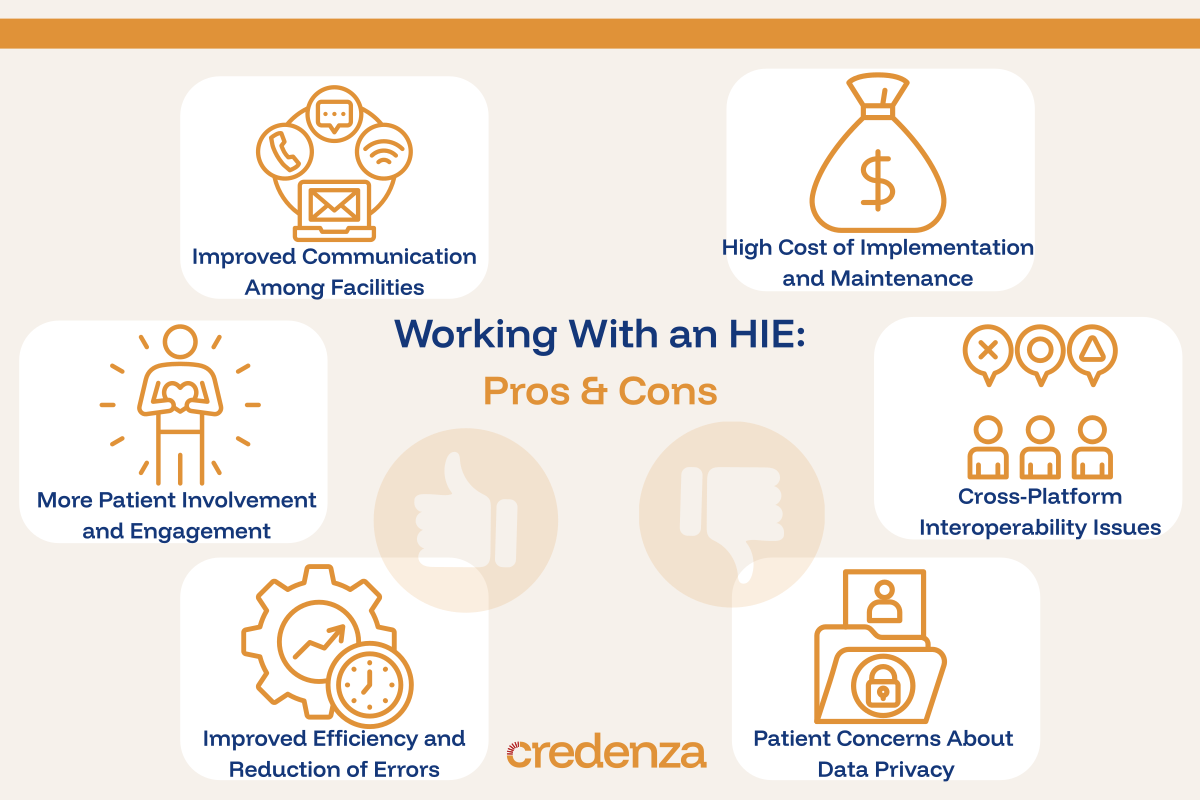
Given that most medical information is shared electronically, the benefits of health information exchanges are abundant, including:
- Improved communication and coordination among different healthcare facilities.
- Enhanced patient engagement.
- Improved efficiency and reduced risk of medical errors.
- Better patient outcomes related to the availability of more data at the point of care.
However, like any complex tool or process, there are also challenges associated with HIEs, such as:
- High costs of implementation and maintenance.
- Interoperability challenges between different information systems.
- Patients may have more concerns about the security of their data.
Can Patients Opt Out of HIE Network Participation?
Yes. Healthcare systems that participate in information sharing networks often supply patients with an opt-out form to support their right to choose. Finding the right balance between data availability and security is a significant interoperability challenge. Despite the many advantages of health information exchange networks, some patients prioritize data security over sharing, and choose to opt out.
What Regulations Govern the Use of HIEs?
HIEs must comply with all federal and state regulations related to patient privacy and data security, such as the Health Insurance Portability and Accountability Act (HIPAA). However, the Office of the National Coordinator for Health Information Technology (ONC) also oversees more specific rules pertaining to HIE. These rules are outlined in the 21st Century Cures Act.
5 Best Practices for Using an HIE
While HIEs promote data sharing across different healthcare organizations, it's important to ensure your facility has a sound strategy to support these exchanges. Here are five best practices to follow when adopting a new system or network.
1. Identify the Type of Network Your Facility Needs
Your facility can join various types of networks to support the exchange of health information. Some states regulate their own networks to facilitate regional data sharing, while national exchange networks, such as designated QHINs, enable facilities to connect with broader networks of organizations across the country. On a smaller scale, EHR vendors may also provide HIE integration options. You may decide to participate in multiple networks.
2. Partner With Trusted Vendors and Organizations
Given the concerns around data security, it's important to partner with HIE vendors and organizations that comply with all relevant regulations. If you're joining a national network, ensure the network is part of TEFCA. You can find a list of health information exchanges that are officially recognized by this agreement through the ONC.
Similarly, all regional networks should be endorsed by your local government. It's also important to thoroughly vet EHR vendors that offer HIE services and enter a Business Associate Agreement before entrusting your patients' information to these vendors.
3. Ensure Data Entry Processes Support Interoperability
Once you join an HIE network, there are other steps your facility should take to enhance interoperability. One of the most effective strategies is using standardized forms for recording patient data, which can ensure consistency in how information is exchanged across systems.
For example, let's say your providers use free-text notes instead of structured forms to document patient medical histories. If they transfer a block of text to another facility, the recipient may overlook or misinterpret important details. Having a more structured documentation process can ensure that patient data is more accurately captured and shared between providers.
4. Enhance Access Controls at the Facility Level
When data is transferred between organizations, it must be secured at every step of the process. This means that you should also take measures to control who can view, modify, or access data that is transmitted to your facility. Having proper access controls on your data information systems, such as passwords and dual authentication, can help ensure that only authorized personnel are viewing patient information.
5. Educate Staff on Best HIE Practices
You'll also want to ensure that the staff responsible for exchanging information understand how to maintain the security and integrity of patient data. At baseline, staff should learn how HIPAA applies to HIE and ways to support interoperability in their everyday documentation. Here are some professionally vetted resources that you can use to facilitate this training:
- Health IT interoperability course for providers
- Health and Human Services HIPAA training materials
- National Rural Health Resource health information toolkits
Discover More Ways to Streamline Your Care Practices
Now that you know how to optimize your health information exchange practices, you may be seeking other ways to streamline your care services. Stay ahead of the curve with our latest healthcare news and insights, crafted by Credenza's team of nursing and legal experts.