


Due to physician shortages and shifting provider preferences, hospitals and other facilities are increasingly reliant on the PSA in healthcare — or, professional services agreement — as an alternative to standard employment for securing provider services. This arrangement represents a partnership that is meant to be favorable to facilities and providers alike.
In this article, we'll give a brief overview of PSA agreements in healthcare and address commonly asked questions, such as What is a PSA in a hospital? and What benefits do they offer facilities and physicians? We'll also provide five best practices for using one at your facility.
What Is a PSA in Healthcare?
In the healthcare industry, the abbreviation PSA can stand for professional services agreement. This is a hospital-provider agreement in which a facility enters into a contract for the services of a provider (or medical group) instead of hiring them as a full-time, W2 employee. These agreements can serve institutional needs while allowing the provider (or group) to remain autonomous.
This system is one of multiple alignment models that are intended to promote provider and facility collaboration. Other alignment model examples include leased practice agreements and management service agreements.
What Is Typically Included in a Hospital PSA?
Many types of businesses use PSAs to define their working relationships with external experts. Healthcare leadership may have the question, What is a PSA in a hospital context supposed to cover? Important aspects of a hospital PSA contract may include:
- Obligations to comply with applicable statutes and regulations, as well as confidentiality requirements.
- The scope of responsibilities, assets, and provider obligations.
- Compensation structures and payment dispersal schedules.
- An explicit timespan and grounds for termination of the contract.
Facilities often customize their arrangements based on operational needs. For example, a hospital in need of emergency department coverage may elaborate on this in their PSA contract, meaning specifics such as on-call hours and response times will be defined.
Although much of the discussion around healthcare PSAs involves hospitals, PSAs can also be used to contract with providers for many organizations, including outpatient ambulatory centers, home health agencies, and outpatient imaging centers.
What's the Benefit of a PSA Agreement?
PSAs offer many benefits to healthcare facilities struggling to recruit full-time specialists. Here are some advantages to consider:
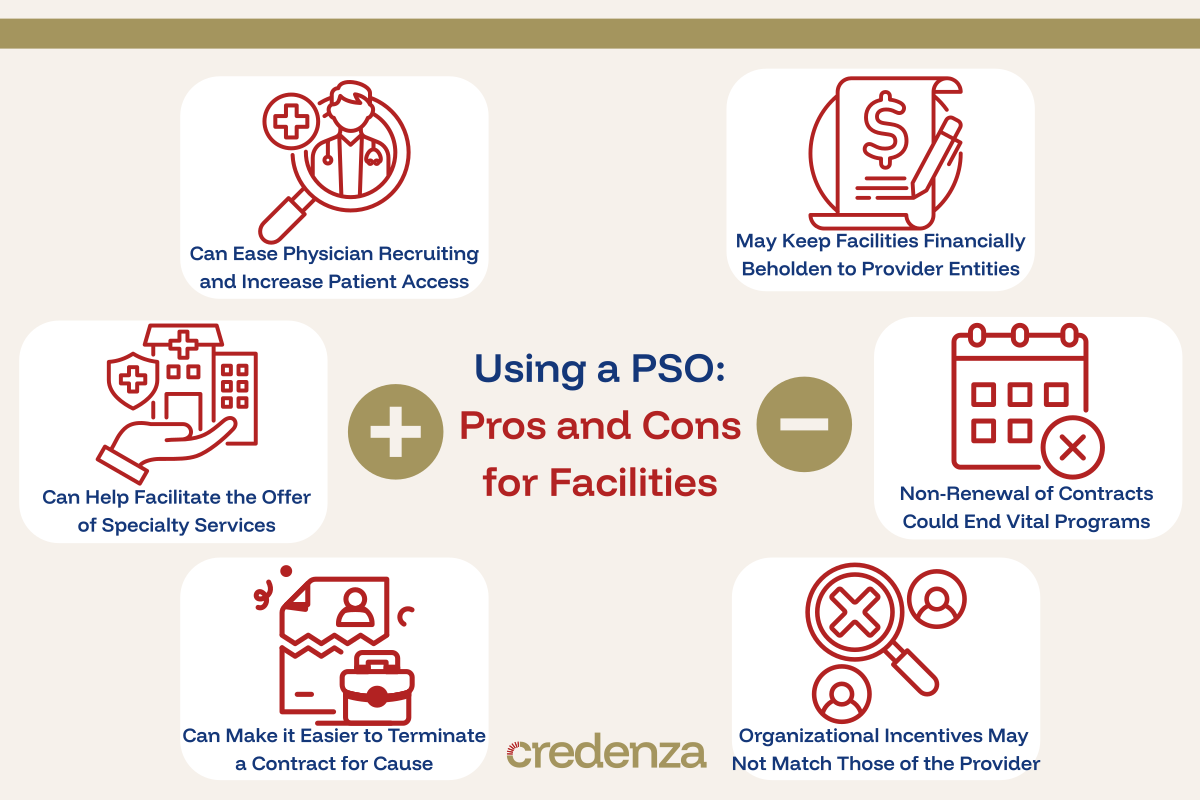
- The PSA can ease physician recruitment challenges, reducing the burden of the existing team and increasing patient access to medical services.
- It may allow facilities to offer specialty services that weren’t previously available, such as complex oncology programs.
- If the provider-to-facility alignment doesn’t work out, it can be easier to terminate a contract, protecting the institution from unproductive, non-collaborating ties.
Some physicians also seek out and appreciate these arrangements due to the advantages they offer. Here's a closer look at the benefits physicians may experience when entering into a PSA in healthcare:
- Increased flexibility and independence, often reducing the administrative burden that comes with full-time employment.
- Greater number of referrals, and the use of market-based compensation, can benefit practice profits.
- Because they control their own benefits, providers may be able to keep favorable pensions despite changing facilities.
What's the Downside of a PSA Agreement?
As with anything, though, there can be drawbacks. Here are obstacles and challenges that facilities may encounter:
- A PSA may keep facilities financially beholden to provider entities even when promised services are not being rendered.
- If a provider introducing new medical service offerings doesn’t renew their contract, vital programs may suddenly become unavailable.
- Organizational incentives may not match those of the provider, leading to mismatched priorities and difficulties in achieving facility goals.
Physicians entering into these arrangements must also contend with limitations, including the following:
- Many providers are wary of the PSA as simply a gateway to full-time employment rather than a model for maintaining practice autonomy.
- Contract stipulations may restrict the provider’s practice, resulting in increased overhead and loss of independence.
- PSAs may not provide a safe harbor for providers from the Anti-Kickback Statute (AKS).
Using a PSA in Healthcare: 5 Best Practices
As with any contract, negotiation is often key to ensuring the PSA model meets your facility's needs. As you develop your agreements alongside designated legal and administrative experts, here are some additional tips to consider.
1. Align All PSAs With Institutional Goals and Plans
To avoid mismatched provider and organizational goals, facilities should ensure that forward-looking objectives are known, with standards to ensure their long-term adherence.
Suggestions:
- Stipulate relevant quality metrics into agreed-upon reviews.
- Conduct regular evaluations to revisit alignment goals.
- Develop job expectations that reflect institutional priorities.
2. Define Expectations and Denote Assets Clearly
Not only does this establish institutional requirements, thus ensuring provision of necessary care, but it also avoids the potential for commingling assets and compromising the PSA's integrity.
Suggestions:
- Clarify job duty expectations including (but not limited to) licensure and qualification requirements, roles, responsibilities, work hours, and on-call obligations.
- Identify payment structures and methods.
- List assets and clearly denote which belong to the contracting organization and which belong to the provider entity.
3. Standardize and Automate Where Possible
This can decrease the initial costs associated with contract negotiations and implementation and help streamline payment processes, often easing data review and spotlighting spending shifts.
Suggestions:
- Develop a standard PSA template to better track covered services and assets provisioned, and to help keep systems equitable.
- Automate payment to ensure providers receive timely and adequate compensation.
- Automate review systems to assess data for inconsistencies and potential noncompliance, where applicable.
4. Allow for Flexibility Within the Contract
Whether you're addressing work schedules or separations, allow for flexibility to help protect the healthcare organization in case of unforeseeable changes. Physicians often value flexibility when entering into a PSA with a hospital, meaning that allowing for changes over time may help to attract quality providers.
Suggestions:
- Include a process for creating amendments to the PSA.
- Consider termination clauses and potential events that might necessitate separation.
- If using a template, highlight sections where deviations to suit different provider and therapy requirements are allowable.
5. Ensure Regulatory Compliance
Facilities and providers alike must maintain compliance with governing statutes and regulations such as the AKS, Stark Law, and False Claims Act. Avoiding violations can save institutions and providers from penalties, fees, and even criminal charges.
Suggestions:
- Ensure legal parameters and confidentiality criteria are included in all PSAs.
- Establish oversight committees to monitor outcomes and compliance.
- Perform routine compliance audits.
Curious About Other Methods of Securing Talent for Your Facility?
Even with the assistance of a PSA, in healthcare, physician shortages and staffing challenges are a hard issue to tackle. That's why we're dedicated to serving facilities with strategies and resources for modernization to help improve efficiency, recruitment, and retention.