

| In This Article |
|---|
|
You visit your grandad in the hospital, and a wound care nurse comes to look at the sore on his toe. They assess closely, ask about his history, and have an arsenal of supplies at the ready. By the time they leave, your grandad’s toe is dressed in a specialized hydrogel dressing, and he has a new plan to care for it when he goes home.
This is just one of the ways wound care nurses help patients by treating and managing complex wounds. Seeing patients heal and gain back quality of life can be a highly rewarding aspect of this role. A wound care nurse career allows you to get to know your patients and watch their progress over time. And wound care is a developing specialty, presenting opportunities for ongoing learning and career advancement. Here’s what to know.
What Is a Wound Care Nurse and What Do They Do?
Wound care registered nurses (RNs) specialize in assessing, treating, and educating patients on caring for wounds. They tend to see more complex or chronic wounds, which affect nearly 2.5% of the U.S. population. They also treat surgical wounds, traumatic wounds, and burns.
A nurse in this role generally doesn’t pass medications, do full-body assessments, or help discharge patients like a staff nurse does. Instead, their work is focused on assessing and managing wounds, as well as patient education. They do extensive chart reviews, manage chronic disease, and make discharge plans for patients going home with wounds.
See these examples of tasks these nurses might perform on a shift:
- Consult on a patient with a new stoma (a surgical opening to the abdomen).
- Educate a bedbound patient and their family on pressure ulcer prevention.
- Evaluate a venous ulcer that has excessive drainage.
- Review a patient’s labs, vascular status, nutrition, ambulation, history of smoking, and family history to understand the root cause of a nonhealing ulcer.
For more insight into this role, have a look at a sample job description for a wound care nurse.
Wound Care Training for Nurses: Treatments and Tools
Wound care nursing combines precision treatment techniques with a deep knowledge of wound and skin physiology. They treat post-op patients, dealing with chronic illnesses, and healing from injuries.
Here are some of the types of wounds that these nurses commonly see:
- Stomas and ostomies: These are chronic surgical openings that help patients evacuate stool and urine from their abdomen. The skin around these openings can become damaged by moisture. They require specialized cleaning, maintenance, and equipment.
- Diabetic foot ulcers: Chronic wounds can occur on the feet of individuals with diabetes, often due to poor circulation and nerve damage.
- Post-surgical wounds: While some patients will have a closed wound with stitches after surgery, many surgical wounds are left open to heal over time, requiring ongoing wound maintenance.
- Pressure injuries: Especially in elderly and less mobile patients, pressure injuries can occur on the sacrum, elbows, heels, and back of the head. Medical devices like endotracheal tubes, Foley catheters, and feeding tubes can also cause pressure injuries.
Wound care RNs use a range of treatment tools. Wound care technology is constantly evolving, and these nurses stay up to date on the latest standards of care. Examples of these tools include:
- Negative pressure devices promote blood flow, reduce infection risk, and remove exudate from wound beds.
- Hyperbaric oxygen therapy increases oxygen levels in tissue to promote healing and reduce inflammation.
- Topical antibiotics are necessary when the bacterial load in a wound leads to infection. Medical-grade honey is another topical solution used to lower bacterial load.
- Packing supplies are used to soak up drainage and help wound tissue heal from the inside out.
- Advanced dressings include hydrocolloids, hydrogels, alginates, and foam dressings.
In collaboration with physicians, wound care RNs help create and manage care plans, combining these treatments to give patients the best outcomes possible.
Where Do Wound Care Nurses Work?
You can find wound care nurses in acute care, skilled nursing facilities, dedicated wound units, and more. There are several settings where these nurses are an essential part of the team, such as:
- Ambulatory settings (for example: dermatology, primary care, vascular, and surgery offices).
- Specialty wound clinics, where patients with chronic or complex wounds come in regularly for assessment and care.
- Wound and ostomy care teams, who see patients in acute care settings and create treatment plans.
- Wound and burn units, where nurses care for patients who need acute medical support and early healing care.
- Home care teams, who come into patients’ homes or facilities to do assessments and care.
- Post-acute care, such as a skilled nursing facility or rehab, where nurses assess, treat, and document patients’ wounds.
How Much Do WOC Nurses Make?
The average salary for wound care nurses is around $102,000 per year. Your exact pay will depend on where in the country you’re employed, facility type, years of experience, and certifications. To see what you might earn, check out the latest wound care nurse jobs.
What Are the Steps to Becoming a Wound Care RN?
If you haven’t started nursing school, it can take four to six years to get your nursing degree, pass the NCLEX, and gain experience in wound care. Learn more through the steps below.
1. Earn a Nursing Degree
The first step is to earn a nursing degree. This means a Bachelor of Science in Nursing (BSN) or an Associate Degree in Nursing (ADN) from an accredited institution. BSNs are increasingly preferred in this specialty and others. Learn more about comparing ADN vs. BSN degrees.
During nursing school, you’ll take classes on anatomy and physiology, pathophysiology, pharmacology, and assessments. You’ll also rotate through clinical training in the hospital, in clinics, and in other care specialties to gain necessary hands-on experience. If you’re particularly interested in wound care, you might ask for a clinical placement at a clinic or with a wound care team.
2. Pass the NCLEX for Your RN License
After graduation, you’ll need to pass the National Council Licensure Examination for Registered Nurses (NCLEX-RN) in the United States. This standardized test assesses your readiness to begin practice as an entry-level nurse. Successfully passing the NCLEX demonstrates your competence in basic nursing skills, and once you pass, you’ll be an RN. Learn more about the newest NCLEX.
3. New Grad Residency
Once you have your license, you’ll enter the nursing profession as a new graduate nurse. Nurse residency programs help prepare new grads with extended preceptorships and classroom learning. It’s rare, but you might be able to go directly into a residency in a wound care clinic or unit. Otherwise, you’ll likely need to get one to two years of experience in another area (such as med-surg, oncology, or cardiac care) before transitioning into wound treatment.
In large hospitals, a wound care team sees patients who have specific orders for wound care. To join this specialized team, you’ll typically need experience, and teams generally require one or more wound care certifications.
4. Certification Options
The Wound, Ostomy, and Continence Care Nursing Certification Board (WOCNCB) is the leading certifier in this area and can help you further your wound care nurse career. The WOCNCB requires a BSN for certification, and you’ll need to have several years of experience to qualify for certification as a wound care nurse. Career advancement certifications in this specialty include:
- Certified Wound and Ostomy Continence Nurse (CWOCN)
- Certified Wound Care Nurse (CWCN)
- Certified Ostomy Care Nurse (COCN)
- Certified Continence Care Nurse (CCCN)
- Certified Wound Ostomy Nurse (CWON)
- Certified Foot Care Nurse (CFCN)
- Wound Treatment Associate (WTA)
With experience, you might choose to pursue even more education as a wound care nurse practitioner. NPs have two or more years of experience as an RN, as well as a master’s or doctoral degree. There are additional certifications NPs can acquire within the wound care specialty:
- CWCN-AP
- COCN-AP
- CCCN-AP
For another certification option, consider becoming Wound Care Certified (WCC) from the National Alliance of Wound Care and Ostomy (NAWCO) or a Certified Wound Specialist (CWS) from the American Board of Wound Management (ABWM).
Can an LPN Work in Wound Care?
Yes, but they might not be able to practice in every wound care setting. Depending on your state, LPNs may be able to perform wound assessments and care under the supervision of an RN. LPNs can become wound care certified as Wound Treatment Associates (WTA). Explore the latest LPN wound care jobs to see what’s available.
What Are Some Good Qualities to Develop in This Role?
Do you have what it takes to work in wound care? Check out the top skills below:
Focused Assessments
Most nurses in this specialty don’t pass medications or chart full-body assessments. Instead, their focused assessments include wound size, depth, edges, surrounding skin condition, presence of drainage, and any other factors that impede healing.
Professionalism
If you’re interested in wound care, you’ll need to be able to tolerate strong smells and visually distressing wounds. Patients often can’t control how their wound looks or smells, and they might be embarrassed. You’ll need to maintain professional composure even in challenging situations.
Proper Cleaning and Dressing
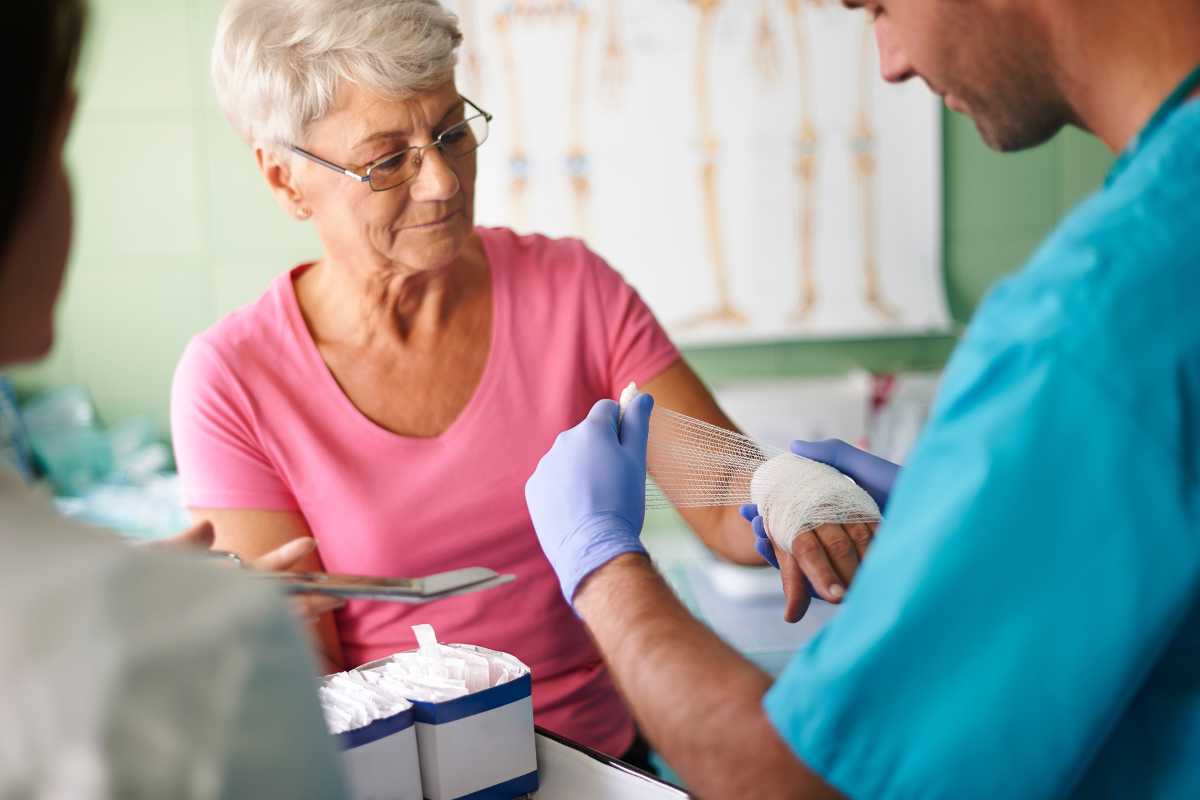
These nurses are meticulous, and every step of cleaning and dressing is thorough. Be ready to cleanse, remove debris and bacteria, irrigate, and re-dress wounds with care and precision. Wound care nurses have a healing toolkit that includes silver-based dressings, gauze, gel dressings, antimicrobial solutions, and more.
Precise Documentation
As in every specialty, accurate documentation helps with team communication and care continuity. Wound care RNs chart wound depth, cleansing techniques, dressing changes, patient education, pain levels, and developments in the care plan.
Patience
Wounds don’t heal overnight, and patients with diabetes or venous problems can have chronic wounds for months, years, and even indefinitely. Wound care and maintenance require patience with wound healing and education.
Empathetic Rapport
Since wound and ostomy care can be uncomfortable and embarrassing for patients, you want to be able to put people at ease. In clinics, you might see patients repeatedly for months or years. Patient assurance and the ability to build rapport with empathy are essential wound care nursing skills.
Find Your Next Wound Care Nurse Opportunity
Want to find job opportunities in wound care and other specialties? Learn how we can match you with quality nursing jobs that match your expertise, location, and preferred care setting.