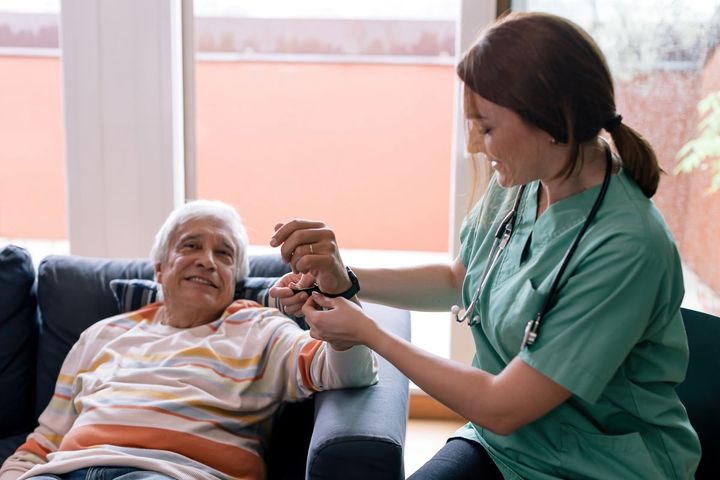

Wearables in healthcare have evolved well beyond simple communication instruments like cell phones and Vocera Smartbadges. Now, they can directly impact the direction of care through patient wear, enabling continuous monitoring of certain vital signs, cardiac rhythms, and other health metrics.
The opportunity for real-time, ongoing health data reflects the foundational value of these devices, providing healthcare professionals with a clearer picture of a patient’s condition and supporting more informed clinical decision making. But what are some other specific benefits of wearable technology in healthcare? In this article, we’ll answer that question by providing a list of their top five organizational benefits in addition to an overview of how wearable technology and healthcare’s latest monitoring devices are influencing the future of care.
These insights can help you better evaluate today’s top wearable health devices, making more informed equipment investments and supporting stronger patient outcomes.
What Are Wearables in Healthcare?
Examples of healthcare-adjacent wearables have become increasingly commonplace throughout the U.S. Many adults now routinely use smart devices to track health metrics, activity levels, and lifestyle patterns (including sleep hygiene).
Healthcare professionals also frequently rely on wearable devices to support day-to-day operations, whether it’s a Vocera, pager, or even an employee badge that allows entrance to restricted-access spaces. Historically, patient-facing wearables centered on cardiac monitoring through telemetry systems. While effective, these devices typically relied on bulky equipment, cumbersome wires, and limited communication ranges that, when combined, significantly restricted patient mobility.
Advances in wireless connectivity, device design, and remote monitoring technology have since transformed healthcare wearables into comfortable tools capable of continuously transmitting patient data over long distances. Today, clinicians can monitor vital signs, cardiac rhythms, glucose ranges, activity and stress levels, and other patient metrics, all remotely.
Common examples of wearable devices in healthcare include:
- Smart watches, such as those made by Apple, Garmin, and Samsung.
- Smart rings, offered by brands including Nova and Oura.
- Fitness trackers, including the FitBit step tracker and WHOOP wearable.
- Connected clothing, such as smart socks that monitor skin integrity for patients with diabetes, and smart belts which are designed to improve balance and mobility.
- Smart medical devices, like blue-tooth enabled hearing aids that can test for auditory changes, wirelessly communicating the results to connected devices and providers.
- Biosensor patches, from Hicardi’s EKG-monitoring patch to emerging sensors capable of identifying skin cancer and other health abnormalities.
- Continuous glucose monitors (CGMs) such as the FreeStyle Libre system, which provides continuous updates on patients’ blood sugar levels.
- Infant-specific wearables, like the Owlet system, which monitors a baby’s heart rate, oxygen saturation, and sleep pattern to provide caregivers with peace of mind.
Possible Disadvantages of Wearable Technology in Healthcare
The future of wearable technology in healthcare requires careful consideration of the devices’ potential challenges alongside the advantages. One of the primary concerns is cybersecurity. Because wearable systems continuously collect and transmit patient information, every connected device represents another potential access point for unauthorized users and a data breach. To ensure robust data security, wearable transmission systems must be fully secured.
From the nursing perspective, additional concerns include:
- Data accuracy, particularly when devices aren’t worn consistently or are used incorrectly.
- Affordability, because the cost of some wearables may limit implementation with certain patient populations.
- Technical reliability, including battery life, connectivity considerations, and device malfunction.
Wearables in healthcare also depend on active patient participation. Many devices require consistent wear, frequent charging, and proper maintenance to ensure that collected data remains accurate. However, wearable technologies have the potential to truly transform care by expanding clinical access to personalized health information and supporting individualized treatment decisions.
Wearables in Healthcare: 5 Key Organizational Advantages
By prioritizing wearable technology in healthcare, companies can support highly individualized patient care, which has many benefits. We’ll review some of the key advantages below.
1. Continuous Monitoring Optimizes Therapeutic Decision Making
Many healthcare decisions (from medication adjustments to activity recommendations) are informed by one-time clinical assessments and evidence-based guidelines, like average dosing requirements for a population. Wearable technology can enhance this decision-making process by providing continuous health information that paints a wider, highly individualized picture of the patient’s specific condition over time.
These ongoing insights can then help providers to identify concerning trends and personalize treatment plans to reflect a patient’s data-informed care needs.
Example:
When a child is newly diagnosed with epilepsy, a wearable smart watch is used to continuously monitor seizure activity and alert caregivers when an episode occurs. This in-depth collection of information regarding seizure frequency, duration, and possible triggers helps the care team evaluate treatment effectiveness, adjust medications, and recommend the appropriate safety precautions based on that child’s specific needs.
2. Wearable Technology in Healthcare Enables Proactive Intervention
With real-time health information, clinicians are empowered to proactively treat physiological concerns before they escalate into crises. The ability to establish trends within patient data also supports more accurate health forecasting, allowing providers to mitigate potential health risks using evidence.
Example:
A diabetic patient’s smart sock detects heat changes in one area of the foot. Upon receiving this information, their provider calls them in for a skin check as temperature fluctuations can indicate inflammation and growing risk for downstream ulcerations. This proactive intervention prevents the patient from developing a wound.
3. Remote, Ongoing Monitoring Can Reduce Overall Healthcare Costs
Proactive intervention can help prevent complications that may otherwise require emergency care, hospitalization, or other costly treatments. Additionally, a wearable’s continuous monitoring also helps patients and caregivers make more informed decisions about when medical evaluation is actually necessary. So, instead of relying on symptoms or a patient’s uncertainty, care teams can use objective data to recommend whether a virtual visit, office appointment, or emergency evaluation is most appropriate.
Example:
A patient with a history of atrial fibrillation worries that they’ve returned to an abnormal heart rhythm after spending the day working in the garden. They consult their care team who reviews their wearable EKG monitor data and confirms that the patient is still in normal sinus rhythm. Rather than recommending an unnecessary emergency department visit, the provider advises hydration, cooling measures, and stress reduction while outlining signs and symptoms that would warrant further medical evaluation.
4. Wearable Healthcare Devices Improve Access to Care
By improving the ability to gather patient data from afar, wearables in healthcare make medical services more accessible. In the same way that telehealth connects patients to providers, wearable technology devices can help patients fulfill important diagnostic or therapeutic measures, often from the comfort of their own home.
Example:
Geographic challenges and an inflexible work schedule have made it difficult for a rural patient to complete the sleep study needed to diagnose their suspected sleep apnea. A wearable that tracks respiratory patterns, oxygen saturation, and overall sleep quality allows the study to be completed at home. As a result, the patient receives a timely diagnosis and begins appropriate treatment (including CPAP therapy) without the logistical barriers of needing to complete the test within an official sleep lab.
5. Patient Engagement Is Encouraged by Wearable Technology
Healthcare isn’t a one-way street. High patient participation can benefit overall outcomes by improving treatment plan adherence while also supporting stronger patient loyalty, lower healthcare costs, and higher staff career satisfaction. By integrating devices that require this level of engagement, patients are drawn into their care plans as active participants, maximizing the benefits of this level of involvement.
Example:
While working to quit smoking, a patient with borderline hypertension begins to use a smart blood pressure monitor. Over time, they notice that each cigarette is followed by a measurable increase in their blood pressure. Seeing the immediate impact of smoking motivates the patient to follow their care team’s tobacco cessation recommendations more consistently.
High-Quality Staff Are Still the Heart of Healthcare
Wearables in healthcare and other technological resources are great tools, but high-quality staffing support is still central to excellent patient care. Want to keep a good pulse on the hiring market so you can connect with the right clinicians when you need them? Connect with us for free today and get instant access to our wide-range of clinically-minded resources and local hiring insights to keep your organization at the cutting edge of healthcare.