

The governance, risk, and compliance (GRC) framework is designed to help businesses perform optimally and within compliance of laws and regulations. Through the use of GRC, healthcare organizations can integrate various areas of operations to form a more resilient system.
The approach places a heavy emphasis on managing information technology (IT) and security risks to promote ethical, legal business practices. In healthcare, where cybersecurity is a paramount concern, GRC is a key tool for keeping patient data safe. But that's not all it's used for. Studies show that successful implementation can also improve care quality, patient safety, operational efficiency, and financial outcomes.
In this guide, we'll provide an overview of GRC, discuss its component parts, and answer your questions about implementation. You'll learn the signs of successful and unsuccessful strategies, and get tips about how software typically fits in. We'll also give you examples in clinical care and hiring, so that you can see how your workflows might be affected.
Healthcare Governance, Risk, and Compliance: An Overview
The GRC movement emerged in the 2000s, primarily in the financial sector, in response to corporate scandals and resulting legislation. As businesses worked to comply with increased regulations, they needed new methods for organizing workflows and internal policies.
For example, the Sarbanes-Oxley Act of 2002 mandated that company executives had to certify that internal audits were complete and accurate — thus removing the chance that a CEO could claim a lack of awareness of what was going on in certain areas of the company. Using an integrated risk management framework, such as GRC, helped businesses move toward transparency between departments.
The use of GRC expanded beyond financial and accounting firms, and has seen widespread use in healthcare — another heavily regulated industry. Over the years, the framework has evolved toward more automation. Modern healthcare GRC is heavily automated, often taking the form of a single platform that acts as a central hub for various parts of an organization.
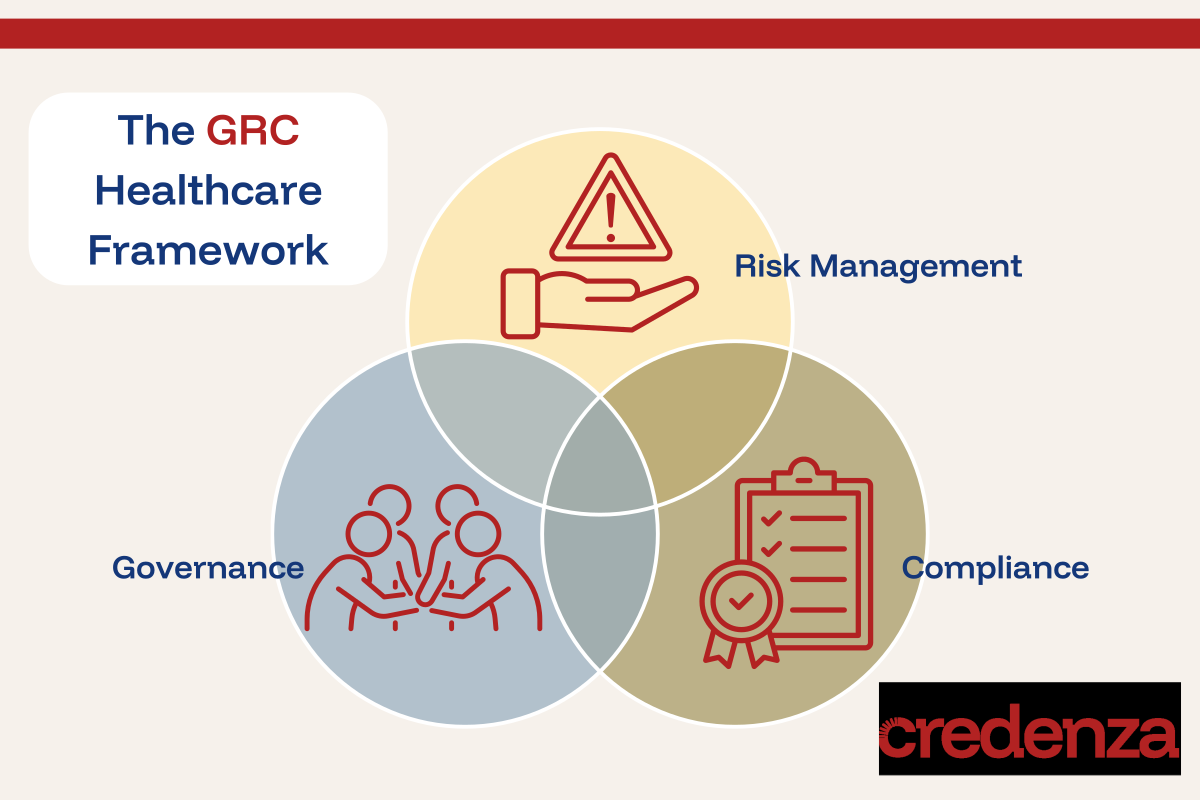
Components of the GRC Healthcare Framework
To understand the framework's structure, it's helpful to consider each part. Though the components can be defined separately, the point of the approach is to develop a web of connections between all three.
Governance
This includes the policies and procedures that leadership puts in place to guide the actions within the healthcare facility. Ideally, this internal guidance aligns with the organization's goals.
Risk Management
These are the steps that an organization takes to reduce risks that could harm patients, staff, or the organization as a whole. Risk management processes identify, assess, and respond to threats to the organization.
Compliance
This means adherence to external laws, rules, and regulations. While governance refers to internal policies, compliance is about meeting externally imposed standards, such as state and federal laws.
Using GRC for Healthcare Risk Management: FAQ
Here are answers to questions that healthcare leaders may have about how to best use this approach within their organization.
What roles and departments are responsible for GRC?
The GRC approach places emphasis on collaboration and transparency between departments. Through swift, unimpeded information sharing, organizations have more visibility into issues as they arise. This type of sharing is very different from other ways of working, and it can be difficult to achieve. These are the roles and departments that should be included and what they may be responsible for:
- Leadership enacts the policies and procedures that guide actions within the facility.
- Human resources (HR) recruits and hires employees with proper credentials, and often oversees staff training needs.
- Information technology (IT) installs and maintains the servers, networks, and computers that allow safe transfer of digital data.
- Security oversees security measures, including cybersecurity, to prevent data breaches and HIPAA violations.
- Clinical safety personnel (including nurse auditors) identify clinical care vulnerabilities to mitigate risk and prevent patient harm.
- Legal department provides guidance to limit legal exposure and protects the facility's legal rights.
- Clinicians deliver safe, compliant, ethical patient care.
- Finance oversees billing compliance.
What are some signs that a facility is lacking an effective GRC framework?
Though using GRC for healthcare is a popular strategy, it's not always successful. Challenges such as outdated IT infrastructure and a lack of skilled participation from key personnel can make implementation fall short or fail. Even if you've implemented GRC, you may see signs that it's not yet effective, such as:
- Redundant administrative work.
- Duplicated compliance-related tasks (often called healthcare's "compliance tax").
- Long response times to cybersecurity threats.
- Lack of communication between departments.
- Loss of, or failure to obtain, an accreditation.
- Poor audit results.
- Poor patient satisfaction scores.
- Poor patient outcomes.
What are some signs that a strong GRC framework is in place?
Effective GRC enables a healthcare facility to function in a cohesive manner. Successful implementation may be indicated by:
- Administrative work that is completed once and then shared appropriately.
- Compliance-related tasks that are streamlined and centralized.
- Cybersecurity threats that are quickly responded to and trigger aligned policy and workflow updates.
- Efficient communication between departments.
- Improved audit results.
- Improved patient satisfaction scores.
- Improved patient outcomes.
What are some GRC healthcare examples related to clinical care?
GRC's application in care delivery often relates to streamlined workflows between identified risks and leadership-initiated resolutions. For example, consider the following situation:
A clinician administers a scheduled blood thinning medication just before receiving notification that a lab value is outside of the medication's recommended parameters. The clinician works with management to submit an incident report via the facility's healthcare GRC software. The platform's centralized incident management hub analyzes the incident alongside multiple others of a similar nature to determine possible root causes.
A systemic weakness is identified and automated workflows trigger follow-up actions from leadership. A new policy for lab value reporting is created with help from the platform's GRC applications and tools, and automatically distributed.
Can healthcare GRC software help with hiring workflows?
Staffing and recruitment are areas of operations that can entail a high volume of administrative work to ensure compliance. When GRC is successfully applied to the hiring process, tasks are completed once and information is strategically, safely stored and shared within the organization. Through improved transparency between departments, onboarding tasks (such as identity verification for the purpose of granting access controls) are informed by the latest applicable risk management strategies.
Leverage Support to Improve Your Hiring Process
Implementing an effective GRC healthcare framework is one way to move toward improved risk management and compliance. Continue the trend by leveraging our job board services. You'll get connected to our network of pre-verified nursing professionals who are ready to provide high-quality care.