

Surveys from the Consumer Assessment of Healthcare Providers and Systems (CAHPS) are widely regarded as the industry gold standard for capturing patients’ perspectives on their clinical experiences. Developed by the Agency for Healthcare Research and Quality (AHRQ) as free, publicly available resources, CAHPS survey requirements are often set by third party organizations. The AHRQ itself doesn’t mandate participation.
Yet, mandatory or not, these surveys often provide healthcare organizations with valuable insight into how patients feel about the quality, communication, and delivery of their care. We’ll outline the additional benefits of these surveys with a concise CAHPS overview and answers to common survey-related questions. With clearer understanding of these tools for direct patient feedback, you’ll be better positioned to optimize the patient journey, improving satisfaction scores, clinical flow, and health outcomes through a data-driven approach.
CAHPS Program and Survey: Background
Launched in 1995 to address the lack of meaningful patient-reported data on health plan quality, the CAHPS program was designed to generate actionable insights for improving those coverage experiences. Over time, the surveys’ scope broadened to include a range of healthcare services and settings. Today, the program continues to evolve through successive funding cycle stages, building on earlier efforts to grow publicly available patient data that drives relevant, research-backed care quality improvement (QI).
The CAHPS Consortium, led by the AHRQ (with collaboration from CAHPS grant recipients), supports survey development, testing, and refinement. The consortium also evaluates whether tailored surveys meet the criteria required to use the CAHPS name. These standards help ensure that all trademarked surveys consistently:
- Adhere to scientific principles in survey design.
- Maintain standardized questions and data collection protocols.
- Focus on capturing the patient experience.
- Produce reliable, actionable feedback.
- Support organizational initiatives to improve care quality.
Benefits of a Patient-Led Survey in Healthcare
Gathering patient feedback is essential for understanding how care delivery is regarded by those who received it. When that information comes directly from patients, it enables organizational follow-up that reflects real patient needs. However, it’s important to note that surveys from CAHPS aren’t meant to measure patient satisfaction. Instead, they evaluate the patient experience, focusing on aspects of care like communication and coordination.
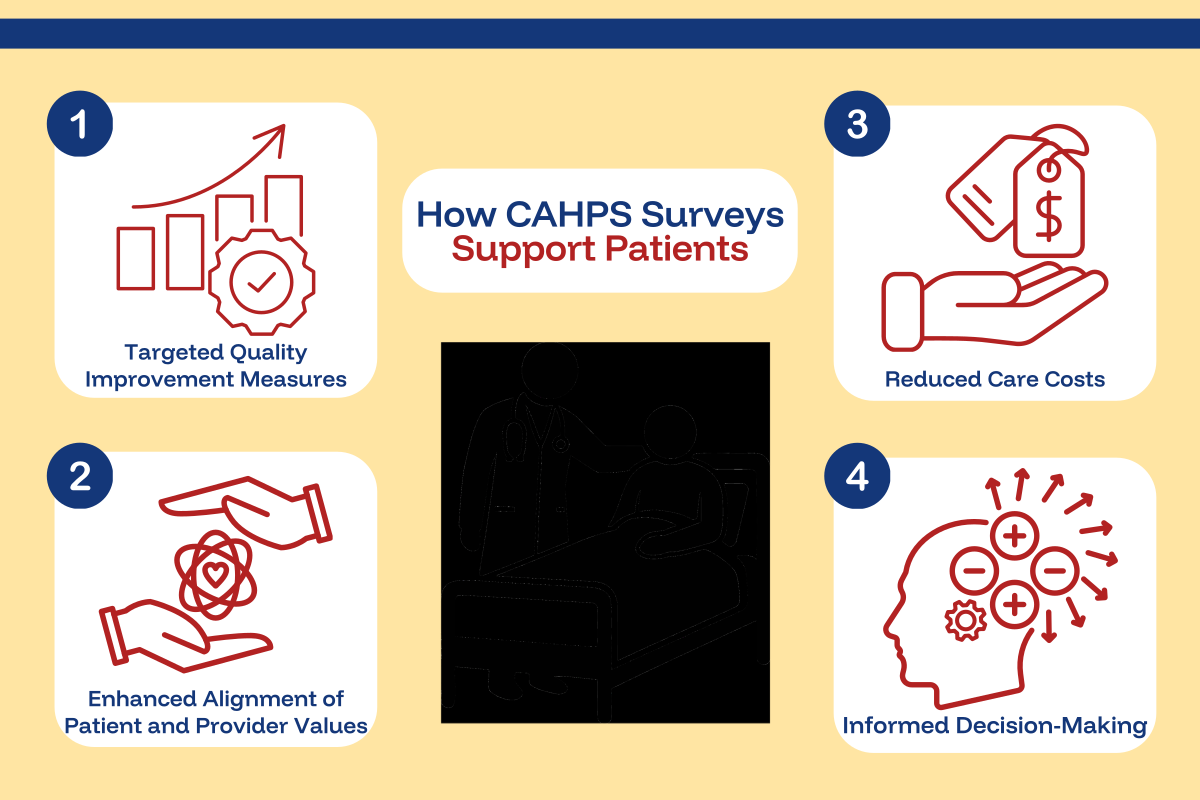
Understanding (and acting on) this patient-reported information benefits healthcare facilities in a number of ways. So, what is the CAHPS surveys’ particular benefit compared to other clinical questionnaires? Notable advantages of this trademarked survey (vs. others) include its scientific development, standardized measures that support benchmarking, and its accessible, centralized database for valuable patient feedback. CAHPS’s trademarked surveys also support:
- Targeted quality improvement measures, facilitating better healthcare experiences and outcomes for patients and staff alike.
- Reduced care costs with opportunities for score-based financial bonuses from the Centers for Medicare and Medicaid Services (CMS).
- Enhanced alignment of provider and patient values, encouraging increased engagement and adherence to treatment protocols.
- Informed decision-making, because publicly available CAHPS data allows consumers (and health plan payers) to compare healthcare services and providers.
The CAHPS Survey vs. HCAHPS Survey
These surveying tools are related, but not the same. Broadly speaking, CAHPS is an umbrella program that includes surveys like the Hospital Consumer Assessment of Healthcare Providers and Systems (HCAHPS). More specialized and narrow in focus, HCAHPS (or, the CAHPS hospital survey) only gathers inpatient perspectives on hospital-specific care.
HCAHPS was developed by CMS (in conjunction with the AHRQ) in 2002. It’s the first national, standardized, and publicly reported feedback tool for assessing the inpatient perspective. The surveys are given to a random selection of adults who were discharged from the hospital between 48 hours and 6 weeks earlier. Results of the survey are available to the general public through the Medicare website.
CAHPS Program and Surveys: FAQ
CAHPS’s wide array of healthcare experience surveys offer healthcare providers a standardized method of gaining direct feedback about the patient experience. They not only support QI initiatives, they often improve reimbursement within value-based care payment models and facilitate a more patient-centered care environment.
To help you make the most of these feedback tools (or determine if they’re right for your facility), we’ll answer some key questions about CAHPS-trademarked surveys and how they’re used.
What does CAHPS stand for in healthcare?
While the acronym stands for Consumer Assessment of Healthcare Providers and Systems, the program stands for much more. Its core purpose is to standardize the measurement of patient experiences while contributing to the research that helps healthcare organizations better understand (and respond to) patients’ insights. This drives better overall outcomes through stronger engagement and patient-provider alignment.
What is a CAHPS survey measuring within the patient experience?
There are several key aspects of the patient experience measured by CAHPS-based surveys. Topics are limited to what patients can best attest to regarding their own care, yet a few core focus areas include:
- Timeliness of care delivery, appointments, and information.
- Communication with providers, including its clarity and openness.
- Care coordination, especially when patients require multiple services or providers.
- Interactions with staff, like their friendliness, respectfulness, and professionalism.
- Overall ratings of care and providers by patients.
Additional surveys from CAHPS may cover supplemental topics, including:
- Accessibility of specialists and specialty services.
- Health education (and its associated materials) clarity and value.
- Shared decision-making capability and patient involvement in care.
- Support for patients’ health and functional status.
- Stewardship of patient resources (like time and care costs).
When is the CAHPS survey administered and how?
CMS-developed Consumer Assessment of Healthcare Providers and Systems surveys are administered annually by a contracted vendor to a random selection of patients over the course of about four months (typically March through June). Surveys are issued by mail and email, but telephone-assisted surveys are available for those who require the alternative method.
What are some examples of CAHPS survey questions?
A sample CAHPS for the Merit-based Incentive Payment System (MIPS) survey includes these two questions:
“In the last 6 months, when you made an appointment for a check-up or routine care with this provider, how often did you get an appointment as soon as you needed?”
- Never
- Sometimes
- Usually
- Always
“When you and this provider talked about starting or stopping a prescription medicine, did this provider ask what you thought was best for you?”
- Yes
- No
Who is mandated to use CAHPS-trademarked surveys?
There’s no universal mandate that enforces the use of surveys from CAHPS. Instead, they’re often conditionally required for participation with specific federal or health plan programs. For example, CMS requires the administration of CAHPS hospital surveys with participating facilities in addition to other post-acute services. Some of these include Medicare-participating hospice, hemodialysis, and ambulatory surgery centers.
How can organizations boost CAHPS response rates from patients?
Like many other patient feedback requests, CAHPS-trademarked surveys can suffer from low response rates. Organizations can boost survey engagement by offering sequential, mixed-modal administration. So, instead of simply emailing the survey to patients, follow your email with a phone call. When possible, always allow patients their choice of survey modalities (web-based vs. written, for example).
Additional methods of increasing participation include offering the survey in-person. Notifying the patient ahead of time that they’ve been selected to offer feedback is also helpful. It’s essential that any additional (or customized) questions maintain the easy-to-understand clarity of language that encourages — rather than discourages — completion of the survey.
What can help facilities improve their CAHPS survey results?
Ensuring positive CAHPS scores starts with building a culture of continuous, patient-centered improvement. Because these surveys measure the patient experience (not satisfaction or clinical outcomes), it’s best to focus on the aspects of care that affect patients most. Often, these focal points align with other key performance indicators (KPIs), such as patient wait times.
Some targeted considerations that may help drive stronger survey performances include:
- Clear, respectful communication should be a priority. This means that staff must converse with patients openly, at their level, and with empathy.
- Respond to patient concerns by actively listening so patients feel heard with carefully considered follow-up action that prioritizes the patients’ needs.
- Timeliness of care means minimizing delays in appointment and service scheduling in addition to follow-up communication measures.
- Care coordination should (ideally) happen seamlessly, facilitating ease of movement across the care spectrum to support patient needs at the acute and post-acute levels.
- Patient engagement may look like ensuring patients receive their annual flu shots, or it may look like patients understanding their medication regimen. In any circumstances, better engagement almost always starts with consistent, understandable patient education.
Want to Make the Most of Your Patients’ Feedback?
Whether or not you’re mandated by participation rules with Medicare, CAHPS survey questions can help you gain valuable quality improvement insights. QI work doesn’t stop there, though. Leverage our wide range of healthcare guides and resources, designed by experts to strengthen all of your care delivery initiatives.