


Home care has long provided a convenient access point for patients who require additional help managing ongoing healthcare needs. The hospital-at-home (HaH) model takes this concept a step further, enabling patients with acute-care needs to also receive services from the comfort of their own home. Although this approach is still evolving, it has shown promising results, including lower care costs, improved accessibility, and a better overall patient experience.
With the recent extension of the Hospital Care at Home waiver from the Centers for Medicare and Medicaid (CMS), many healthcare leaders are exploring how to establish or expand their at-home hospital care initiatives. If you’re looking to adopt a more patient-centered strategy for acute care delivery, this guide provides a comprehensive overview of the patient-forward, HaH model with answers to key questions about the program.
Using this advanced care at home approach, you can sustainably increase your hospital capacity, reduce readmissions and hospital-associated infections, and improve patient satisfaction.
What Is Hospital-at-Home’s Origin?
The HaH model was first implemented in the U.S. in 1995 to offer hospital-level services within a patient’s home. One of the primary objectives of the initial program was to protect elderly patients from the risk of hospital-acquired infections. It's since been adopted by select facilities across the U.S. and has even become a popular model of care in other countries, including Canada and Australia.
When the COVID-19 pandemic disrupted traditional care delivery models, the advanced care at home method gained renewed attention as a safe alternative to inpatient care. Accordingly, CMS introduced the Acute Hospital Care at Home (AHCAH) waiver, which allowed hospitals to receive federal reimbursement for acute care delivered within the enrolled patient’s home. This waiver temporarily relaxed certain Conditions of Participation that had previously limited the reimbursement for any home-based hospital care.
Who Qualifies for Hospital-at-Home?
HaH care goes well beyond the simple delivery of a hospital bed for elderly patients. At-home hospital care is designed to meet the comprehensive acute care needs of patients without the added risks associated with the inpatient setting (such as infection). However, patients must still be deemed stable enough to be treated at home.
Individuals who need intensive care from multiple specialists each day should generally be seen within the hospital facility for better care coordination and continuity. On the other hand, patients with known conditions that have regimented protocols, such as congestive heart failure, are usually good candidates for HaH services.
How Does HaH Care Work?
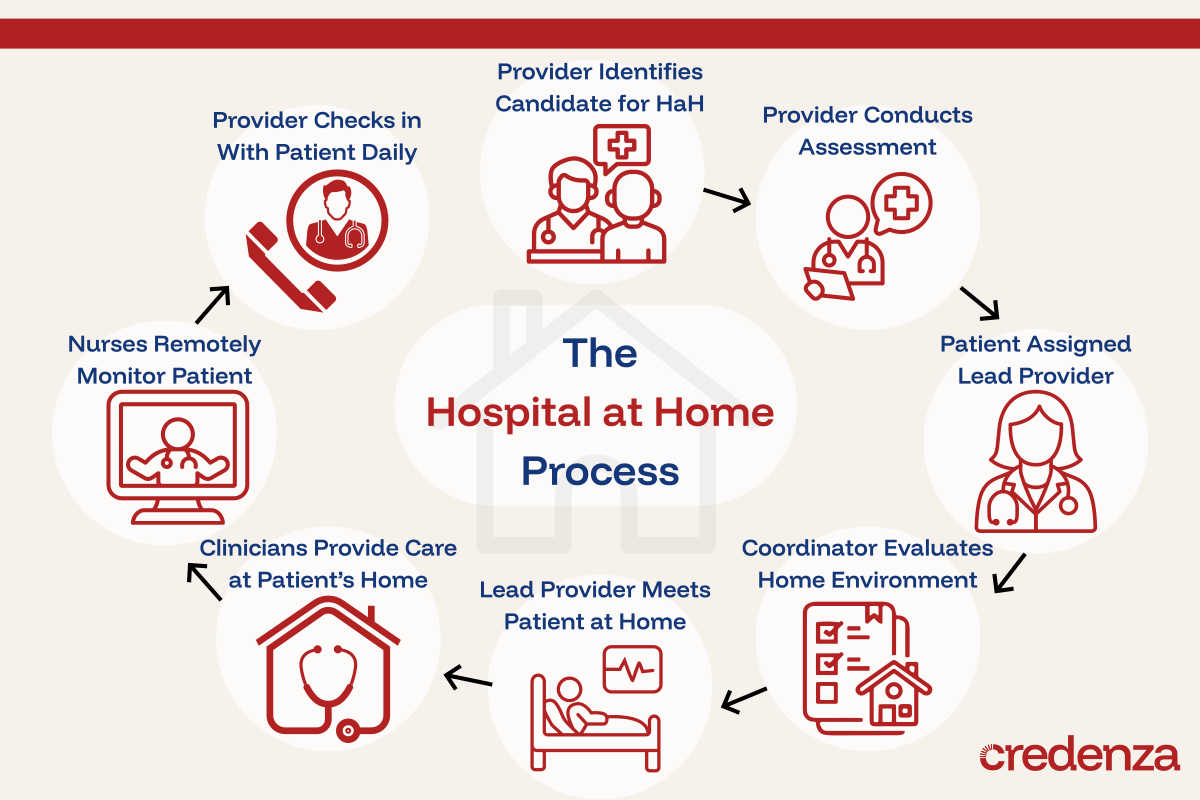
Every facility will have a slightly different process for managing acute care at home. However, we can take a look at a general, step-by-step example of how a patient might complete these HaH services below.
- A provider at the emergency room sees a patient who may be a good fit for HaH.
- The provider conducts an assessment and determines that the patient is eligible.
- The patient is assigned a lead provider who is responsible for their home care.
- The facility arranges for a coordinator to discuss hospital care at home services with the patient, evaluate the patient's home environment, and arrange their transportation home.
- The lead provider meets with the patient at their home, either in person or via video call, to discuss their plan of care.
- Specialists, nurses, and caregivers arrive at the patients home each day to deliver treatments and conduct exams.
- In between home visits, the nurses utilize remote patient monitoring tools to continuously monitor the patient's status.
- The assigned provider checks in with the patient on a daily basis until they're stable enough to be handed off to their primary care provider.
How Is a Hospital-at-Home Program Staffed?
Similar to in-hospital services, hospital care at home services are staffed using a multidisciplinary team. Fundamentally, facilities must ensure that patients enrolled in HaH can be safely monitored and cared for on a 24/7 basis.
We'll outline the core structure of an HaH team in the table below. However, a patient's specific needs may require the involvement of other types of specialists and therapists in at-home hospital care services. Nonclinical HaH team members include:
- Clinical directors, who oversee the overall strategic vision and operations of HaH.
- Patient coordinators, or the staff who handle the logistics of enrollment, care, and supply delivery.
- Social workers, responsible for connecting patients with essential community-based services.
- Administrative assistants, who handle patient phone calls, paperwork, and related matters.
Clinical HaH team members include:
- Practitioners, who manage (or give input on) the patient’s plan of care. This includes a lead provider.
- Nurses and aides, bedside clinicians who handle daily home care and scope-appropriate interventions (like IV placement and medication administration).
- Physical and occupational therapists, who develop care plans that target physical mobility, strength, and functional independence.
Does Medicare Pay for HaH?
Since November 2020, Medicare has provided a waiver that enables federal coverage for hospital care provided at home. This AHCAH waiver has been extended through 2030, prompting many organizations to continue making the most of this covered care option. According to CMS, 366 hospitals across 37 states have now received approval to offer at-home acute care services.
What Are the Benefits of HaH?
While the acute care at home delivery model hasn’t been widely adopted, preliminary studies have shown that it may offer many unique benefits for patients, providers, and the overall healthcare system. Here are a few examples of how HaH programs and initiatives have helped improved care:
- The CMS hospital-at-home program led to over $1 million dollars in savings per hospital, with some hospitals experiencing up to a 44% reduction in 30-day readmission rates.
- Early pilot programs of HaH have led to increased patient satisfaction and clinical outcomes that were comparable to in-patient care services.
- HaH programs have helped expand the capacity of hospitals, freeing up in-patient beds for those who need higher acuity care.
What Are Common Barriers to Implementing HaH?
Despite the benefits associated with HaH, the lack of standardized hospital-at-home guidelines and regulations has led to some ongoing challenges. Here are three potential barriers to consider before implementing this care model.
Physician Resistance
Physicians have concerns about the overall efficiency of HaH, given the amount of time it takes to introduce and acclimate patients to these services. In fact, studies have shown that HaH providers may spend an average of 20.5% of their time outside of home visits on care coordination activities. Many of these hours are not reimbursed, which can lead to unpaid overtime and increased burn out.
Inconsistent Reimbursement Policies
Historically, many patients have been resistant to enrolling in HaH because of limited insurance coverage. This is getting better as more commercial health insurers enroll advanced care at home services. Yet, complex standards and policies (or coverage that reimburses at rates comparable to home health rather than inpatient services) complicate the decision-making process when choosing among HaH vs. traditional inpatient care delivery options.
Patient and Staff Safety
While HaH services involve frequent care visits and remote monitoring, many healthcare stakeholders remain concerned about patient safety. Acute care at home patients often struggle with medication adherence and may face a higher risk of fall-related injuries. Even with an emergency response team on call, remote monitoring can delay responses to urgent issues — also increasing legal risks for facilities and providers.
For staff who frequently face violence as part of the inpatient environment, the seclusion of a home setting presents additional safety risks. It’s important to consider the possibility of behavioral side effects from mental illness, medications, or acute conditions when deciding whether a patient is eligible for advanced care at home.
What Will the Future of Home Care Look Like?
Since the COVID-19 pandemic, there has been a significant expansion of hospital-at-home. Future trends will likely focus on overcoming the existing challenges of scaling up this care model. There's still much that needs to be done to improve the efficiency and regulation of HaH services. But as technology continues to advance, there's potential to automate administrative tasks that would allow providers to focus more on the care delivery aspects of HaH.
Discover the Latest Trends in Healthcare
Hospital-at-home is one of many care models developed to address critical shifts in the healthcare industry. Want to stay ahead of other emerging trends? Access our wide range of timely healthcare management news and insights, designed by experts to help you tackle healthcare’s emerging challenges.