

Learning how to get more patients in the door is a top concern for many healthcare facility leaders. Against the backdrop of systemic financial pressures and rising consumerism, marketing is an essential component of running a profitable business.
Healthcare systems had a median operating margin of 1.5% in 2025, with many hospitals operating in the negative and around 760 rural hospitals at risk of closing due to financial distress and changes to federal tax policy. A strong patient acquisition strategy can make the difference between financial viability and failure.
We'll discuss five practical, creative ways to increase patient volume at your facility. Our tactics cover various ways to increase awareness of your services, how to get more patient referrals, and how to boost your online reviews. Get inspired with ideas for growing your organization and serving more patients.
How to Get More Patients Into Your Practice: Overview
Developing a plan to expand your patient base will likely involve examining where you are now, and where you'd like to be. This is sometimes called a gap analysis or a growth opportunity analysis, and it can be very helpful to prevent investments in marketing tactics that don't get the results you need.
Step One of a Patient Acquisition Gap Analysis
Your analysis should be based on objective data, whenever it's available. Consider your facility's current:
- Patient base: Who visits your facility? For what services?
- Funnel: How did your patients find you?
- Capacity: How many patients is your facility capable of seeing per day? What is your current bed occupancy rate?
Step Two of a Patient Acquisition Gap Analysis
Next, define your desired results. This will give you information to guide your facility's growth strategy. You might consider identifying:
- The number of new patients you would like to acquire, and by what date.
- A desired percentage increase in new patients over a specific time period.
- A target bed occupancy rate.
- A target reduction in the number of no-shows.
- The addition of a new service line, and when it will be implemented.
- A specific expansion in capacity or staffing resources.
Step Three of a Patient Acquisition Gap Analysis
Work with your team to understand the obstacles standing between the current and desired state. This might involve looking for root causes, or performing research. For example, a new community clinic may discover that 70% of their patients found them through a successful local ad, prompting them to continue the campaign or possibly scale it up.
Customize Your Growth Strategy
Whether you've recently opened the doors of a new ambulatory surgery center or you're wondering how to get more patients in your clinic, your circumstances are unique — and your growth strategy will be, too. Tailor your approach by learning about your patients and their needs and behaviors. For example, patients seeking emergency care have different priorities than those searching for elective services.
The competition level of your specialty area will impact your strategy. Some service lines, such as orthopedics, bariatrics, and cardiology are highly competitive and may require more aggressive tactics. It's also important to be aware of the laws and regulations that impact your facility. For example, federal law prohibits some types of incentivized referrals, and many states have additional laws regulating healthcare referrals.
How to Grow Your Medical Practice: 5 Ideas for Facilities
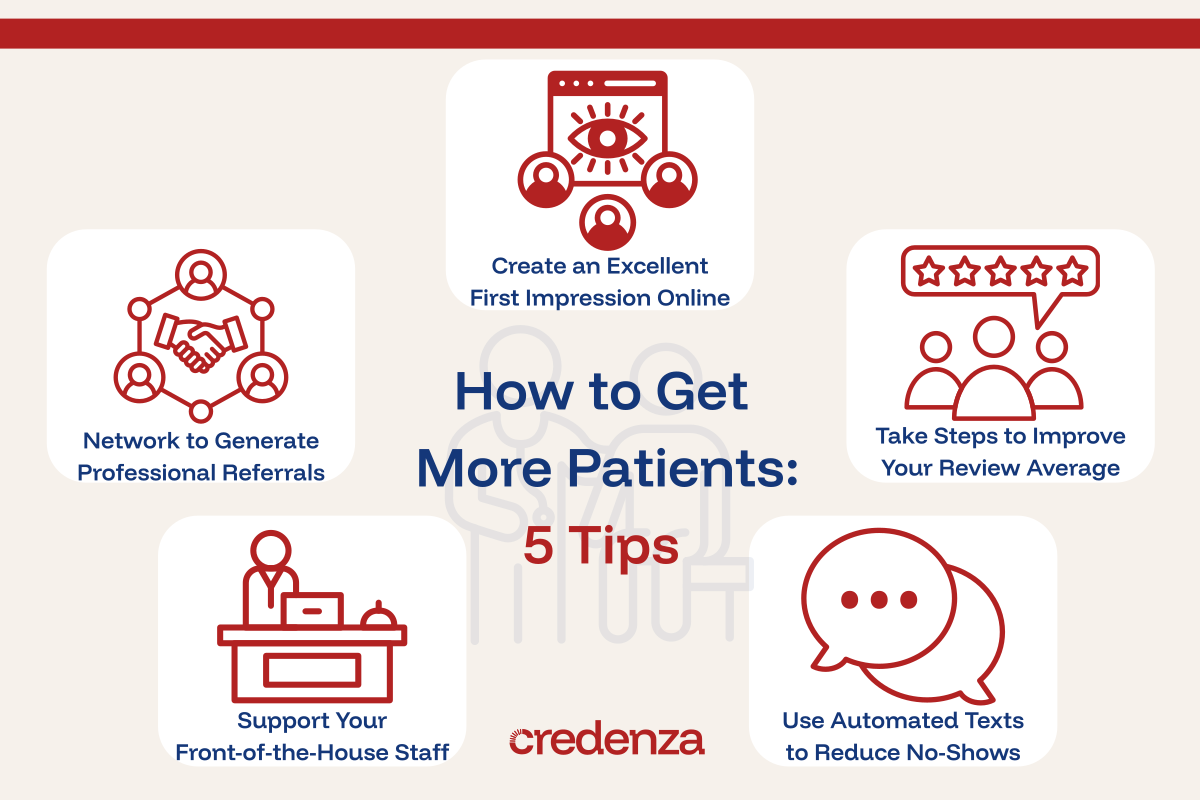
Learning how to get more patients into your practice can be an exciting endeavor, because there's so much potential for growth. Healthcare leaders want to know the services they bring to communities are making a difference, and it can be rewarding to see those services reach more people. Even if you're not a marketing expert, this is a chance to strategize, take action, and get results. Here are five ideas to inspire you and your team.
1. Create an Excellent First Impression Online
The rise of healthcare consumerism and advances in technology have shifted the patient journey, which now typically begins online. Make improvements to the initial digital touchpoints that a patient may have with your practice, such as your Google Business Profile, website, and social media channels.
Example: An urgent care clinic uploads updated photos to their Google Business Profile to reflect recently renovated patient exam and treatment rooms.
Suggestions:
- Update your Google Business Profile with high-quality images and current information.
- Ensure your website is visually welcoming, easy to navigate, and renders well on various device sizes (including phones).
- Use a scheduling tool for social media pages to create regular content that portrays community engagement and a friendly, welcoming atmosphere.
2. Put Systems in Place to Boost Your Review Average
Learning how to get more patient reviews could breathe new life into your growth strategy. Seventy-three percent of patients consult online reviews before booking appointments. A low average may be preventing potential patients from booking your services out of fear of a similar poor experience.
You might be able to increase your average by simply prompting happy and satisfied patients to leave a review. Some facilities use software designed for reputation management to help them manage their reviews.
Example: A medical aesthetic center with 10 Google reviews averaging 2.5 stars implements an automated text message sequence to request patient reviews post-visit. After collecting 200 more reviews over the course of six months, their average star rating increases to 4.2, and they notice that more new clients are calling to book appointments.
- Send automated texts or emails requesting reviews from patients.
- As a patient completes the final steps of the appointment, such as scheduling their follow-up visit, hand out a card with a link or QR code to the review platform.
- Analyze feedback for patterns and seek to fix underlying issues, to promote positive reviews in the future.
- Use reputation management software to track reviews and flag problems.
3. Leverage Automated Texts to Reduce No-Shows
Once a patient makes an appointment with your facility, you need measures in place to actually get them through the door. Patients who receive personalized reminders are more likely to make it to their appointments, and texting is the preferred method of communication. Studies show that 85% of patients prefer texting over phone calls or emails, and that texts have a much higher average open rate (98%) than email (27%). Software can be used to automate text messaging.
Example: A private practice with a 12% no-show rate implements a system to remind patients via text message of upcoming appointments. Reminders are sent 48- and 24-hours prior to the appointment. The no-show rate drops to 6% and more patients are successfully seen by staff.
Suggestions:
- Send a series of text messages to help patients remember their appointments.
- Enable two-way messaging so that you can request confirmation of the appointment.
- Keep communication brief, friendly, and professional.
4. Support Your Front-of-the-House Staff
While the patient journey now typically begins online, there are also critical initial in-person interactions that can either help or hinder your growth efforts. Provide training for your front-of-the-house staff so that they're prepared to warmly greet patients and provide information about the services your facility offers.
Example: A small hospital provides in-depth training for their medical receptionists, including details about the types of laboratory services offered. When a patient calls to inquire about whether she can get blood work done at the facility, the receptionist offers a confident, clear response to assure the patient that the service is offered. The medical receptionist gets more information from the patient and books the appointment.
Suggestions:
- Help these key personnel understand what services are offered, and under what circumstances patients might require those services.
- Ensure administrative and non-medical staff members understand facility privacy policies so that they know what they can and can't discuss with callers.
- Enact policies to help front-of-the-house staff quickly connect patients to information about billing, which can become a barrier if not addressed.
5. Network to Generate Professional Referrals
Collaborate with other healthcare and wellness professionals in your area, or even online, to encourage partnership referrals. Consider networking with personal trainers, holistic practitioners, gyms, pharmacies, and other healthcare facilities to figure out how your services might benefit their clientele, and vice versa.
To maintain compliance and stay within the bounds of the law, payments should not be offered for referrals. Instead, discover how to get more patient referrals by exploring cross promotion opportunities.
Example: An orthopedic surgeon who owns a joint replacement center offers community outreach at a local gym, building a pipeline for professional referrals down the line.
Suggestions:
- Network with other providers to increase awareness of your services and area of expertise.
- Express gratitude when a colleague refers your services.
- Visit or call other health and wellness professionals to share any unique resources or equipment you are offering to the community.
Looking For More Healthcare Marketing Insights?
Understanding how to get more patients into your clinic or facility is a great step toward expansion — and we know you have exciting milestones on the horizon. We're here to support your next big initiative with expert-backed healthcare guides that deliver the research, without the hassle.