


A line of business (LOB) is a specific category of products or services provided by a company. If you're wondering, What is LOB in healthcare? we have you covered. In the healthcare industry, LOBs refer to the different specialized patient services offered by a particular facility or organization. These clinical groups are established to treat unique patient populations and conditions.
In this article, we'll review the function of healthcare lines of business, go over examples, and explain why organizations use them to develop tailored patient care efforts. Then, we'll provide tips on how you can optimize your organization's LOB strategy to improve patient satisfaction and boost care quality.
What Is LOB in Healthcare Delivery?
In the context of healthcare, a line of business is a collection of services offered to a target patient population or to meet specific needs. They may also be called service lines or revenue streams. When discussing lines of business in healthcare, examples may include services like primary care, surgical care, oncology treatment, and diagnostic imaging.
The business lines offered by each healthcare organization will vary based on the size of the company and the complexity of the care they provide. Proper service line management can enable healthcare organizations to monitor team performance, improve care quality, and optimize health outcomes for patients receiving care.
What Is the Function of a Line of Business in Healthcare?
Structured healthcare LOBs allow facilities to deliver specialized patient services. Each line operates with its own multidisciplinary team of clinicians who have the appropriate experience and expertise to deliver customized care.
In smaller organizations, service lines are usually housed in one main hospital building. Companies often design the layouts of these facilities around the service lines they provide. For example, the first floor of a smaller community hospital might house emergency services, the second floor may house all pediatrics subspecialties, and the third floor may house all surgical suites.
In larger institutions, LOBs may operate as separate business units, each with its own mission, goals, and budget. Organizations with large operating budgets often build separate freestanding facilities for each service line. For example, a large academic medical facility may have one main acute care hospital, a separate oncology treatment center, and multiple specialty clinics located across the community.
What Are Healthcare LOBs Used For?
In healthcare, it can be challenging to develop tailored quality improvement initiatives when hundreds of providers work in the same facility. Organizations often opt to define separate service lines so that they can develop targeted care strategies and goals for each clinical subgroup.
Organizing services into separate lines of business also allows administrators to track clinical and financial performance metrics for each specialized team of clinicians. This oversight improves the efficiency, resource utilization, and quality of care each department is able to provide.
What Are Some Healthcare LOB Examples?
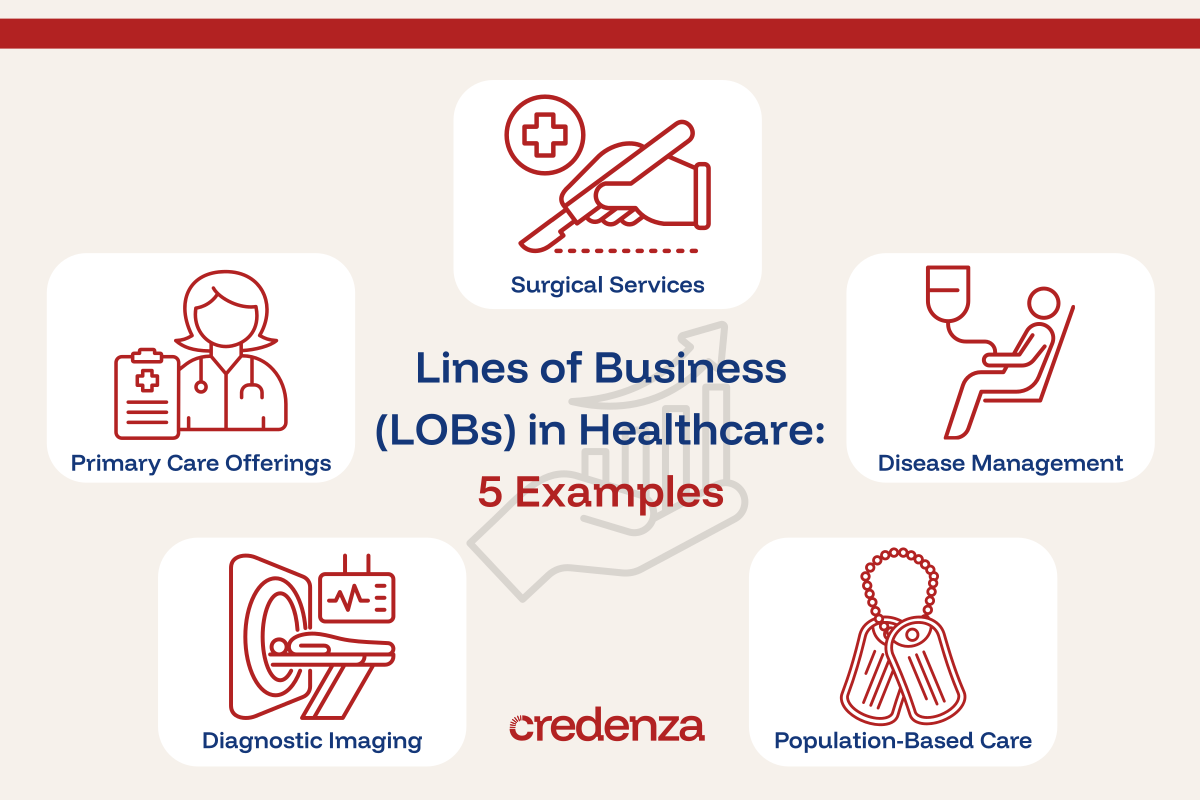
Healthcare business lines are typically organized around care levels, clinical conditions, or patient populations. Here are some typical service lines seen in the healthcare industry:
- Primary care offerings
- Surgical services
- Disease management services (e.g., oncology)
- Diagnostic imaging services
- Population-based care (e.g., veteran health services)
A single service line may offer multiple treatments and products. For example, a cosmetic/aesthetic surgery center may generate income for a broader healthcare system by offering surgical procedures, botox, and medical-grade skincare products.
What Is a Revenue Stream and How Does It Relate to LOB?
A revenue stream represents one way that a healthcare organization generates money. Organizations typically operate with multiple revenue streams. For example, a hospital may generate revenue through inpatient procedures, emergency room visits, in-house laboratory services, imaging, and telehealth services.
Revenue streams are defined by the way that money is flowing into an organization, while the LOB meaning in healthcare relates more to what is offered out to patients. These two concepts are closely linked, because what is offered (the treatments, products, etc.) directly affects how money enters the organization. Identifying market-tested business lines can help healthcare organizations determine how to diversify revenue streams effectively.
Optimizing Lines of Business in Healthcare: Examples of Strategies
If you're a facility administrator, you may want some tips for how your organization can improve the efficiency and performance of your existing lines of business. The following three suggestions can help you get started.
1. Streamline Clinician Workflows
To ensure your service lines operate productively, you'll want to map out existing clinical workflows. Identify areas of weakness to reduce errors and deliver safe, efficient care. Consider automating basic tasks to allow clinicians to work at the top of their license and scope of practice.
2. Utilize Technology Platforms to Improve Communication
In large organizations, each service line can include hundreds of employees. Without structured team-based communication, it can be challenging for clinicians to provide high-quality care.
You'll want to use technology-based communication platforms to ensure all members of each clinical subgroup have the most accurate and up-to-date information. Instant messaging through electronic health records, encrypted text messaging, and mass notification systems allow teams to spread information quickly.
3. Refine Care Practices Based On Performance Metrics
Productivity tracking is an essential aspect of boosting efficiency and quality. You'll want to periodically assess performance metrics and make changes when necessary. Curious about how to evaluate the quality of care offered by your facility's lines of business? In healthcare, examples of tools for evaluating performance can include:
- Distributing patient and family surveys.
- Evaluating key performance indicator (KPI) data.
- Soliciting employee feedback.
Discover More Ways to Provide Excellent Service
Now that you know the answer to the question, What is LOB in healthcare? you may have other topics you'd like to explore. Whether you're expanding your practice or looking for staffing strategies, we're here to support you with expert-backed healthcare resources, tools, and guides.