

Automated credentialing workflows use technology to streamline the provider credentialing process. While it's not yet feasible to automate 100% of the workflow, various tools can be used to replace the tedious, repetitive tasks that don't require human judgment. Automation can help healthcare facilities complete the process quickly and accurately, while generating records for compliance.
Setting up automated provider credentialing often involves implementing in-house, technology-driven workflows. It may also entail partnering with a credentialing verification organization (CVO) to oversee automated tasks. Whatever approach your facility takes, you'll want to be sure that it's well-informed and meets government and payer regulations. In this guide, we'll answer your questions about setting up automated systems for managing provider credentialing.
Automating Your Credentialing Tasks: An Overview
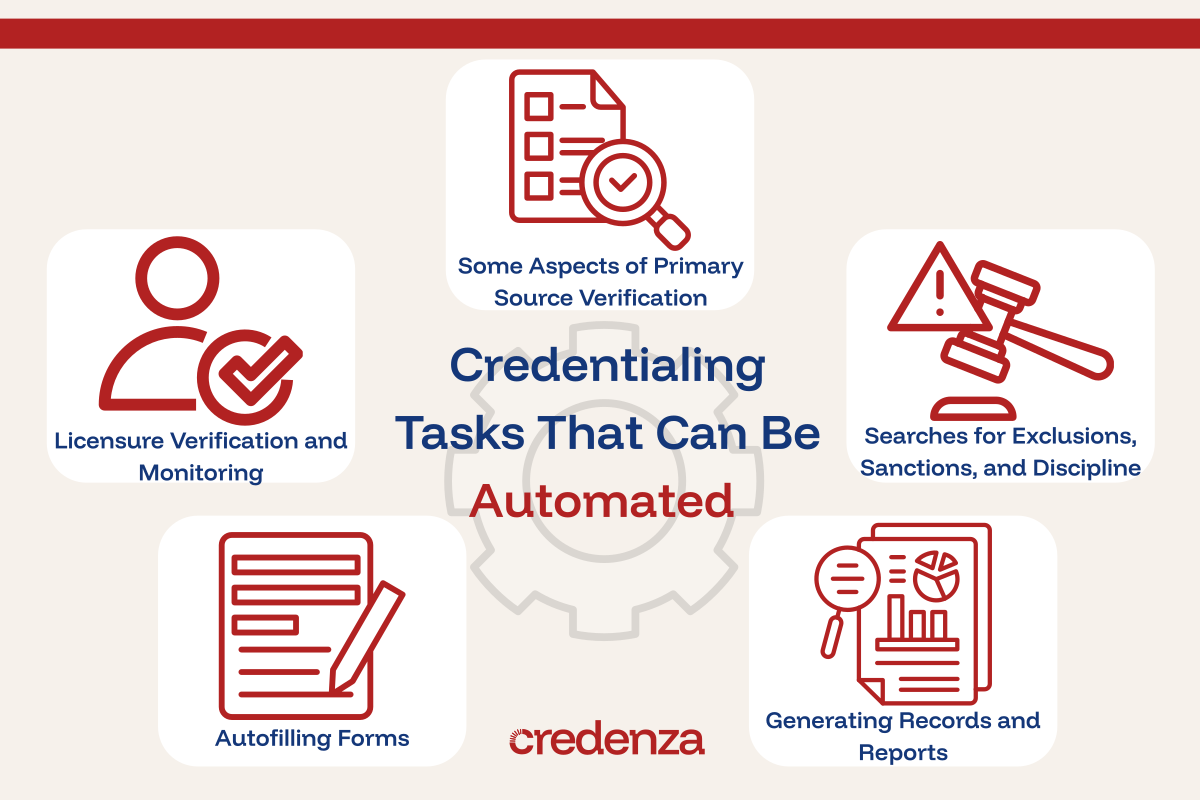
Since credentialing is an information-heavy, multi-step process, it's a good fit for automation. Without automating parts of the process, it can be sluggish and tedious — producing costly delays. Technology has evolved to allow for the automation of many types of credentialing tasks, including:
- Some aspects of primary source verification (PSV).
- Licensure verification and monitoring.
- Searching databases for exclusions, sanctions, and disciplinary action.
- Auto-filling forms.
- Generating records and reports.
Setting Up Automated Workflows for Credentialing: FAQ
If you're looking for ways to streamline provider credentialing at your facility, you may be wondering if automated solutions are the right choice. The following answers to some frequently asked questions about setting up automated workflows to verify provider credentials will help you decide whether it could benefit your facility.
How do healthcare facilities use automated systems for managing provider credentialing?
Automations are typically integrated into HR workflows. This can be through purchasing a subscription to specialized credential management software, or working with IT to implement strategic upgrades that automate specific tasks. Alternatively, healthcare facilities can choose to partner with a CVO that will oversee automated tasks and provide human input when needed. Be sure to read reviews and otherwise vet the services before signing up for third-party automated services.
What are the pros and cons of automated credential management?
Here are some advantages and disadvantages to consider.
Advantages:
- Reduces (or eliminates) the back-and-forth communications between various people within agencies, reducing time lags between steps.
- May improve accuracy by reducing manual data entry errors.
- Increases the visibility of the process by generating records and reports.
- Reduces administrative burden for HR staff, freeing up time for more high-level tasks.
- Is scalable; can likely handle surges.
Disadvantages:
- Subscription to a software-as-a-service (SaaS) platform can be costly.
- Integration of IT infrastructure may require significant initial investment, as well as ongoing work for maintenance and management.
- Gives you less control over the process.
- Staff may adopt an "out of sight, out of mind" attitude toward aspects of the process, creating risk if the automation workflows are flawed.
- May be unable to handle unique or complex onboarding situations (such as onboarding an international provider).
What types of technology are required?
Automating parts of the credentialing process may require the use of multiple types of technology. Facilities that automate tasks may take advantage of the following:
- Software robotics (also called robotic process automation, or RPA)
- Application programming interfaces (APIs)
- Cloud computing
- Artificial intelligence (AI)
- Optical character recognition (OCR)
- Centralized databases
What is credentialing software?
Emerging healthcare credentialing software platforms combine tools to provide comprehensive services. An example of this is MedTrainer's cloud-based healthcare credentialing management software. The companies Verifiable and HealthStream also offer popular automated credentialing solutions. Healthcare software products that cover a range of workforce management functions may have credentialing features built in.
Are there alternatives to using specialized software?
Rather than paying subscription fees for comprehensive credentialing software, some facilities target specific tasks. For example, a clinic could choose to pay for access to the National Practitioner Data Bank API for easier integration of provider information. Another alternative is working with a third-party vendor that either has access to credentialing software or uses other means for completing tasks.
What's an example of an automated credentialing process for an HR team?
An HR team can build in automations in a variety of ways, from merely automating the most tedious data-entry tasks to gaining access to a suite of services. Consider the following automated tasks related to verifying a nursing school diploma:
- A school emails a hospital an image file of a diploma.
- Automated provider credential verification tools read the document, extract information from it, and auto-fill the appropriate HR document fields.
- The verification tools compare the document's information to centralized databases.
- The nurse's education is recorded as verified.
- The next step is triggered to keep the process moving.
Find Verified Nursing Professionals to Onboard
Getting your automated credentialing workflows up and running is an exciting step toward swifter provider onboarding. Continue to optimize your process by only considering qualified candidates that won't strain your system. Post your openings on our job board to connect with pre-verified nursing professionals who are looking to join a team like yours.