

Credentialing Verification Organization (CVO) services help healthcare facilities efficiently onboard clinicians while meeting rigorous regulatory and legal credentialing standards. For many facilities, onboarding processes are crucial to operations. Formal payer credentialing is required before a provider can begin seeing patients (and billing the payer for services), making delays costly. It's estimated that one out of every five hospitals loses $1 million or more per year due to credentialing delays.
While outsourcing to a CVO can be a step toward swifter, more visible, cost-efficient credentialing, it must be handled carefully. If you're considering working with one for the first time, or perhaps switching vendors, you may have questions. In this guide, we'll provide an overview of what CVOs are, and how they typically contribute to clinician onboarding and compliance. We'll discuss the advantages and disadvantages of these partnerships and give you five best practices for moving forward.
What Is a Credentialing Verification Organization?
CVOs are specialized businesses that offer credentialing services. Credentialing is a formal process of vetting healthcare workers to ensure they are who they say they are, and that they're qualified to provide patient care. At the core of this duty is primary source verification (PSV).
Why Do Healthcare Businesses Outsource Credential Verification?
Organizations, such as hospitals, insurance companies, and telehealth platforms, routinely need to clear clinicians to interface with patients. While the process can be completed in-house, it's often time- and resource-intensive. If internally managed processes are suboptimal, businesses may outsource some (or all) of the process to a CVO that's dedicated to the chore.
How Does a CVO Service Work?
Since the purpose of a CVO is to credential healthcare workers, they have staff dedicated to that aim. Many also leverage automations to complete tasks, involving humans at key touchpoints and for oversight. The organization's workflows are typically designed to perform tasks and documentation as quickly as possible while maintaining high accuracy.
What Is a CVO in Healthcare Responsible For?
Here's a closer look at the tasks a CVO may be responsible for, depending on their arrangement with the client (e.g., a clinic, hospital, or insurance company):
- Primary source verification of education and training
- Verification of active/unencumbered licensure
- Uncovering past disciplinary actions taken by state boards
- Searching for and investigating malpractice lawsuits
- Checking for exclusion from Medicare and Medicaid
In addition to performing these duties, they typically collect and organize time-stamped proof that the task was completed, which contributes to audit readiness.
What Types of Healthcare Roles Are CVOs Used for?
Facilities can use these services to verify the credentials of any licensed or certified professionals who will be working in clinical settings and engaging with patients, such as:
- Doctors
- Nurse Practitioners
- Certified Registered Nurse Anesthetists
- Registered Nurses
- Certified Nurse Assistants
- Physical Therapists
- Radiology Techs
- Pharmacists
Pros and Cons of Working With a CVO
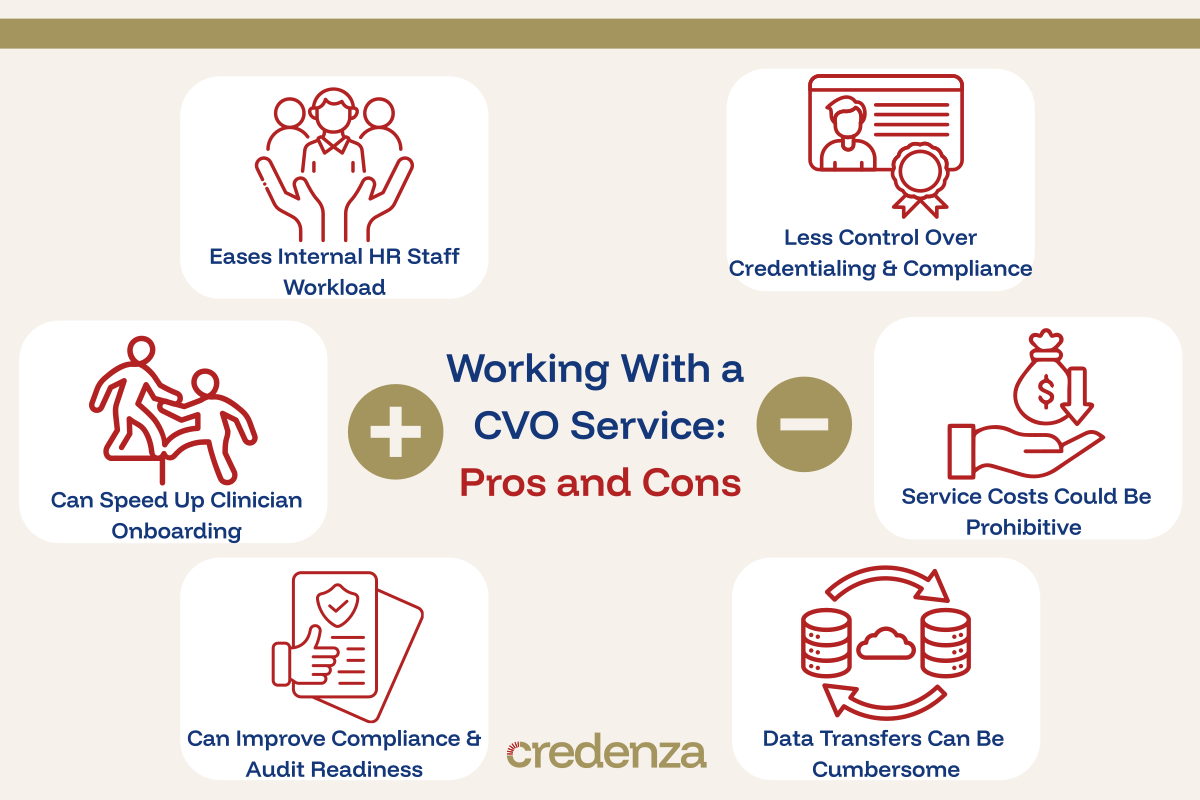
Credentials verification organizations are fee-for-service businesses, so partnership comes at a price. Because of the costs involved, as well as some other issues, outsourcing work to a CVO is not the right move for every healthcare organization. Here are some key pros and cons to consider.
Advantages:
- Alleviates internal HR staff's workload
- Can speed up clinician onboarding
- Can improve compliance and audit-readiness
Disadvantages:
- Loss of control over some aspects of credentialing and compliance workflows
- CVO service costs could result in a negative ROI
- Data transfers can be cumbersome
Best Practices for Healthcare Facilities Working With CVOs
Improper clinician verification processes can have significant consequences, including fines and lawsuits. Even processes that are merely slow or slightly misinformed could be costing your facility thousands per day, or (worst case) putting your patients at risk. As you work to optimize your process, you'll want to know the most productive and safe ways to outsource to a CVO. Here are five best practices to consider.
1. Choose a Certified CVO
Credentialing companies vary in quality. When choosing a vendor to work with, look for certification from a national accrediting body. The National Committee for Quality Assurance (NCQA) and the Utilization Review Accreditation Commission (URAC) offer credentialing accreditations that are highly regarded. Certification of this type proves that the vendor's processes have met high standards.
Once a company earns this status, you'll likely see it in their marketing material. For example, the vendor may state that they are "NCQA-certified". You can also perform a search on the NCQA's Report Card database or the URAC Accreditations Directory. Around 25 top CVOs in the country have earned dual certifications.
2. Thoroughly Vet Your CVO
In addition to checking for certifications, you should also ask vendor representatives a series of questions to determine whether the partnership will be beneficial for your facility. Consider asking:
- How long has this business been in operation?
- What was your average turnaround time for clinician files last year?
- Do you offer any expedited services?
- What are your accuracy rates, and how do you prevent errors?
- What are your customer service hours, and how is your service center staffed?
Also consider asking for references. Speak to a person at a healthcare facility that uses the CVO service, and ask if the experience has been positive or negative.
3. Perform a Cost-Benefit Analysis
Calculate the costs and benefits of keeping your process in-house, and compare this to a similar analysis for working with the CVO. Each healthcare facility will have a unique analysis. Include a broad range of factors to create an accurate financial picture of each scenario, such as:
- The number of clinicians you typically vet per year.
- Labor costs related to PSV tasks.
- Subscription fees for software.
- Any revenue leakage that you can determine (for example, estimated lost revenue due to delays in clearing physicians for work).
- Past malpractice lawsuit payouts and fines.
4. Customize Your Partnership With Your Credential Verification Organization
CVO-assisted onboarding can be tailored to your budget, staffing needs, and organizational objectives. You may, for example, decide to ask for help with doctors, NPs, and CRNAs, while maintaining your in-house process for other roles.
Healthcare providers who can independently treat patients represent a greater risk to employers than those with a narrower scope of practice. If one of your driving reasons for partnering with a CVO is risk management, you may want to consider prioritizing the outsourcing of tasks related to these high-risk roles.
5. Inquire About Continuous Monitoring Services
Compliance concerns often extend beyond the initial onboarding processes and first round of credential verification. Organizations that offer continuous monitoring services may deliver the most value to your facility. Unlike a one-time service, continual monitoring can pick up on upcoming license expirations and watch for new sanctions. These crucial insights can help facilities maintain compliance and reduce legal exposure.
Connect With Verified Healthcare Professionals
Taking advantage of CVO services is one way to add clinicians to your healthcare team faster. Looking for more ways to optimize hiring? Get a head start by posting your job openings to our network of pre-verified healthcare professionals — so that you know all of your applicants are high-quality from the start.