


In response to growing concerns about identity theft across multiple industries, the Federal Trade Commission (FTC) and other government agencies issued a set of regulations, referred to as the Red Flags Rule. Healthcare settings have a duty to protect patients’ personal information, though not all are strictly required to comply with these federal regulations.
Since they became effective in 2008, the rule has obligated businesses to maintain a written identity theft prevention program (ITPP) to spot (or "flag") suspicious patterns of activity that might indicate attempts at illegally accessing personally identifying information (PII). In this guide, we'll discuss the meaning of the Red Flag Rules in healthcare contexts, the regulations related to flagged behavior, and the four steps you can take to comply with this federal law.
No matter the law’s applicability within your specific care setting, understanding its intent and broader impacts can help you strengthen your data protections, maintaining the confidentiality that keeps your organization compliant and well trusted.
Purpose of the Red Flags Rule in Healthcare
The rule, published in the Code of Federal Regulations Title 16, is designed to prevent and mitigate identity theft. It states that certain businesses have a duty to identify, detect, and respond to identity theft attempts. Later amendments narrowed its organizational applicability, primarily targeting creditors and financial institutions. This may still include healthcare facilities in circumstances where the organization:
- Accesses credit reports (to evaluate charitable care eligibility, for example).
- Offers medical treatment payment plans.
- Advances funds to patients beyond the amounts incidental to provided care.
When it comes to the application of the Red Flags Rule, healthcare organizations are obligated to maintain identity theft mitigation provisions and follow-up on any activity that meets flagging criteria. Even seemingly harmless events must be investigated, sometimes causing increased operational costs or potential delays in care. Of course, its effectiveness really depends on how well a given facility or healthcare entity identifies risks and implements its prevention plan.
History of the Red Flag Rule
The Fair and Accurate Credit Transactions Act, passed in 2003, requires certain government agencies to take a closer look at the problem of identity theft. In response, the FTC published a new set of identity theft prevention regulations. Even in this early version of the Red Flags Rule, compliance for healthcare facilities largely mirrored the Health Insurance Portability and Accountability Act (HIPAA), complementing its protected health information (PHI) provisions.
However, the law faced immediate pushback from various groups, including physicians and healthcare institutions who argued that the laws created administrative burden because they duplicated existing regulatory safeguards (including HIPAA). Due in part to this controversial reaction, the FTC was unable to enforce the regulations for several years.
The Red Flag Program Clarification Act of 2010 later narrowed the scope of the laws and clarified who, exactly, was subject to them. One year later, the FTC started enforcing the new regulations with penalties and fines.
What Is the Red Flags Rule’s Applicability in Healthcare Today?
The 2010-based amendments largely sharpened the language around what constitutes a creditor within the Red Flags Rule. Healthcare examples of institutions still required to comply with the law due to the new creditor definition include:
- Any hospitals or healthcare facilities that routinely use patient credit data.
- Institutions that furnish patient data to consumer reporting agencies.
- Organizations that offer in-house financing options for medical services.
This means that as long as none of those coverage items apply, many medical practices and facilities may be exempt from the red flags rule. So, a small clinic that doesn’t offer payment plans or maintain any covered billing accounts wouldn’t be considered a creditor under the revised definition, and is therefore exempt.
Although these non-creditor healthcare organizations aren’t required to comply with the rule, its provisions address risks that affect all patients, no matter the setting. Therefore, it’s worth considering the use of these regulations as a framework for strengthening data protection policies and safeguards. Implementing these federally backed principles can help reduce the risk of identity theft from data breaches or unintentional security lapses.
Are There Other Red Flags in Healthcare?
The red flags of identity theft prevention are not the only red flags you'll encounter at your facility. You may be familiar with the warnings built into your facility's electronic health records (EHRs) and billing or compliance processes. These warnings pop up when an inconsistency, discrepancy, or potential risk (like red flags for Medicare fraud) is identified and needs to be addressed.
In addition to the FTC's rule meant to prevent identity theft, there are red flags that alert stakeholders in the healthcare industry to instances of possible fraud and abuse, such as:
- Billing irregularities.
- Unbundled services (services that should be grouped are invoiced separately).
- Markedly low numbers of incident reports.
- Consistently late submission of insurance claims.
Red Flags Rule Healthcare Compliance: 4 Steps
Failing to comply (or align your patient data safeguards) with these regulations could result in damage to your facility's reputation, fines, or lawsuits from individuals who have been affected. While compliance efforts involve upfront work and expenses, they're vital for protecting PII. If your facility has measures in place for protecting your patient's information, you're already on your way toward meeting federal standards.
The Red Flags Rule requires the establishment of an ITPP, and the FTC outlines a 4- step process for compliance. What are the 4 elements of the Red Flags Rule that ensure compliance? We’ll answer that question by comprehensively reviewing this step-by-step approach below.
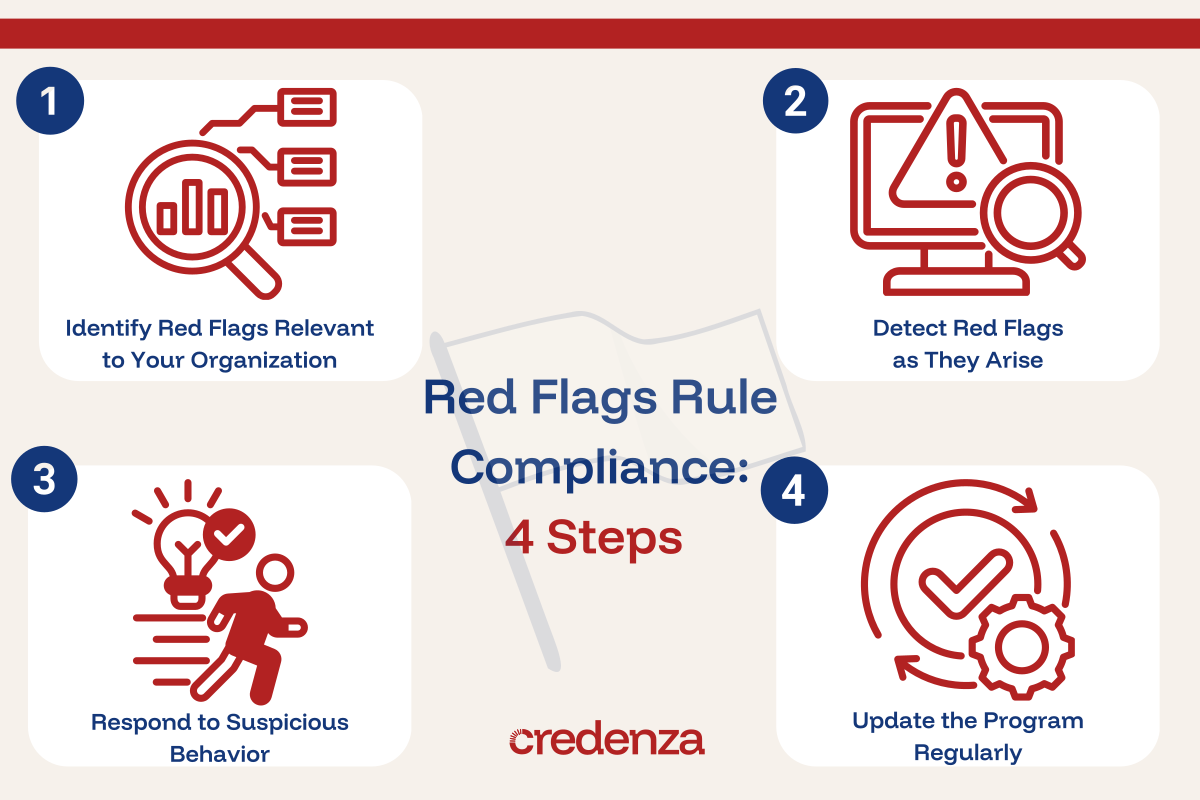
1. Identify the Red Flags Relevant to Your Organization
The FTC identifies five areas covered in the Red Flags Rule. In healthcare, though, the warning signs that your facility identifies will likely be unique to the systems you have in place.
The ways you handle confidential patient information, your method of billing patients, and your admissions process all relate to the Red Flags Rule. Examples of suspicious behavior commonly seen in healthcare include:
- A mismatch between a medical record and the patient's appearance/symptoms.
- An inquiry from a patient about a bill for a treatment that they never received.
- A patient's refusal to provide backup documentation for an insurance card.
- A notice from an insurance fraud investigator.
2. Detect Red Flags as They Arise
Use appropriate tools, systems, and resources to detect suspicious behavior. This might take the form of specific software to monitor financial transitions, or a policy for authenticating the insurance cards that your patients provide.
3. Respond to Suspicious Behavior
Your program should outline the actions you'll take when a red flag is detected, such as gathering evidence, reporting the incident, notifying the individuals involved, and following up in ways that prevent and mitigate identity theft.
4. Update the Program Regularly
Technology changes at a rapid pace, and your program will need to stay up to date to remain effective. In addition to evolving technology, consider changes to your facility's operations, like new ownership or partnerships with other providers.
Stay Informed About the Latest Healthcare Regulations
Regulations like the Red Flags Rule (healthcare-related and beyond), can impact your facility's day-to-day operations, from billing and administrative work to direct patient care. Stay on top of the latest policy changes through our consistently updated healthcare management insights, written by clinical and legal experts to support leaders like you.
Legal Disclaimer: This article contains general legal information, but it is not intended to constitute professional legal advice for any particular situation and should not be relied on as professional legal advice. Any references to the law may not be current, as laws regularly change through updates in legislation, regulation, and case law at the federal and state level. Nothing in this article should be interpreted as creating an attorney-client relationship. If you have legal questions, you should seek the advice of an attorney licensed to practice in your jurisdiction.