


Transforming Episode Accountability Model (TEAM) is a value-based payment model that was implemented by the Centers for Medicare and Medicaid Services (CMS) to improve patient outcomes and contain costs for the Medicare program. Enacted on January 1st, 2026, the CMS TEAM model is intended to encourage the efficiency and optimization of care related to five specific surgical procedures. While the model doesn't impact all healthcare facilities, it's mandatory for those that have been selected for participation.
We'll cover five essential components of the model, including the specific surgeries it addresses, participation criteria, and how payment works. We'll also give you an overview of the three tracks that participating facilities can use to navigate the model.
The CMS TEAM Model: A Brief Overview
A program many years in the making, TEAM has several predecessors, including the mandatory Comprehensive Joint Replacement (CJR) model and the voluntary Bundled Payment for Care Improvement (BPCI) and BPCI-advanced (BPCI-A) initiatives. TEAM is the blended successor, intended to build and refine the lessons learned from each of those initial models.
Through the TEAM model, CMS is able to continue its work reducing episode-related costs and improving patient outcomes by incentivizing collaboration between acute care and post-acute care settings. As with CJR, it's a mandatory, episode-based payment model. However, the Medicare TEAM model covers surgical-specific episodes from the initial day of the procedure (or the related hospitalization) through the 30 days following discharge.
From implementation through its five year end date, this approach will ensure hospitals (or outpatient surgical facilities) maintain responsibility and financial liability for patient recoveries.
5 Key Things to Know About the Medicare TEAM Model
To help you maximize the potential benefits of participation, let's review five essential components of the CMS TEAM model.
1. What Episodes of Care Are Included in the TEAM Model?
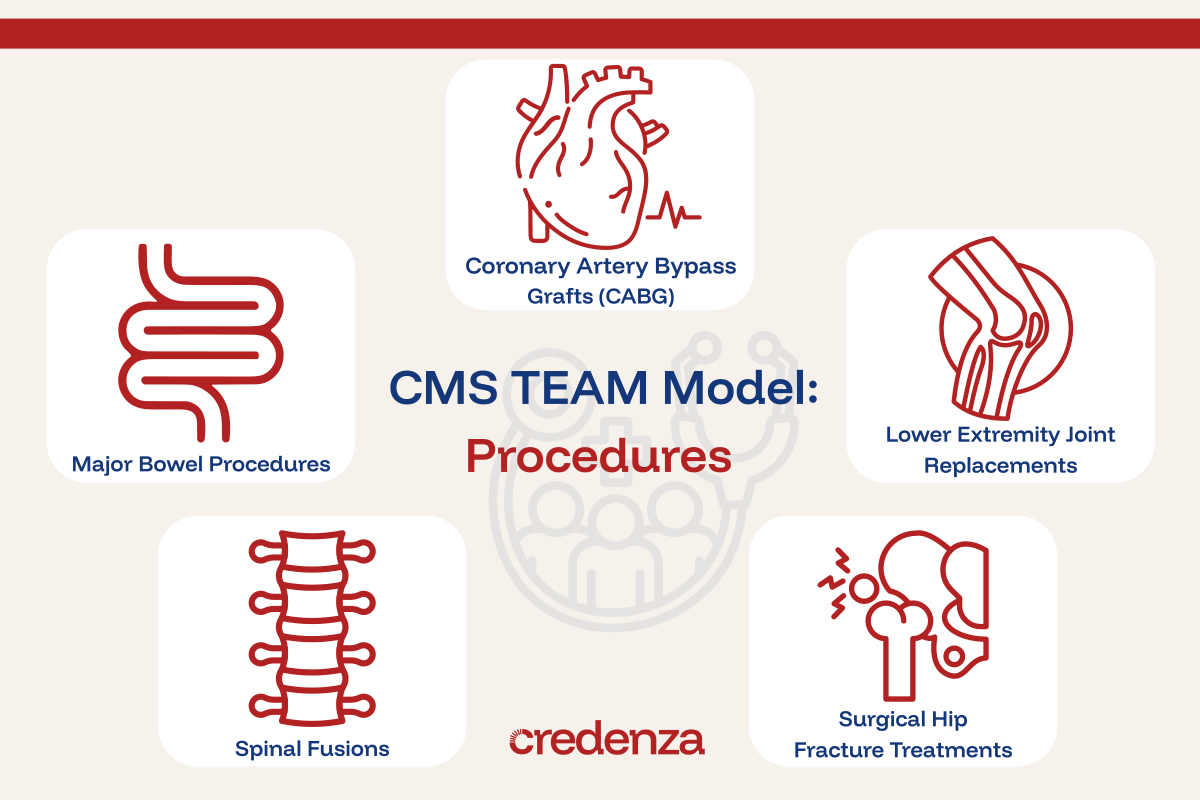
There are five selected surgical episodes of care which, as noted, begin on the date of procedure-related hospitalization (in an inpatient setting) or the date of surgery (if outpatient) and extend 30 days post discharge. Any services associated with the episode — from initial surgical needs to potential postoperative complications and resulting readmission — are bundled as part of the episode. The five selected CMS TEAM model procedures include:
- Coronary artery bypass grafts (CABG)
- Major bowel procedures
- Lower extremity joint replacements
- Spinal fusions
- Surgical hip fracture treatments
2. Who Is Affected by the Implementation of the TEAM Model?
The beneficiaries affected by implementation include Medicare beneficiaries with Part A and Part B coverage. However, there are also exclusion criteria which include situations involving:
- The presence of end stage renal disease (ESRD) diagnosis.
- Enrollment in any managed care plans (like Medicare Advantage).
- Coverage by a United Mine Workers of America health plan.
Affected facilities include:
- Acute care hospitals (ACHs) located within nearly 200 core-based statistical areas (CBSA). More than 700 ACHs have been selected for mandatory participation.
- ACH facilities which also participated in CJR and BPCI-A have the ability to use a one-time opt-in to participate. Once enrolled, a facility must participate throughout the full 5 years of the CMS TEAMs model program.
3. How Does Payment Work Through the TEAM Model?
CMS assigns a prospective target price to reimburse for the expected total cost of each episode. This process starts with the specific surgical encounter, but could also include any known rehabilitation and diagnostic follow-up services. CMS shares target price information with participants through various channels, including email and the CMS TEAM portal.
General price determinants include:
- Regional and historical spending.
- Adjustments for the type and location of cases (inpatient versus outpatient, for example).
- Select quality measures of performance.
Specific price adjustments include:
- Hospital consideration (safety net status, for example).
- Individual patient considerations (such as age and comorbidities).
Target prices also include a discount which factors in the projected CMS savings, set at 1.5% for CABG and bowel surgery episodes, and 2% for the orthopedic episodes. CMS then conducts end-of-year performance reconciliation processes. Facilities that stay within their target cost estimates receive positive reconciliation payment disbursements (gains), whereas facilities that go above the projected cost may end up owing the difference (losses) to CMS.
4. What Are the Different TEAM Tracks?
CMS TEAM model participants may utilize one of three available tracks to navigate this new payment model in a phased approach. The tracks are intended to help hospitals transition to the new model and manage the associated risks of potential productive year-end losses.
- Track 1 is available to all participants in the performance year 1 (PY1) and is available through performance year 3 (PY3) for safety net hospitals. In this track, there is only upside risk, with no risk of year-end losses.
- Track 2 is available to eligible hospitals such as rural hospitals, safety net hospitals, and sole community hospitals, and features moderate upside and downside risk. Its stop-gain and stop-loss limits are set at 5%.
- Track 3 features the highest level of risk (and reward), and is available to all program participants from the beginning of the program through the end. It caps stop-gains and stop-losses at 20%.
Before the beginning of each productive year, hospitals must select a Medicare TEAM model track. Failure to do so will result in automatic selection of track 1 for the hospital, regardless of their preference.
5. What Are the CMS TEAM Model Quality Measures?
In keeping with the primary objective of the program — improved patient outcomes — CMS selected quality measures that focus on the performance of care coordination, patient safety, and patient-reported outcomes (PRO) to guide its quality assurance strategy.
Some of these measures include:
- Hybrid, hospital-wide readmission data.
- Total hip and total knee arthroplasty PROs.
- PSI 90 claims.
- Inpatient falls with injury electronic clinical quality measures (eCQM).
- Inpatient post-respiratory-failure eCQM.
- Failure to rescue claims (often an indication of post-procedural morbidity).
- Information transfer PRO (used to assess the patient's perception of discharge information and instruction clarity).
This data is already collected via the standard process of Medicare's inpatient quality reporting (IQR) program. Because of this, there should be no new or additional submissions necessary for a hospital beyond the existing report criteria.
Stay Informed as More Healthcare Initiatives Roll Out
From figuring out the CMS TEAM model tracks to understanding the big picture of value-based care, you have a lot on your plate. We're here to support you with healthcare updates and guidance, written to help you stay informed and provide the best services possible.