


Successfully transitioning to a desired future-organizational state often requires a structured approach to change management. In healthcare, where patient safety and care quality depend on the effective adoption of new technologies and evolving practices, poorly executed change can have significant consequences. That reality makes the finding that only 12% of major transformation programs achieve their end-state objectives particularly concerning.
To help you navigate the complexities of healthcare change management, this guide will provide a focused overview of the topic and review several well-known change management models in healthcare. We’ll also highlight five best practices for driving meaningful innovation, which can help your organization foster a culture of continuous improvement and achieve future goals.
What Is Change Management in Healthcare?
In healthcare, the end goal is often focused on improving quality of care and patient safety. Navigating new developments with a structured process allows organizations to also harness unavoidable shifts (like advancing technology) to facilitate better outcomes.
Why Is Change in Healthcare Important?
Healthcare is an industry defined by constant evolution, whether by external or internal pressures. Some of these drivers of healthcare change include:
- Technological advances and modernization.
- Shifting patient preferences and social trends.
- Workforce availability and resource constraints.
- New regulatory mandates and evolving best practices.
Adapting to these change drivers (like new therapeutic evidence and emerging technologies) is one method of achieving positive transformation. For example, previous decades saw significant change management in healthcare IT processes as electronic health records (EHRs) became increasingly widespread. These digital systems transformed modern healthcare operations, facilitating better communication, care quality, and interprofessional teamwork.
Why Is Change Management Important in Healthcare?
Successful innovation requires careful planning. In the previous example that referred to the change management in EHR implementation, systems had to account for the bridging processes that allowed clinicians to safely adopt new charting formats while still maintaining safe, effective patient care.
Enabling smoother transitions is only one of many benefits associated with change management in healthcare. Examples of its additional advantages include:
- Higher patient satisfaction and health outcomes.
- Increased staff engagement and morale.
- Enhanced compliance alongside updated regulations.
- More efficient clinical care with the adoption of new technologies.
- A stronger culture of safety and adaptation.
- Reduced costs with new program implementation.
Comprehensively managing healthcare change is also integral to mitigating the risk of burnout from change fatigue. Without a strategic approach, healthcare leaders can face greater instability and anxiety within their workforce and downstream effects on patient care quality.
Are There Specific Change Management Strategies in Healthcare?
Change management theory in healthcare has driven the adoption of several useful models for implementing new programs or initiating organizational reform. Below, we'll review some of the key change models in healthcare.
The ADKAR Model
This five-step model is guided by the components of its acronym: Awareness, Desire, Knowledge, Ability, Reinforcement. These steps span the continuum from initial enablement to engagement for facilitating lasting organizational change.
John Kotter’s 8-Step Change Model
The emphasis of this model is the acceptance of change. It focuses on receptiveness (rather than implementation) as the key requirement for effective healthcare change management. This is done using eight key steps:
- Increase Urgency
- Build Guiding Team
- Develop the Vision
- Communicate for Buy-In
- Empower Action
- Create Short-Term Wins
- Don’t Let Up
- Make Change Stick
Lewin’s Change Management Model
Lewin’s framework is another example of healthcare change management that approaches innovation sequentially. Within this model’s three distinct stages, each step accounts for the necessity of preparation, action, and internalization to direct effective change.
- Unfreeze
- Change
- Refreeze
McKinsey’s Influence Model
This psychology-guided approach uses four building blocks to encourage innovation. Each block highlights the importance of considering human nature as the primary driving force within change adoption and adherence.
- Fostering and understanding conviction
- Reinforcing with formal mechanisms
- Developing talent and skills
- Role modeling
How to Manage Change in Healthcare: 5 Tips
The necessity of participation is a common theme among all those change management models. In healthcare settings, the need for staff engagement with innovation is especially true. Here are our five best practices for successful organizational transformations in the healthcare setting.
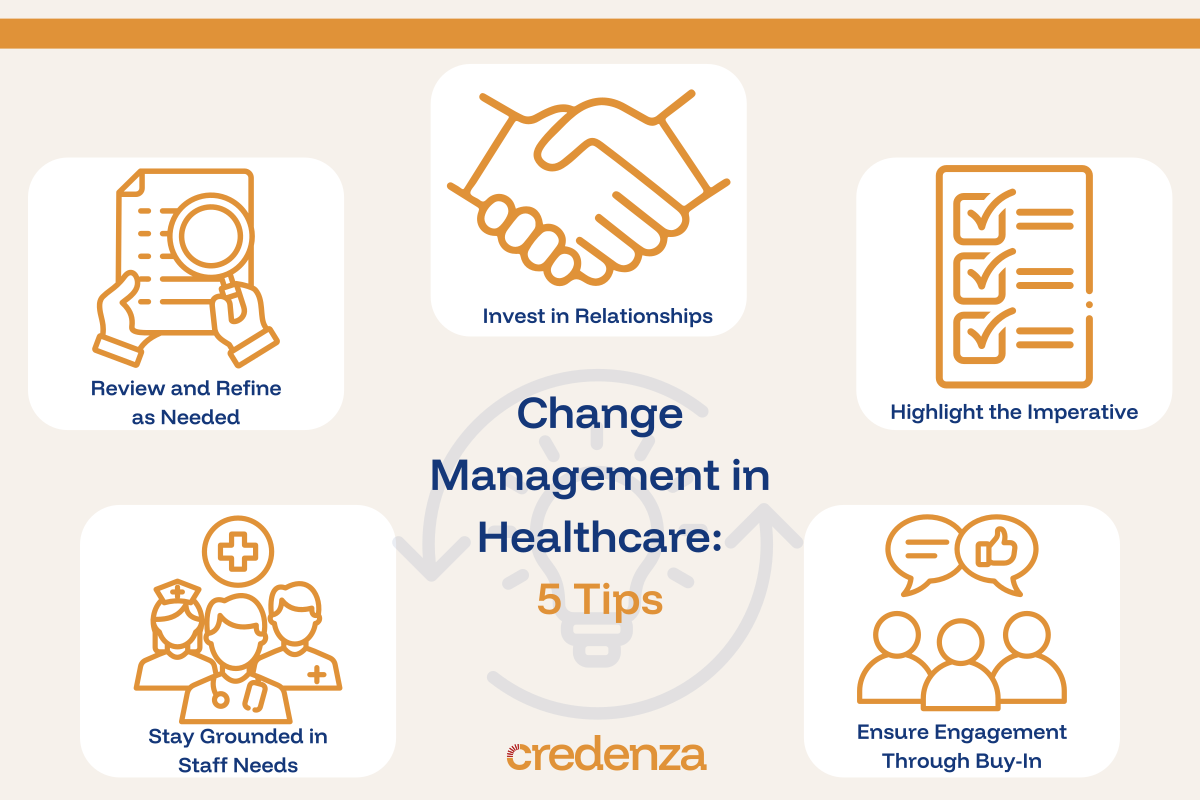
1. Invest in Relationships
Mutual trust forms the backbone of innovation in healthcare. This may look like shared governance and allowing staff to participate in leadership decisions. It may also appear in the form of staff brainstorming events, used to inform system-wide reform. However it shows up in the healthcare environment, those relationships form the bedrock of change readiness and willing participation.
Example: Nursing leadership demonstrates trust and care by being receptive to learning about unit-wide safety issues and initiatives from the staff's perspective during safety huddles.
2. Highlight the Imperative
This step aligns with the beginning aspect of each reviewed models' call for early communication. In healthcare, onboarding staff requires both communication (of expectations and duties, for example) and understanding of the imperative. By signaling how everybody’s role contributes to patient safety, regulatory compliance, and organizational wellbeing, facility leadership incentivizes early change acceptance and the eventual participation in reform.
Example: The chief nursing officer meets with surgical units to express the imperative of a new time-out program, highlighting the recent frequency of never events like wrong-site surgeries and the severity of the current risk to patient safety.
3. Ensure Engagement Through Buy-In
This is often the stage where the effects of change management in healthcare become noticeable. For the process to come to successful fruition, staff members need to integrate the necessary changes into their clinical approach. This can't be achieved without authentic buy-in. If staff believe in both the imperative and the end result of the new program, they'll be willing to contribute to the process's necessary rollout measures.
Example: Clinic nurses are enthusiastic about the new patient relationship management program because they know that it will improve satisfaction scores while cutting costs, enabling those savings to be better spent elsewhere. The nursing team integrates a discharge stop-gap to ensure patients have access to the new self-scheduling and health information portal.
4. Stay Grounded in Staff Needs
Most healthcare changes are going to require additional effort from staff members. This may be temporary as staff acclimate to a new, more efficient system. Or, it may be a long-term additional task. However the change affects staff, leadership needs to remain open to hearing the related challenges and helping mitigate them for the adoption of the intended change to continue.
Example: During the new surgical time-out safety measures, certain members of the team consistently refuse to participate, citing the time drain. Leadership steps in and reapproaches their buy-in measures while reviewing the surgical scheduling complications to ensure that the entire team is cooperative with the new protocol.
5. Review and Refine as Needed
Once a new initiative has been adopted, leaders need to continue impressing the significance of an improvement mindset. Change management strategies in healthcare always encourage continued evolution, mirroring and complementing the flux of healthcare itself. A proactive leader knows that managing change in healthcare is never over, and that refinement is always possible.
Example: A newly adopted accidental needlestick protocol was implemented successfully, but staff have expressed a mental burden associated with the protocol paperwork. Leadership interviews employees and collects data and feedback on how to streamline the documentation process.
Drive Sustainable Innovation at Your Facility
Effective change management in healthcare can help organizations navigate a shifting care landscape while ensuring better outcomes for patients and staff. Enhance your pursuit of quality improvement using our wide range of facility guides and best practice recommendations.