


Nurses who hold a doctor of nursing (DNP) degree have technically earned the title "doctor" in some settings, which is why so many people wonder, Is a DNP a doctor? Getting clear on the nuances of the DNP degree can help to prevent confusion in clinical settings.
Advanced practice nursing is one of the most rapidly growing occupations in the U.S., which means more patients than ever rely on doctorate-level nurses for their care. This growth area also means more DNP-prepared nurses are integrated into care teams, making careful avoidance of role confusion important to team functioning.
We'll provide an overview of the DNP title in healthcare and discuss how it differs from the MD title. We'll also answer common questions about using the DNP abbreviation in medical settings (especially along with the word "doctor") so that you can help your care team, and patients, better understand the role.
Frequently Asked Questions by Patients About DNPs
If you have DNPs on your staff, you may get inquiries from patients about how these providers differ from medical doctors and how this might impact the care they receive. To help you address these questions and concerns, here are answers to some of the most frequently asked questions about the differences between a DNP and a doctor.
What is the definition of a DNP?
A DNP is a Doctor of Nursing, which is the highest level of education and training possible in the nursing field. Earning a DNP degree usually takes a nurse somewhere between 2 to 4 years and approximately 1,000 hours of supervised clinical work.
Is a DNP a doctorate similar to a PhD, or more like an MD?
Like the names, the paths to earning a DNP, PhD, and MD are entirely separate.
A DNP may take a baccalaureate nurse as many as 4 years to complete, but it can take upwards of 7 to 10 additional years to finish an MD. In fact, one of the most notable differences in an MD vs. DNP degree is the number of years of study and training involved for each. Both fields of study are clinical in nature, which means their curriculums may overlap. However, they're influenced by two fundamentally different approaches: the nursing versus medical model.
The Doctor of Philosophy, or PhD, is another distinct academic field and is much less clinical in nature. Nurses more interested in research and education often choose the PhD route.
So, is a DNP a doctor or a nurse?
Short answer: Yes and yes, which is why it's so important to understand the nuances involved in using the dnp abbreviation in medical treatment situations compared to those that are purely academic.
A DNP is a nurse who has earned a doctorate and is therefore entitled to refer to themselves according to that achievement. Like someone who has a PhD in an unrelated field (say, economics) going by doctor while working as a professor, a DNP is also recognized academically as a doctor — but not as a physician.
This is less clear in the clinical setting. To refer to yourself as a doctor while in a hospital or other medical facility implies an MD or DO (Doctor of Osteopathic Medicine) license, which a DNP doesn't have. In some states, like California and Georgia, DNPs are prohibited from calling themselves a doctor with patients. Other states allow the title, but that may change as more states introduce legislation that could forbid a DNP from identifying as a doctor with patients.
Are DNPs ever called doctors in clinical settings?
While the official regulations vary, in general it's best practice not to call DNPs doctors at all in clinical settings. This means DNP-prepared nurses should not introduce themselves this way to patients, and staff shouldn't address them with the term. The best alternative is to call the DNP-prepared nurse by their job title. For example, many nurses who hold DNP degrees work as nurse practitioners.
Is a DNP a nurse practitioner?
The DNP title refers to an academic degree, not a job title. Nurse practitioner is a specific job that can be held by advanced practice registered nurses (APRNs) who have obtained a master-level or doctorate-level degree.
How is a DNP provider different from a doctor?
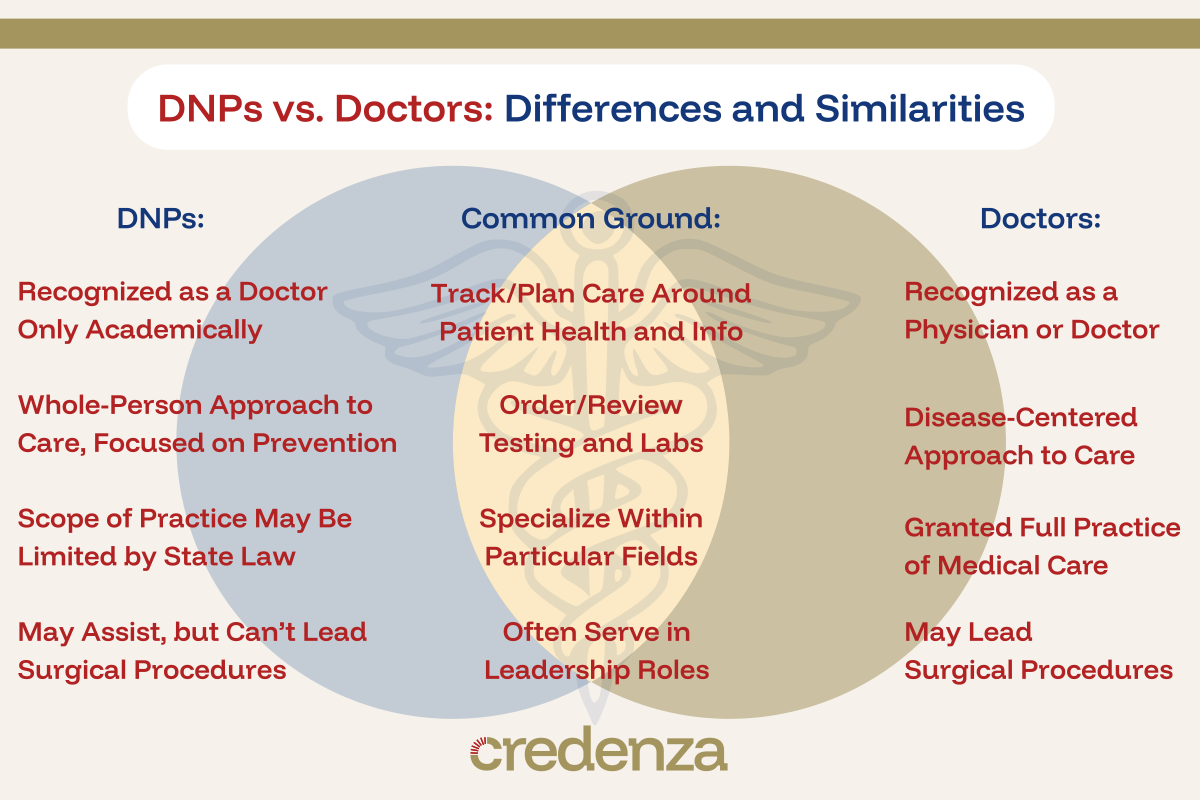
DNP-prepared providers may work in the clinical setting as nurse practitioners, clinical registered nurse anesthetists (CRNAs), midwives, or in other specialized roles that require an advanced degree. Their practice is typically guided by the classical nursing approach to care, which addresses the whole person and prioritizes preventative measures, whereas the historical physician-led approach is more disease centered. Additional differences between DNP-prepared providers and physicians include:
- A physician’s earning potential is typically much higher than that of a DNP-prepared nurse, such as a nurse practitioner.
- DNP-prepared providers may assist with surgeries but they don’t lead surgical procedures.
- Unlike doctors, a DNP-prepared provider's scope may be limited by state laws and restrictions. For example, nurse practitioners must abide by a state's level of practice authority (which can be full, reduced, or restricted).
However, as healthcare and patient priorities shift, these differences become less accurate and there's an increasing overlap in the roles of MD vs. DNP providers. For example, both training paths typically allow providers to:
- Track and plan care around patient health and physical information.
- Order and review diagnostic testing and labs.
- Specialize within particular fields, like dermatology or pediatrics.
- Act as leaders (functioning as healthcare executives, for example).
Is it better to have a DNP provider or an MD?
The inclusion of APRNs into the provider team has proven to lower institutional costs and improve patient satisfaction and wait times. Their addition also promotes better access to care, reducing physician burden and increasing availability of appointments for patients.
For many who openly prefer an APRN provider such as a DNP, bedside manner and convenience are often cited as key benefits. Others who prefer physicians attribute their trust in the qualifications required to become an MD or DO. No matter which is right for you, both DNP-prepared providers and physicians deliver care that is guided by their respective fields' highest levels of education and training.
Curious About Provider Roles and Other Important Details?
As healthcare roles continue to grow more diverse, questions like, Is a DNP a doctor? become increasingly common. For answers you can trust, Credenza offers continuously updated, expert-informed guidance and resources.