


The growing popularity of the APP care model as a framework for offsetting physician shortages begs the question, What does app stand for in healthcare? The APP medical abbreviation refers to an advanced practice provider. These non-physician providers — like nurse practitioners (NPs) and physician assistants (PAs) — are part of an evolving care team and are increasingly necessary for ensuring access to care and maintaining safe patient caseloads.
If you're considering hiring more APPs to help alleviate physician burden and improve appointment availability, you may be wondering if this model is right for your facility. In this article, we'll help you make an informed decision with a brief overview of this alternative provider framework and answer key questions about its use across healthcare settings.
What Is an APP Medical Model’s Benefit?
Healthcare involves so many moving pieces that its processes can often feel tediously complex. Models address that problem by providing a framework that defines application and scope of care while ensuring that it remains evidence-based and aligned with best practice.
When it comes to expanding the provider team, a model that guides the inclusion of an APP in medicine offers a formal structure for clarifying questions like, What is an APP medical provider’s role? By clearly differentiating their responsibilities from those of a physician, organizations are better positioned to facilitate effective interprofessional collaboration and optimize clinical, operational, and administrative processes.
The APP Care Model: Overview and FAQ
This advanced practice provider framework standardizes the roles, expectations, and quality metrics surrounding APP medicine delivery to help ensure all team members are practicing at the top scope of their license.
By clarifying the roles and expectations for APPs, a facility ensures that none of the team members will ever ask the question, What is an APP in healthcare's role? This not only benefits interdisciplinary collaboration, making best use of individual skill sets, but also addresses unintentional limitations and missed opportunities for delegation that may decrease the APP's effectiveness and opportunities for leadership in the workplace.
To further investigate this model, let's answer some of the most frequently asked questions.
Which APPs are included in the APP care model?
Advanced practice providers who are considered APP nurses include:
- Nurse practitioners
- Nurse midwives
- Certified nurse specialists
- Certified registered nurse anesthetists (CRNAs)
Physician's assistants (PAs) are another widely utilized (but non-nurse) APP. Together, with advanced nurse clinicians, they're able to contribute to patient care, often independently supplying the majority of patient needs. These extend to the collection and assessment of health and physical data, ordering and reviewing diagnostic tests, and prescribing medications.
What are the advantages and disadvantages of this model's use?
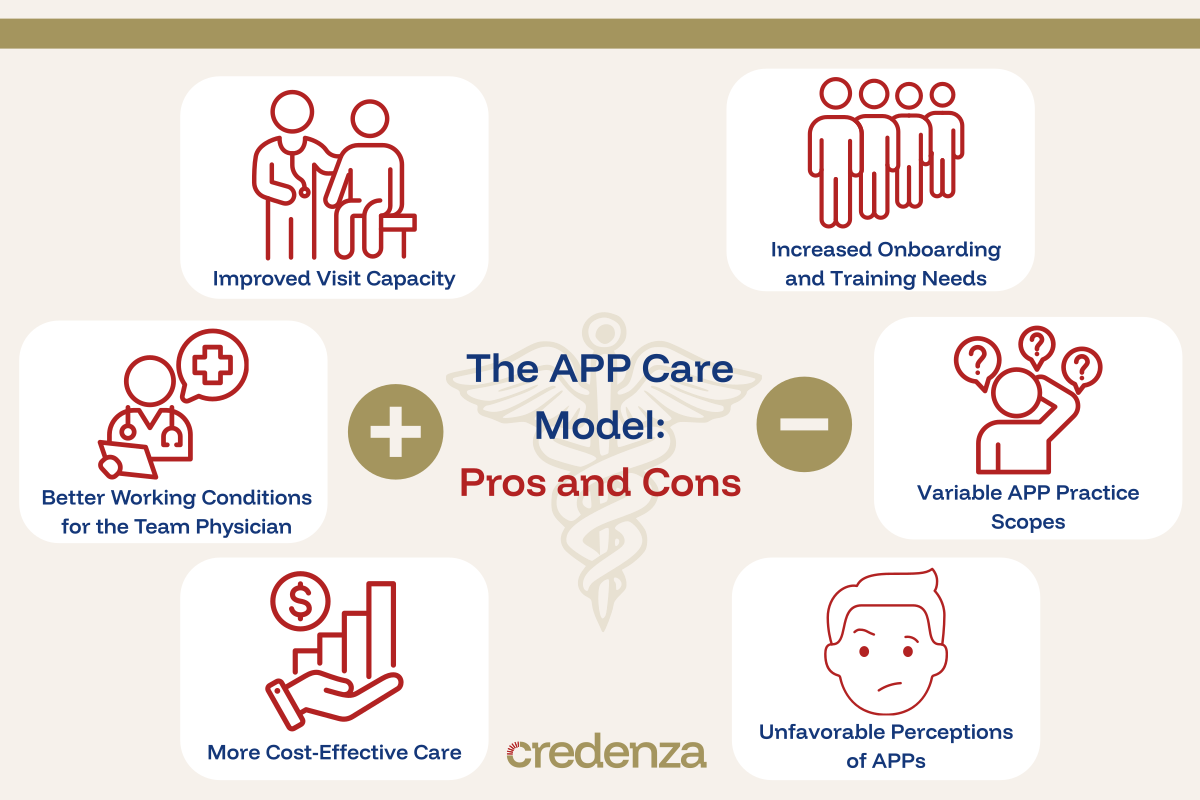
Use of the model has the potential to help healthcare facilities meet their operational goals despite physician shortages, while maintaining care standards and saving on overhead costs. Yet, as with any new program, there can be drawbacks, further described below.
Pros of employing non-physician providers may include:
- Improved visit capacity and expanded access to care (especially for disadvantaged populations and patients in rural settings).
- Better working conditions for the team physician by decreasing their burden, with improved retention of APPs and job satisfaction through model usage.
- More cost-effective care without jeopardizing the patient and therapeutic outcomes associated with physician-based clinical care.
Cons of employing non-physician providers may include:
- Increased onboarding and training needs because APP candidates may arrive with less experience, requiring more time and resources to become fully integrated into the provider team.
- Variable APP practice scopes due to state-by-state differences, regulating the extent of an NP or PA’s clinical autonomy.
- Unfavorable perceptions of APPs, potentially related to ongoing controversies over the effectiveness of APPs, which may encourage downstream effects on organizational culture and jeopardize patients’ trust in their treatment plans.
Many of these listed downsides relate to organizational culture and pre-existing perceptions. This is why a model is so helpful — it standardizes job titles and duty expectations, preempting conflict or distrust generated by misconceptions.
How does a facility implement this model?
If you've decided the APP care model is a good fit for your facility, implementation means designing a model framework that suits your personnel and patient needs. Here's a list of recommendations to help guide the development of your own model.
Best practices to consider:
- Implement a collaboration agreement that applies to all members of the provider team.
- Clarify job descriptions, title distinctions, and role expectations.
- Utilize standardized metrics for performance evaluations.
- Engage the team in routine meetings to help identify individual strengths and skills, optimizing teamwork and improving decision making in clinical care.
- Develop a marketing plan that celebrates providers while providing clarity for patients.
How can facilities ensure transparency around the APP model?
Studies demonstrate that patients largely appreciate physician-led teams like the APP care model supports, but can experience confusion over the credentialing of their different providers. To clarify the APP meaning, medical facilities need to provide clear definitions and proof of qualification to avoid unintentionally misleading patients and to preserve the patient-to-provider relationship.
Transparency Suggestions:
- Incorporate credentials on name tags or labeled uniform-wear.
- Advertise care team member roles in marketing schemes and website or pamphlet introductions.
- Add provider names and qualifications to discharge or summary of care paperwork.
- Mandate that providers introduce themselves and clarify their titles and qualifications during every patient interaction.
Are there any other considerations worth noting?
Several methods have been shown to improve APP satisfaction and efficiency while providing care in the clinical setting. It's worth considering these additional elements for maximizing the benefits of advanced practice providers as part of your care team.
Additional Suggestions:
- Support leadership opportunities for APPs and a seat at the table for guiding institutional values, care approaches, and organizational changes.
- Standardize onboarding processes for all providers, immediately setting the standard for collaboration.
- Consider using mentors to help new APPs transition to the provider role, potentially utilizing group mentoring if staffing is an issue.
- Incorporate technology such as AI-powered scribe services (while maintaining strong data security) to further promote efficiency.
Looking for Other Ways to Optimize Care Delivery?
The APP care model is one of many that can help detangle complex aspects of healthcare into effective and patient-centered frameworks. Don't miss our latest healthcare insights and resources, written by experts to help you stay on top of regulatory changes and best practice updates.