


Alcohol use disorder (AUD) affects approximately 11% of the U.S. adult population and is a leading preventable cause of death both nationally and worldwide. The Sinclair Method is a treatment option for patients with AUD that involves taking an opioid-antagonist pill an hour before drinking. It's gaining recognition in both academic and treatment communities, but what is The Sinclair Method, exactly?
In 2022, the World Health Organization (WHO) identified AUD as a significant public health burden and, for the first time, included two medications for treating AUD on the Model List of Essential Medicines (EML). Using medication-assisted treatment (MAT) options, like The Sinclair Method, alcoholism can be addressed with an effective, multimodal approach. Yet, it continues to face resistance and is widely underutilized by healthcare providers.
As a nursing leader, you may be wondering about how you can best help your staff advocate for patients with AUD and stay informed about available treatment options. Use this guide as a starting point, with clarifying details and answers to common questions about this specific method, including its origins, uses, and limitations.
The Sinclair AUD Treatment Method: History
The Sinclair Method (TSM) was created by Doctor John D. Sinclair, based on his years of research related to alcohol addiction, behavior, and brain chemistry. In the 1980s he proposed that alcohol consumption (including problematic overuse) was learned behavior, reinforced by an endorphin release in the brain, and could therefore be unlearned. In effect, a person could be "free" from AUD once treated. This ran counter to the model of alcohol addiction as a chronic condition requiring ongoing vigilance and intervention.
Sinclair's discovery of the alcohol-deprivation effect also separated his work from the existing treatment models by stating that, for those with a habit of drinking alcohol, deprivation phases led to increased cravings and increased consumption rates when a period of absence ended. Instead of immediate abstinence, he proposed that patients needed to experience drinking alcohol without the endorphin-mediated reward. This could potentially lead to extinction, the reversal of the initial learned association between alcohol and pleasure.
In an early clinical trial, he had patients take an endorphin-blocking medication (naltrexone) before drinking to gradually break the link between alcohol and pleasure. In one pivotal study addressing the question, What is The Sinclair Method's role in public health? a total of 78% of the patients experienced decreased cravings for alcohol and decreased consumption over time. Additional studies confirmed his findings, and experts now advocate for TSM as an important option for patients.
An Overview of TSM
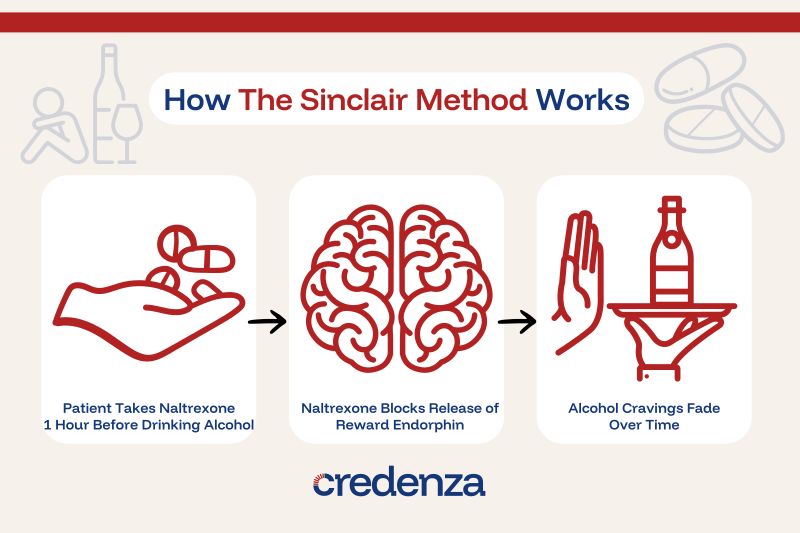
Before a patient begins TSM, they're encouraged to speak with a healthcare provider to see if the method is a good fit. Next, a provider needs to write a prescription for naltrexone. Sinclair Method timing is important, and requires that patients take the pill one hour before drinking so that the pleasurable "buzz" is disrupted by the medication. Each time the patient drinks while on naltrexone qualifies as an extinction trial, meaning the brain is forming different neural pathways.
Over time old associations are broken down by using naltrexone. The Sinclair Method has thus helped patients establish a new relationship with alcohol. However, this takes time and requires consistent engagement. Patients are often tasked with tracking alcohol usage and participating in therapy to work on learning coping skills or to address underlying psychological or psychosocial issues.
The goal of TSM is patient centered and varies considerably. For some, targeted naltrexone use can help break a habit of binge drinking on weekends. Others may want better control over drinking habits in social situations, or to experience more alcohol-free days. The method focuses on giving patients dignity during treatment, removing moral stigmatizations around AUD, and improving the patient's sense of wellbeing.
Frequently Asked Questions About TSM
Nurses are often required to talk to patients about their relationship to alcohol. This may be during routine intake at a well-patient visit, when addressing an acute illness, or during preparation for a surgical procedure. As a nursing leader, it's important to be informed about the treatment options for patients.
We put together this FAQ to give you a starting point as you delve into the research around addiction so that your staff can deliver informed, compassionate nursing care to those with AUD.
What is The Sinclair Method used for?
With The Sinclair Method, alcohol use can be reduced over time. The method is used when patients want increased control over problematic drinking patterns. It may be best for those with mild or moderate alcohol disorders (which can be termed "pre-addiction"), rather than those with a severe, late-stage addiction.
Sometimes negative health episodes, such as accidents or unpleasant symptoms, trigger a desire for change. Nurses at the bedside or in outpatient settings may be the first caregivers to speak to a patient who has decided to seek help.
Why isn't TSM more widely used?
In general, medication is infrequently prescribed for patients with AUD. If you've worked in a direct patient care setting, you may know firsthand that TSM is rarely mentioned during conversations with patients about problematic drinking patterns. Often, a provider will suggest self-directed modifications (such as "try to cut back"), or separate the substance use disorder from the rest of the healthcare plan entirely.
Many barriers to integrating TSM exist, including perceptions of addiction and differing understandings of what recovery looks like. Given its lack of encouragement for immediate cessation, many providers don’t trust The Sinclair Method. Criticisms (largely rooted in concerns about the effect of continued drinking on patients’ health) may have contributed to the method’s consistent disuse.
What are the advantages and disadvantages of TSM?
The Sinclair Method has several advantages over more traditional AUD treatment options, such as AA. It doesn't require complete abstinence, which is a deterrent for some people struggling with problem drinking. It can also be done privately via telehealth, which reduces feelings of shame or negative social stigma for the patient.
It also has some disadvantages. Because of Sinclair Method criticisms across the medical community, many providers don't know about it. Even those that prescribe medication support for AUD may use an approach that administers a prophylactic naltrexone (daily) vs. The Sinclair Method. Whether or not a physician uses the Sinclair Method, dosages for naltrexone typically start at 50mg, with adjustments made on a case-by-case basis.
For patients interested in redefining their relationship with alcohol through this method, it may be daunting to find support for beginning and sticking with TSM. For some people, naltrexone’s side effects can make the regimen difficult to sustain. Patients may also struggle to take the pill at the correct time.
What is The Sinclair Method success rate?
So, does the Sinclair method work? Research suggests that TSM has an 80% success rate, which is high for the treatment of AUD. It's important to note that "success" in this context is nuanced and involves the patient's goals, which may be to gain control of drinking and consume less, rather than the blanket aim of complete abstinence.
How long does the method take to work?
A patient's experience with TSM will vary, and desired changes can take weeks, months, or years to occur. Progress is gradual and may not be linear. While some people experience shifts in drinking patterns within weeks, for others it could take years to reach their goals.
What are the alternatives to TSM?
There are other medication-assisted treatments for AUD. For example, disulfiram promotes an adverse reaction to alcohol consumption. Some providers prescribe naltrexone for AUD without incorporating other aspects of TSM, like the timing of the medication or the continuation of drinking while extinction takes place. In addition, there are treatment options that don't use the assistance of medications, such as residential rehab programs, AA, and talk therapy.
Want to Stay Informed About Changes in the Healthcare Landscape?
Now that you can answer the question, What is The Sinclair Method? you may have more questions about how to continue to provide optimal patient care. We know that staying informed about advances in healthcare can be challenging, so we're here to support you with our expert-backed healthcare insights and resources.