

Healthcare compliance monitoring tools are software platforms that help organizations track, manage, and report regulatory adherence. These solutions vary in terms of scope and vendor support, but all typically offer (some) administrative workflow automation, audit tracking, risk assessment, and real-time reporting options.
As developing technologies continue to advance, many of these compliance platforms are analyzing larger volumes of data at faster speeds than ever before. This helps them discover potential risks and compliance gaps more efficiently. We'll provide an overview of compliance monitoring software in healthcare, and review best practices for ensuring it can be effectively implemented (and maintained) to support regulatory compliance.
Knowing how to maximize the effectiveness of these important healthcare resources not only supports efficient administrative workflows. It also paves the path to a true culture of accountability while enhancing regulatory compliance, boosting patient safety, and protecting organizational integrity.
What Is Compliance Monitoring in Modern Healthcare?
Traditional audits and data tracking methods largely rely on reactive compliance strategies, flagging issues only after they’ve actually occurred. Effective solutions for keeping up with today’s increasingly complex regulatory environment must be proactive. This requires real-time, continuous compliance monitoring that identifies (and addresses) regulatory risk factors before they become violations.
So, in terms of the current healthcare landscape, what is monitoring? Compliance measures currently being tracked, managed, and reported on include the requirements set by a range of governing entities, such as the following:
Federal Authorities
Most notably, these include the rules set by the Health Insurance Portability and Accountability Act (HIPAA), which protects patient privacy through data control. Federal oversight also extends to the Office of Inspector General (OIG) and the Conditions of Participation set by the Centers for Medicare and Medicaid Services (CMS), which provides coverage for nearly two in every five Americans.
State Standards
Each state enforces its own specific rules that govern the provision of healthcare services, from nursing practice guidelines to how new medical facilities are established. Healthcare compliance tracking tools help ensure that these location-specific compliance measures are observed.
OSHA
The Occupational Safety and Health Administration (OSHA) enforces workplace safety standards, like bloodborne pathogen precautions and emergency planning requirements. A violation of these rules can cost a healthcare system as much as $16,250 per day that the issue persists.
Additional Oversight and Accrediting Bodies
Third-party health plan payers and accrediting organizations like the Joint Commission also establish criteria that compliance monitoring tools may track and flag. For example, the Joint Commission mandates monthly re-verifications of certain employee credentials, increasing the responsibility of their compliance team colleagues.
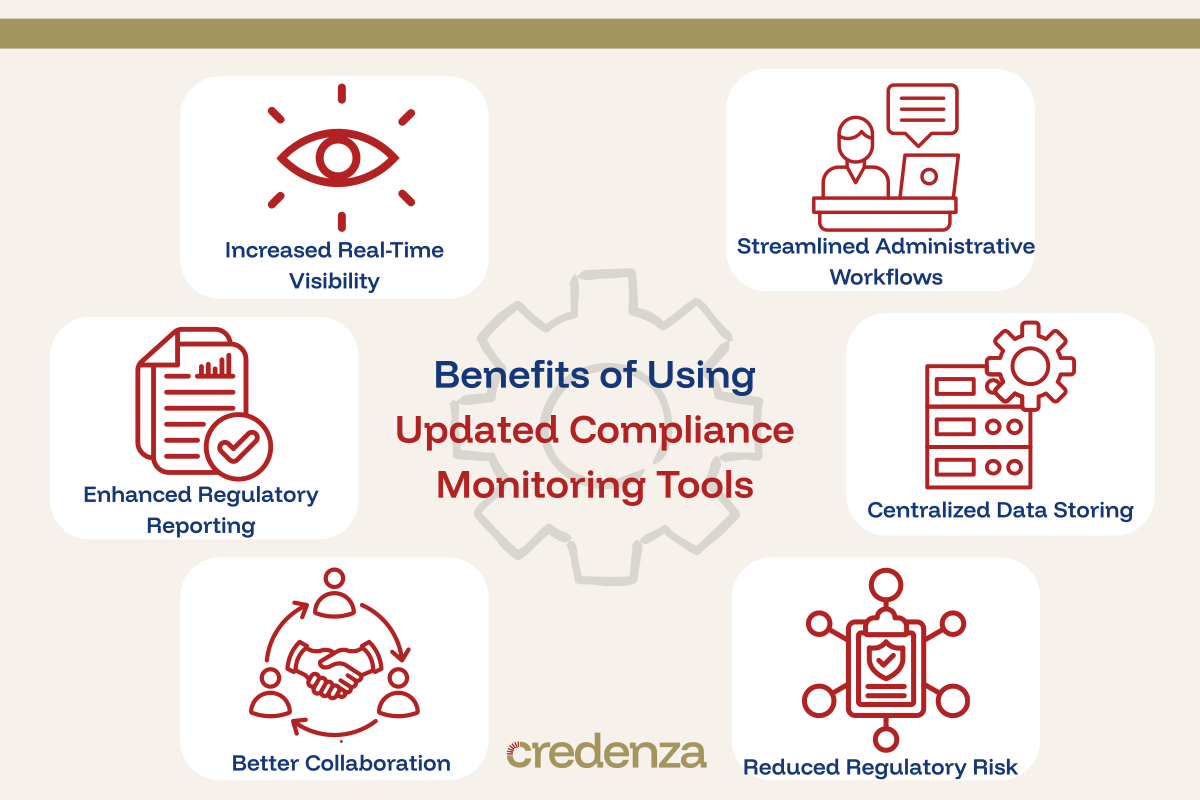
The Benefits of Updated Compliance Monitoring Tools
The key benefit of technology-forward healthcare compliance tools is that they offer a proactive approach to identifying and managing regulatory risk. In contrast, manual compliance monitoring can increase the likelihood of a dangerous records gap. For example, a single missed practitioner license renewal can lead to costly penalties and health plan exclusions.
Additional benefits of advanced, automated compliance monitoring tools (for employees and health systems alike) include:
- Increased real-time visibility into compliance activities for improved risk monitoring.
- Streamlined administrative workflows through automated data tracking, auditing, and reporting.
- Enhanced regulatory reporting with comprehensive analytics and audit-ready documentation.
- Centralized data storing that organizes documentation into a single repository, improving ease of accessibility and oversight.
- Better collaboration by way of improved communication and transparency among compliance teams and stakeholders.
- Reduced regulatory risk through early detection and mitigation of identified compliance failures.
Different Types of Compliance Monitoring Software
Selecting a compliance monitoring platform can feel overwhelming due to the large number of available options. To help narrow your search, consider key features such as:
- Security and privacy measures, including protection features like role-based access.
- User training and support, which strengthens employee engagement and effective program use.
- Policy and contract support, like ease of updating and tracking changes.
- Risk management features, including real-time monitoring and automated risk flagging.
- Reporting and analytics, with organized, audit-ready data that supports better decision-making.
- Integration capacity, particularly the ability to function seamlessly alongside electronic health record (EHR) systems.
- Incident support, which includes any additional tools offered to help manage a compliance event if one were to occur.
Examples of some widely used healthcare compliance monitoring software brands include:
MedTrainer
Used by more than 3,000 healthcare systems, MedTrainer offers an integrative, all-in-one platform that includes compliance training, data management, and credentialing support. It’s recognized for its scalability and automated data review processes.
Key Features:
- Employee compliance training and learning tools
- Automated onboarding and credentialing workflows
HealthStream
A user-friendly interface with comprehensive compliance training modules makes HealthStream a great choice for many compliance teams. Its extensive library of current compliance data also helps protect organizations from regulatory risk.
Key Features:
- Risk assessment and OSHA-specific compliance tools
- Incident reporting and management support
MetricStream
Automated audits and centralized policy tracking have helped make MetricStream an industry-leading compliance management solution. It also leverages artificial intelligence (AI) to
predict compliance trends and flag easy-to-miss systemic risks.
Key Features:
- Real-time dashboards for enhanced risk visibility and executive reporting
- Continuous monitoring with automated evidence collection for audit readiness
Healthcare Compliance Monitoring Tools: Best Practices
Now that you understand how technology-forward compliance monitoring solutions support stronger systemic integrity and administrative workflows, here are some best practices for implementing and maintaining your chosen compliance platform.
1. Carefully Vet Your Healthcare Compliance Monitoring Options
Choosing which platform is best for your organization comes down to three main considerations: the software’s essential functionality, available features, and logistical (or business) considerations. Ensuring that these key elements match your facility’s unique workflows and regulatory requirements can support long-term program adoption while strengthening overall compliance.
Example:
A newly established urgent care clinic bases its compliance monitoring tool selection on which offers the most comprehensive training features. This supports the administrative team's need for additional support, building compliance and regulatory knowledge to support staff (and organizational) readiness before they begin delivering patient care.
2. Integrate Compliance Monitoring Systems Into Standard Workflows
As health systems increasingly prioritize collaboration and integration, compliance tools must align with that same level of intersystem coordination. Seamlessly combining the compliance platform within existing workflows (like EHRs and billing systems) reduces the risk of compliance errors caused by data silos.
Defragmenting the flow of information among healthcare systems and your compliance tool of choice strengthens audit-readiness through better accuracy while allowing for real scalability of the program.
Example:
An ambulatory surgical center integrates its compliance monitoring tools with its billing system, improving real-time compliance monitoring across the revenue cycle. By connecting the two, the practice also increases the efficiency and effectiveness of flagging fraud risks and mitigating potential claim denials before the payment request is submitted.
3. Develop a Staff Training Program to Support Effective Use
Effective, comprehensive compliance monitoring depends on staff engagement. This means that employees need to understand what the regulatory requirements are and how to use the compliance software to maintain them. Ambiguity (whether related to compliance standards or platform functionality) can lead to inconsistent processes and errors.
With structured, consistent training that defines each compliance team member’s role and responsibilities, organizations can improve monitoring software adoption while strengthening the decision-making that ensures the platform is used to its fullest potential.
Example:
A hospital overhauls its HIPAA-compliance training program for administrative staff, clarifying previously gray areas (like, what truly necessitates chart access for a clinician) so that they’re able to confidently and effectively respond to compliance flags when the system alerts a potential breach.
4. Establish Clear Performance Metrics and Compliance Objectives
The pursuit of excellence requires specific, measurable goals. In the compliance sector, this means tracking two categories of performance metrics (leading vs. lagging indicators). Leading indicators identify potential compliance issues, like staff training completion rates. Lagging indicators measure the outcomes of compliance efforts, like the number of regulatory violations.
Setting SMART objectives (specific, measurable, attainable, relevant, and timely) alongside a data-driven approach can strengthen both team performances and the overall process.
Example:
Software auditing reveals chronic late (or missing) reporting on accidental needlestick injuries within the mandatory OSHA 300 Log. The mismatched lagging indicators (the number of needle stick injuries and the number of logged reports) indicates a concerning deficiency. Equipped with this information, the hospital sets a SMART goal to achieve 100% incident reporting within 3 days and compliant OSHA 300 Log accuracy within 30 days. This helps the organization achieve regulatory compliance with OSHA while pursuing better safety standards for staff.
5. Balance Automated Compliance Monitoring With Human Oversight
A truly effective compliance monitoring program needs more than just automation. It also requires a well-defined governance framework that combines developing technologies with expert judgment. This leverages the data-processing capacity of compliance software while ensuring that the machine-driven output is validated by trained professionals who understand regulatory nuance and can consider the ethical implications involved in each case.
By combining automation with human oversight, healthcare facilities ensure that compliance decisions are aligned with systemic values and mission-related objectives.
Example:
An automated monitoring system flags several CMS-insured patients’ billing summaries for excessive care costs and potential upcoding. Before confirming that the alerts indicate healthcare fraud, compliance officers review the clinical documentation for documentation of medical necessity. The clinical notes fully support the treatments employed and the issue is resolved by the reviewing team member, allowing reimbursement procedures to proceed.
Want to Get Ahead of Today’s Top Compliance Concerns?
Compliance monitoring tools offer increasingly proactive strategies for flagging and mitigating regulatory risks. Consult our full catalog of expert-backed facility guides and management insights, designed to help you tackle today’s top healthcare challenges.