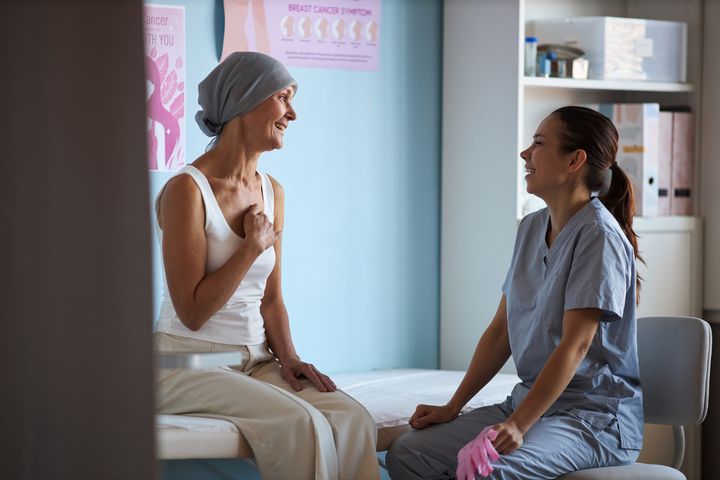

As a radiation oncology nurse, you’d work at the intersection of cutting-edge cancer technology and deeply human care. While powerful machines target tumors with remarkable precision, you’ll ensure patients respond well to treatment, answer questions, offer encouragement, and help them face each treatment session with greater confidence.
Radiation therapy remains a cornerstone of cancer treatment, with nearly 50% of cancer patients receiving it during their course of care. That translates to approximately 1 million courses each year in the U.S. alone. If you want to join this fascinating specialty, this guide will show you the path forward.
Radiation Oncology RN: Career Snapshot
- Mission: Deliver hope, healing, and expert care to patients facing cancer with the help of radiation therapy.
- Responsibilities: Assess patients before procedures, manage treatment-related side effects, monitor responses to radiation therapy, and provide emotional support.
- Workplaces: Cancer centers, radiation oncology clinics, hospitals, and academic medical centers.
- Path: Nursing degree followed by optional certification.
- Timeline: Approximately 2 to 4 years.
What Is Radiation Oncology Nursing?
Radiation therapy is a medical treatment that uses controlled doses of high-energy radiation — such as X-rays, gamma rays, or charged particles (called electrons or protons) — to damage or destroy cancer cells. The goal is to stop cancer cells from growing and dividing while minimizing harm to surrounding healthy tissue.
Radiation oncology nursing is a specialized field of nursing focused on caring for patients who are undergoing radiation therapy, which is often delivered in a course of multiple sessions over several weeks. This is where radiation oncology nurses play a critical role: educating patients on what to expect, monitoring how they tolerate treatment over time, and intervening early when side effects appear.
Wondering who your typical patient might be? Radiation therapy is used to treat a wide range of cancers, including the following:
- Breast cancer
- Cervical cancer
- Head and neck cancers
- Lung cancer
- Lymphomas
- Prostate cancer
- Skin cancers
Radiation therapy can also be used in combination with surgery, chemotherapy, or immunotherapy. This means that, in practice, you’ll work with a wide range of cancer patients, including those whose primary treatment involves other approaches.
What Does a Radiation Oncology Nurse Do?
In addition to typical nursing duties like head-to-toe assessments, medication administration, and accurate documentation, radiation oncology nurses have highly specialized responsibilities that are closely tied to the radiation treatment process and its unique side effects. Their duties include:
- Reviewing radiation treatment plans, including verification of prescriptions, tumor and target volume definitions (GTV, CTV, PTV), and organ-at-risk (OAR) contours to ensure accurate dose delivery.
- Performing pre-treatment assessments, including skin condition in anticipated radiation fields, weight, hydration status, pain, and overall functional status.
- Verifying patient understanding of the prescribed treatment regimen, including fractionation schedule, total dose, and expected duration of therapy.
- Educating patients about CT simulation procedures, immobilization devices (such as thermoplastic masks, molds, or vacuum cushions), and the importance of consistent positioning.
- Explaining the purpose of skin markings, also called radiation tattoos, and emphasizing the importance of maintaining them during the treatment course.
- Assessing for radiation dermatitis within treatment fields, including erythema, dry or moist desquamation, pruritus, and hyperpigmentation.
- Evaluating site-specific toxicities based on treatment location, such as xerostomia and dysphagia (head and neck), ulceration (stomach), or biliary stenosis (bile ducts).
- Monitoring nutritional intake, hydration status, and weight trends, especially in patients receiving head-and-neck or abdominal radiation.
- Providing education about symptom management for radiation-related fatigue, pain, inflammation, nausea, as well as other possible side effects.
- Educating patients on the expected timeline of acute versus delayed radiation effects, including when peak side effects typically occur during and after treatment completion.
- Providing emotional support and anxiety management related to the radiation procedure and immobilization devices.
- Observing for early signs of late radiation effects during follow-up care, including fibrosis, strictures, lymphedema, or organ-specific functional decline.
- Collaborate with radiation therapists, medical physicists, dosimetrists, and radiation oncologists to ensure safe and effective treatment delivery.
How to Become a Radiation Oncology Nurse
Ready to make a difference in the lives of cancer patients? These are the steps you'll need to take to enter the radiation oncology nursing specialty:
1. Earn a Nursing Degree
Your first step in joining any nursing specialty, including radiation oncology, is earning a nursing degree. Most aspiring nurses choose one of two educational paths:
- Associate Degree in Nursing (ADN): Typically takes 2 years to complete.
- Bachelor of Science in Nursing (BSN): Usually takes about 4 years to complete.
While an ADN can qualify you for licensure as a registered nurse (RN), many hospitals, cancer centers, and clinical research facilities prefer or require nurses to hold a BSN. A bachelor's degree may also create more opportunities for career advancement, including leadership roles such as nurse supervisor or educator.
2. Obtain a Nursing Licensure
After graduating from an approved nursing program, you'll need to earn RN licensure. To do so, you'll need to pass the National Council Licensure Examination for Registered Nurses (NCLEX-RN), which is a standardized exam that assesses your knowledge and clinical judgment required to do your work safely. In addition to passing the exam, you'll need to meet any licensure requirements established by your state's nursing board, such as submitting an application, completing a background check, and paying applicable fees.
3. Gain Experience
Now that you're a licensed RN, it's time to start building real-world nursing experience. Depending on the employer, you may be able to enter a specialized role such as radiation oncology shortly after graduation — especially if the hospital where you want to work offers nurse residency programs or externships.
Another pathway to this specialty involves gaining experience in other clinical settings, where you can build all essential nursing skills. Some common new-graduate-friendly specialties include:
- Rehabilitative care
- Oncology nursing
- Neurology nursing
- Progressive care
- Medical-surgical nursing
- Telemetry nursing
- Palliative care
4. Attain Radiation Oncology Nurse Certification (Optional)
After gaining oncology-related experience, some nurses pursue professional certifications that validate their expertise. Here are some examples of applicable credentials you may choose to pursue:
- Radiation Oncology Certified Nurse (ROCN)
- Oncology Certified Nurse (OCN)
- Certified Pediatric Hematology Oncology Nurse (CPHON)
These certifications are offered by the Oncology Nursing Certification Corporation (ONCC) and generally require an active RN license, professional nursing experience, and a specified number of oncology practice hours.
5. Pursue Advanced Education (Optional)
Pursuing advanced education can open the door to higher-level clinical and leadership roles within oncology care. Although this step is not required to enter the field, some nurses choose to earn a Master of Science in Nursing (MSN) or a Doctor of Nursing Practice (DNP) to expand their scope of practice and take their careers to new heights.
How Much Do Radiation Oncology Nurses Make?
The typical radiation oncology nurse salary in the U.S. is about $89,000 per year. Your actual earnings may vary depending on education, certifications, years of experience, and geographic location.
If you are open to relocation, you may want to consider submitting your RN resume to some of the highest-paying states:
Find a Job You Love, Radiate Happiness
Explore radiation oncology nurse jobs and other specialty opportunities with Credenza’s personalized job matching — built to help you land a job you’ll love.