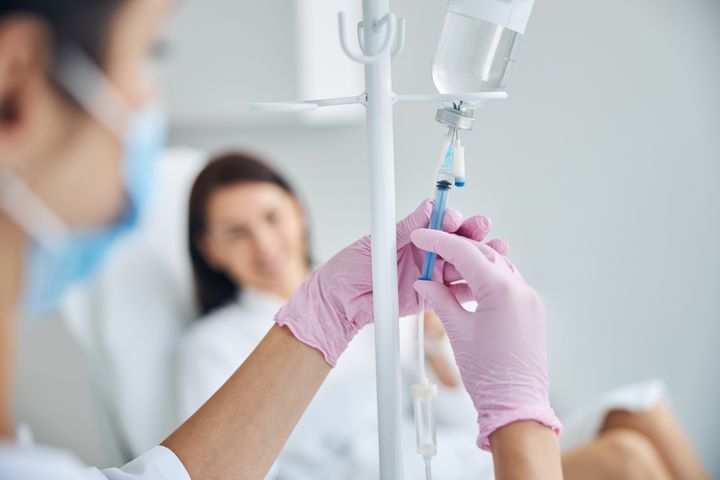

What do insulin, parenteral nutrition, and oxycodone have in common? They’re all high-alert medications — substances that have a higher risk of causing harmful complications as a result of errors. Nursing professionals must be extra careful when handling and administering these meds. Let’s uncover more about high-risk medications and how you can protect patients and your license.
What Are ISMP High-Alert Medications?
The Institution for Safe Medication Practice (ISMP) is a nonprofit organization that works to promote safety in medicine. Their research and advocacy efforts focus on ways to mitigate risk and foster the best outcomes. The ISMP high-alert medications list is a compilation of medications that require additional safeguards to reduce errors and keep patients safe.
The ISMP periodically compiles and updates its list of medications that are most often involved in harmful errors. Here’s a breakdown:
- Adrenergic agonists, IV (e.g., epinephrine and phenylephrine)
- Adrenergic antagonists, IV (e.g., propranolol and labetalol)
- Anesthetic agents (e.g., propofol and ketamine)
- Antiarrhythmics, IV (e.g., lidocaine and amiodarone)
- Antithrombotic agents (e.g., warfarin, rivaroxaban, and alteplase)
- Cardioplegic solutions
- Chemotherapeutic agents
- Dextrose
- Dialysis solutions
- Epidural and intrathecal medications
- Inotropic medications (e.g., digoxin and milrinone)
- Insulin
- Liposomal drug forms (e.g., liposomal amphotericin B)
- Moderate and minimal sedation agents for children (e.g., chloral hydrate and midazolam)
- Moderate sedation agents (e.g., dexmedetomidine and lorazepam)
- Neuromuscular blockade agents (e.g., succinylcholine and rocuronium)
- Opioids of all administration routes
- Parenteral nutrition
- Sodium chloride for injection greater than .9%
- Sterile water for injection, inhalation, and irrigation in containers of 100ml or more
- Sulfonylurea hypoglycemics (e.g., glipizide and glyburide)
Most of this high-alert medications list won’t surprise you — opioids, anesthetic agents, and insulin are known to be very harmful if administered without special care. But other items, such as sodium chloride, might not be obvious. That’s why it’s important to stay updated on the latest recommendations for risky meds and learn how you can mitigate risk yourself.
Strategies to Reduce Errors for High-Alert Meds
When you think about reducing errors, consider the Swiss Cheese Model. Swiss cheese has holes, but few go all the way through to the other side. Accidents happen when there’s a breakdown of safety barriers across several levels of the system — in other words, when an error isn’t blocked from happening at any of the levels of care.
The upside for nurses is that there’s more than one way to manage risk for high-alert meds. Safety measures happen at the pharmacy, the PYXIS, the bedside, disposal, and in many areas in between. The ISMP’s recommendations include the following measures:
- Standardizing the way meds are ordered, stored, prepared, and administered
- Improving access to drug information
- Limiting access to high-risk medications
- Using auxiliary labels and automating alerts
- Using redundancies to block errors
- Requiring automated or independent double checks
How are these safety recommendations carried out? Most measures happen at the policy level. For example, the Joint Commission requires that organizations identify high-alert and hazardous meds. Facilities and healthcare organizations set their own safety systems when it comes to how high-risk meds are processed, ordered, and administered.
Still, accidents happen. For example, in 2024, a nurse followed the safe administration procedure for what she thought was an acetaminophen infusion bag. Shortly afterwards, the patient experienced bradycardia and bradypnea. Upon looking at the empty bag, the nurse found it labeled Dexmedetomidine hydrochloride, or Precedex — a procedure sedative. The manufacturer had mislabeled the outer packaging on the bag.
As a nurse, your focus is generally on safe administration. For example, you’re responsible for getting a cosign on a sliding-scale insulin dose before giving it, but you’re usually not the one labeling insulin in the pharmacy. Still, nurses are often the final safety net, working to prevent errors from reaching patients.
Nursing Recommendations for High-Alert Meds
Medication errors are the most common and avoidable source of harm to patients and are responsible for 22% of readmissions after discharge. Whether giving a high-alert medication or just melatonin, nurses must follow safe practices for medication administration. The nurses’ role in preventing medication errors includes following the five rights of medication administration:
- Right person
- Right drug
- Right dose
- Right route
- Right time
When you’re in a rush, going through the medication rights might seem like a taxing process. If you’re about to do a med pass, take a moment to go through these rights and ensure you’re not assuming something is correct. Interruptions increase your risk of error. You’ve probably heard the phrase, “Go slow to go fast.” Many errors happen when staff are stressed, tired, or burnt out.
Certain patients are more at risk for medication errors than others, and nurses should be aware of these risk factors:
- More than 5 prescriptions
- Age greater than 65
- Multiple prescribers
- Multiple diagnoses
High-Alert Medications FAQ
What are the most hazardous medications to administer?
Some medications are hazardous for medical providers. They may be carcinogenic, toxic to the reproductive system or an organ, or dangerous in another way. This is a separate distinction from high-alert meds. The National Institute for Occupational Safety and Health (NIOSH) maintains a thorough and updated list of these meds, which include the following and many more:
- Cyclosporine
- Estrogen/progesterone combinations
- Methotrexate
- Tamoxifen
What happens if I make a medication error?
That depends on many factors — the type of error, patient outcomes, and how quickly you report it all influence what happens next. Medication errors are scary, but in general, the first course of action is to be honest and tell someone what happened.
Is Tylenol considered high-alert?
Generally, no. However, acetaminophen may be considered high-alert in some individuals because it can be toxic to the liver. Hepatoxicity usually happens when a patient is taking more than one product containing acetaminophen, or when the dosage is miscalculated in underweight individuals.
Promote Patient Safety in a New Workplace
Now that you’ve brushed up on high-alert medications, you’re ready to give safe care across a broad range of settings. Looking for something new? We can help you find nursing jobs in your area with personalized roles sent directly to your inbox. Learn more today.