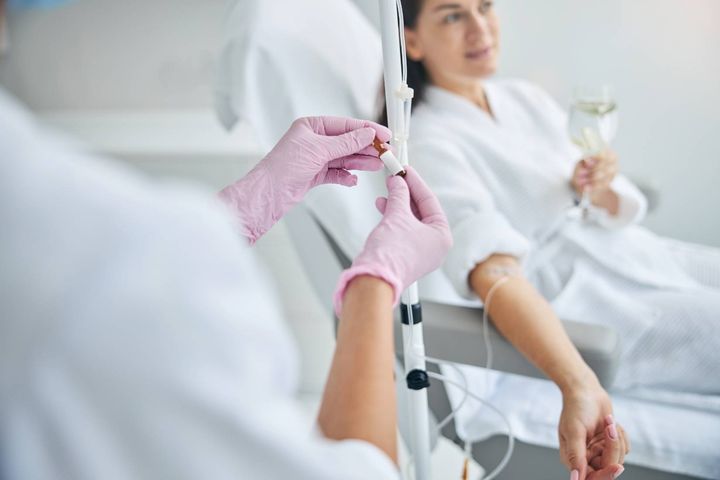

The work of a vascular access nurse requires precision as well as a strong knowledge of anatomy and infection control. In this procedural role, you might manage anything from peripheral IVs to femoral lines. Curious about this career? Learn more about the education, skills, and certifications required for vascular access nursing.
What Is a Vascular Access Nurse and What Do They Do?
This clinician inserts lines that provide access to a patient’s vascular system. Patients may need this type of access for frequent blood draws, medication, dialysis, total parenteral nutrition, or other interventions. While the most common access device is an intravenous catheter, there are many others — peripherally inserted central catheters (PICC lines), midlines, ports, and more.
This is a procedural nursing role, meaning that nurses in vascular access don’t take a daily patient assignment or administer medications like floor nurses. Still, this role is highly patient-facing and specialized. Here’s what the daily responsibilities entail:
- Facility coverage: Vascular access nurses respond to requests from floor staff and physicians, so they travel throughout the hospital on a daily basis. In large facilities, a team of vascular nurses may each cover different sections of a hospital.
- Assessment and chart review: When they’re called to see a patient, a vascular nurse first evaluates their medical status and treatment needs. This includes a skin and vein assessment as well as their medication regimen.
- Planning care: Using assessment data and the overall care plan, a vascular nurse determines what type of line is appropriate. For example, many medications like chemotherapy and total parenteral nutrition require a central line for administration.
- Line insertion: Using their understanding of anatomy and infection control, the vascular nurse inserts a line using a needle and tubing. They typically use ultrasound guidance to visualize the vascular system. After insertion, they apply specialized dressings to keep the site clean.
- Documentation: Charting the site of insertion, catheter gauge, dressing type, patient response, ongoing plan, and more.
- Administrative tasks: Vascular access nurses may also need to help keep track of supplies, train new staff, report on procedures, and communicate amongst the medical and nursing teams.
Which Settings Need Vascular Access Nurses?
Vascular access nurses work in acute care hospitals, where they are called to different units to insert vascular lines. Areas that commonly need vascular access include:
- Emergency room nursing
- Infusion nursing
- Oncology nursing
- Critical care nursing
- Dialysis nursing
- Home health
- Interventional radiology
- Surgical nursing
Vascular Access Nurse Salary Expectations
RNs working in vascular access make an average of about $103,000 per year, but remember that salary depends on many factors. What you earn as a nurse depends on your location, years of experience, certifications, and care setting. If you’re interested in earning more, consider roles in some of the states with the highest salaries for RNs:
What Does VA-BC Stand For?
This credential stands for Venous Access – Board Certified. It shows that a clinician has gone above and beyond to learn the skills and knowledge to serve patients who need vascular access and device maintenance. It is administered by the Vascular Access Certification Corporation (VACC), and it's offered to a range of clinicians, including:
- Licensed professional/vocational nurses (LPNs/LVNs)
- Registered nurses (RNs)
- Nurse practitioners (NPs)
- Physician assistants (PAs)
- Medical doctors (MDs)
- Emergency medical technicians (EMTs)
- Rapid response team members (RRTs)
- Respiratory therapists (RTs)
How to Become a Vascular Access Nurse (VA-BC): 4 Steps
This role requires education, licensure, and experience that typically takes at least five years to complete. Earning VA-BC certification is not a requirement, but it may make you a more competitive candidate once you’ve gained skills and confidence in vascular nursing.
Step 1: Nursing School
Vascular access nurses need to first be licensed as registered nurses (RNs). There are two degree pathways to do so:
- Associate Degree in Nursing (ADN): Takes at least two years, and is offered at community colleges and technical schools. This is one of the fastest ways to become an RN, and is a great choice if you want to start working quickly.
- Bachelor of Science in Nursing (BSN): Takes at least four years, and is offered at universities. This degree may be preferred in some settings, especially if you’re interested in leadership, education, or management.
Step 2: State Licensure
After graduation, you’ll need to become licensed with your state nursing board. The licensure process differs depending on your area, but generally, you’ll need to submit an application with official transcripts, a background check, and fingerprints. Most boards require a fee to apply.
Before or after applying, you’ll also need to pass the National Council Licensure Exam for RNs (NCLEX-RN). This test assesses your readiness to practice as an entry-level nurse, covering topics like reducing risk, care management, and physiological adaptation. It’s an adaptive exam, so you’ll have to answer between 85 and 150 questions.
Step 3: Gain Experience
Vascular access nursing is a specialized role that requires experience to apply. Many freshly licensed nurses start their careers in nursing residency programs, which help add structure to the first year as an RN. Residencies are typically offered in acute care hospitals, where you’ll be hired onto a unit and be paired with one or more preceptors before taking on patients of your own. If you’re curious, check out new grad nurse jobs near you.
While you’re gaining experience, consider adding training or certification to your resume:
- Advanced Cardiovascular Life Support (ACLS)
- Pediatric Advanced Life Support (PALS)
- Peripherally Inserted Central Catheter Training (PICC)
Step 4: Apply for Roles in Vascular Access Nursing
Once you’ve gained experience, get your RN resume ready to apply for vascular nursing roles. Emphasize experience with inserting and maintaining lines. You might track your personal PIV insertion success rate to show that you’ve been working on your insertion skills.
Next, you’ll need to ace the interview. Be prepared to answer questions about your best skills and areas for improvement, as well as your bedside manner. Hiring managers are looking for nurses with excellent clinical skills, but it’s also common to receive on-the-job training in this role, so ask about orientation and how you’ll be properly trained.
Looking for opportunities? Search for vascular access nurse jobs on Credenza.
Step 5 (Optional): Earn VA-BC Certification
VA-BC is not a required certification, but it may help you when applying for more advanced roles. To be eligible, you'll need to meet the following requirements:
- Have a minimum of a post-secondary education (for example, LPN training, an associate's degree, or a bachelor's degree).
- Hold a clinical healthcare professional credential that requires vascular access skills.
- Have at least 1 year of experience in an area where vascular access is required.
- Fall into one of these categories:
- A healthcare professional who is involved in assessing, planning, implementing, and evaluating patients and clients who need vascular access during their care
- A professional in a complementary field to vascular access, such as healthcare educators, administrators, infection control professionals, and nutrition support professionals
Once you meet these requirements, you’ll need to apply, pay a fee, and pass the certification exam. You can take the certification exam in person at testing centers across the U.S. and Canada or on your home computer. Wondering how you should prepare? Check out these approved resources:
- Review VACC's certification candidate handbook
- Watch VACC's How to Study video
- Use the exam references to make a VA-BC study guide
- Take VA-BC practice test questions
If you’re interested in adding a different certification to your resume, consider one or more of these:
- Certified Registered Nurse Infusion (CRNI)
- Certified Dialysis Nurse (CDN)
- Chemotherapy Certification
- Cardiac Vascular Nursing Certification (CV-BC)
Vascular Access Nursing FAQ
Is vascular access nursing difficult?
Any nursing role can be challenging. While vascular access nurses don’t take their own patient assignment, they may see dozens of patients in a day. They also need to be able to place lines on “hard stick” patients (those with poor vasculature, dehydration, scarring, or something else). This role requires finesse, speed, and precision.
What skills do vascular access nurses need?
- Line insertion
- Bedside manner and patient comfort
- Patient education
- Interprofessional communication
- Time management
Does vascular access also mean IVs?
Yes. In some settings, vascular access nurses are also called IV team nurses.
Put Your Venous Access Skills to Work
Whether you're still considering career paths or you’re an established vascular access nurse, Credenza's personalized job notifications make it easy to stay informed about new opportunities in your area. Learn more today.